
The Copy Trading Automation Playbook: How To Never Miss a Polymarket Whale Move Again
Build a copy trading system that alerts you the moment top Polymarket wallets make moves. Learn how to automate your polymarket copy trading strategy from wallet tracking to execution.
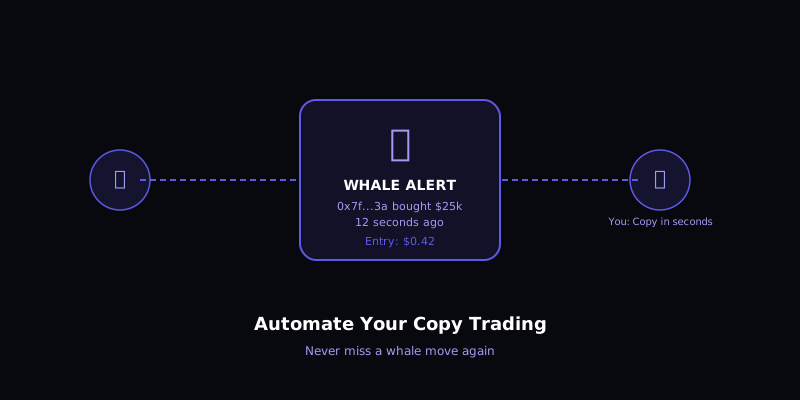
The Biggest Problem With Copy Trading on Polymarket Is Not Finding Wallets
You already know how to find the best polymarket wallets to copy. You have your filters, your criteria, your shortlist of sharp traders. That is the easy part.
The hard part is what happens next: actually catching their moves in real time.
Most copy traders on Polymarket lose their edge not because they follow bad wallets, but because they see the trade four hours after it happened. By then, the price has moved, the value is gone, and you are essentially paying retail for someone else's alpha.
This is why building an automated polymarket copy trading strategy is not optional if you are serious about making money. It is the difference between theory and actual profit.
Why Manual Copy Trading Will Always Underperform
Let me paint you a picture that every copy trader has experienced:
You check your tracked wallets in the morning. Nothing new. You go about your day. You check again at lunch. A wallet you follow bought a massive position in a market six hours ago at 42 cents. That same market is now at 61 cents. You missed almost half the move.
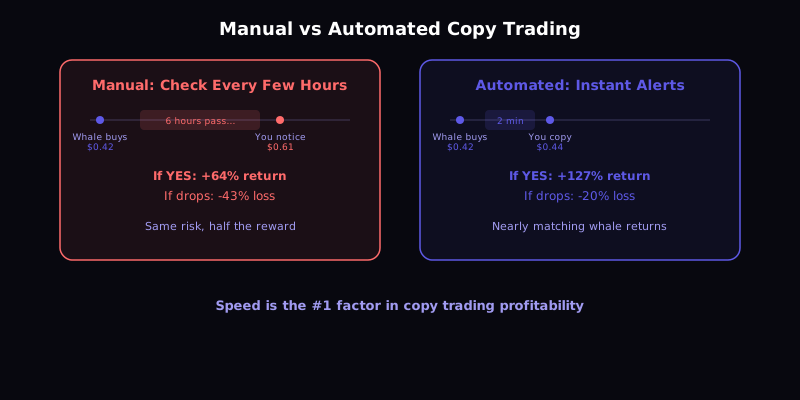
The math is brutal:
- Wallet entry: $0.42
- Price when you notice: $0.61
- If market resolves YES: Wallet makes 138% return. You make 64% return.
- If market drops to $0.35: Wallet is down 17%. You are down 43%.
You are taking on nearly the same risk profile as the whale but capturing less than half the upside. That is not a copy trading strategy. That is a hope-and-check strategy.
The only way to close this gap is automation. You need to know about whale moves as they happen, not hours later.
The Three Layers of Copy Trading Automation
Think of your copy trade polymarket automation as three distinct layers, each building on the one before it.
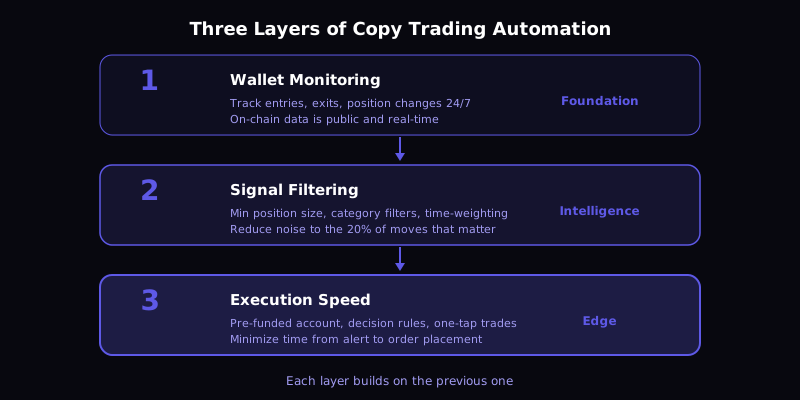
Layer 1: Wallet Monitoring
This is the foundation. You need a system that watches your target wallets 24/7 and detects when they make a trade.
What to monitor:
- New position entries - When a wallet buys into a market for the first time
- Position increases - When they add to an existing position (conviction signal)
- Exits - When they sell (just as important as entries)
- Large orders - Transactions above a certain dollar threshold
The simplest way to set this up is through Ratio, which handles wallet tracking and notifications out of the box. You add the wallets you want to follow, set your alert preferences, and get notified instantly when something happens.
If you want to go deeper, you can also watch the Polymarket smart contracts directly. Every trade on Polymarket happens on-chain, which means the data is public and real-time. But parsing raw blockchain data is a whole project in itself, which is why most copy traders use purpose-built tools.
Layer 2: Signal Filtering
Not every wallet move deserves your attention. If you alert on every single transaction, you will drown in noise and start ignoring your notifications entirely. That is just as bad as not having alerts.
Smart filters to apply:
- Minimum position size - Ignore trades below a certain dollar amount. A $50 position from a whale is probably just noise or a test.
- New market entries only - Adding to existing positions is useful context but not always actionable.
- Category filters - If you only copy trade political markets, do not get alerts for sports positions.
- Time-weighted alerts - A trade at 3 AM in a low-liquidity market might be worth more attention than a midday trade in a popular market.
The goal is to reduce your alerts from "everything this wallet does" to "the 20% of moves that actually matter for my copy trading."
Layer 3: Execution Speed
This is where most automation discussions stop, but it is the layer that matters most. Getting an alert is worthless if you cannot act on it quickly.
Your execution checklist:
- Pre-fund your account - Always have USDC ready. Nothing kills a copy trade faster than "I need to deposit funds first."
- Know the market - Pre-research the markets your wallets are likely to trade. If you have to spend 20 minutes understanding the market after getting an alert, you have already lost time.
- Set decision rules - Before you get an alert, decide: "If Wallet A enters a new political market with more than $5k, I will copy with $500 unless the price has moved more than 15% from their entry."
- One-tap execution - Whatever tool you use, practice executing trades quickly. The fewer clicks between alert and order, the better.
Building Your Alert Decision Tree
This is the framework that turns raw wallet alerts into actual copy trades. Print it, bookmark it, whatever. Just have it ready before you need it.
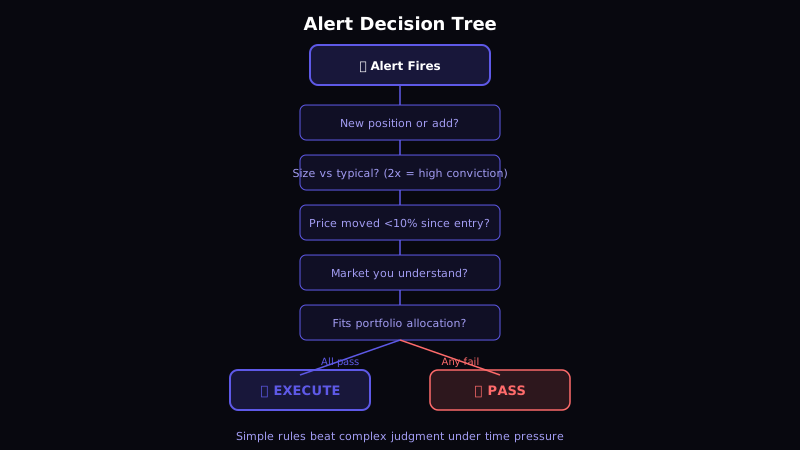
When an alert fires, ask in order:
- Is this a new position or an add? New positions are higher priority.
- How much did the wallet commit? Compare to their typical position size. 2x their normal size = high conviction.
- How much has the price moved since their entry? Less than 10% move = still actionable. More than 20% = probably too late.
- Is this a market I understand? If you have never looked at this market category, consider skipping it.
- Does this fit my current portfolio? If you are already 50% allocated to similar markets, maybe sit this one out.
If the alert passes all five checks, execute. If it fails on any of them, pass. Simple rules beat complex judgment calls every time, especially when you are making decisions quickly.
The Notification Stack That Actually Works
After watching hundreds of copy traders iterate on their setups, here is the notification stack that consistently performs best:
Primary: Push notifications via Ratio
This is your main alert channel. Push notifications on your phone for high-priority whale moves. Set this up for your top 3-5 wallets only. These are the wallets where you want to act within minutes.
Secondary: Dashboard monitoring
Keep a browser tab or app open with your full watchlist. This is for the broader set of wallets you track (10-20+). Check this 2-3 times per day to spot patterns and positions you might want to copy on a longer timeframe.
Tertiary: End-of-day review
Every evening, review all wallet activity from the past 24 hours. This is where you catch the positions that were not urgent but might still be worth entering if the price has not moved much.
This three-tier system means you are fast on high-priority alerts, aware of medium-priority activity, and never completely missing anything.
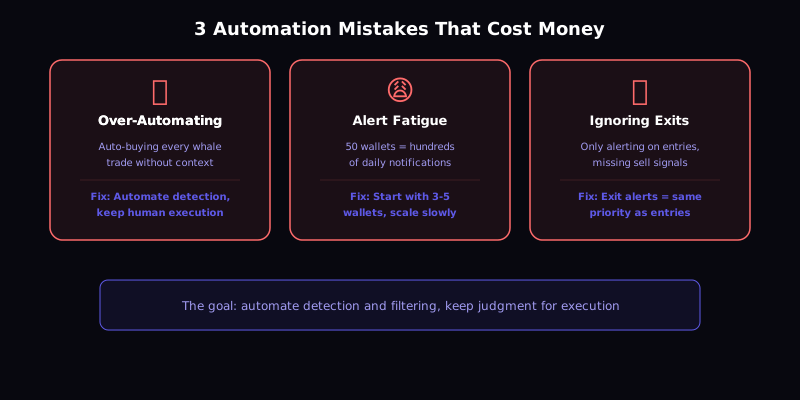
Common Automation Mistakes That Cost Money
Over-automating execution
Some copy traders try to fully automate the execution step, meaning they auto-buy whenever a tracked wallet buys. This sounds great until a whale enters a joke market, makes a hedging trade that does not make sense without context, or buys into a market that is about to resolve.
Human judgment at the execution step is not a bug. It is a feature. Automate the detection, apply rules to the filtering, but keep a human in the loop for execution.
Alert fatigue
If you track 50 wallets and alert on every trade, you will get hundreds of notifications per day. Within a week you will start ignoring all of them, including the ones that matter.
Start with 3-5 wallets. Add more only when you have proven you can handle the existing volume without missing important alerts.
Ignoring exit signals
Most copy traders obsess over entry alerts and completely ignore exits. When a wallet you follow sells a position, that is information. Maybe they know something. Maybe the thesis changed. You should have exit alerts that are just as prominent as entry alerts.
The Weekly Automation Review
Your copy trading automation is not set-and-forget. Every week, spend 15 minutes reviewing:
- Which alerts led to profitable trades? Keep those wallet/filter combinations.
- Which alerts were noise? Tighten the filters or remove that wallet.
- What did you miss? Were there whale moves you did not catch? Why? Fix the gap.
- Are your decision rules still working? If you find yourself overriding them constantly, the rules need updating.
This weekly review is what separates copy traders who improve over time from those who just coast on whatever setup they started with.
Your Copy Trading Automation Starter Kit
Here is exactly what to set up today if you want to start automating your polymarket copy trading strategy:
- Pick your top 5 wallets - Use the filtering criteria from your research (win rate, consistency, category expertise)
- Set up real-time alerts - Ratio for push notifications when tracked wallets trade
- Write your decision rules - Position size thresholds, max slippage tolerance, portfolio allocation limits
- Pre-fund your Polymarket account - Have at least a week's worth of copy trading capital ready
- Schedule your daily review - 5 minutes in the morning, 5 minutes in the evening, plus a 15-minute weekly deep review
- Track your results - Log every copy trade with: wallet source, their entry price, your entry price, slippage, outcome
The entire setup takes less than an hour. The edge it gives you over manual copy traders lasts forever.
Stop checking your wallets manually. Stop missing moves. Build the system once, and let it work for you. The best polymarket wallets to copy are only valuable if you can actually keep up with them.
Get Started
Ready to start copy trading?
Download Ratio and follow the best traders on Polymarket. Available on iOS and Android.