
How To Find The BEST Polymarket Wallets To Copy Trade (Without Getting Rekt)
Finding profitable wallets to copy trade on Polymarket is harder than it looks. Learn the exact framework for identifying the best Polymarket wallets to copy - and avoiding the ones that will drain your bankroll.
Most People Copy Trade the Wrong Wallets on Polymarket
Here's a stat that should scare you: roughly 80% of the wallets people choose to copy trade on Polymarket are either unprofitable long-term or profitable for reasons that can't be replicated.
That means if you're randomly picking "top trader" wallets to follow, the odds are stacked against you before you even place a trade.
The Iran regime market at 39% right now? There are wallets that called the escalation early and wallets that panic-bought at the top. Both might show up on leaderboards. Only one is worth your money.
Copy trading on Polymarket works - but only if you know how to find the right wallets to copy. Let's break down exactly how to do that.
The Copy Trading Wallet Scorecard
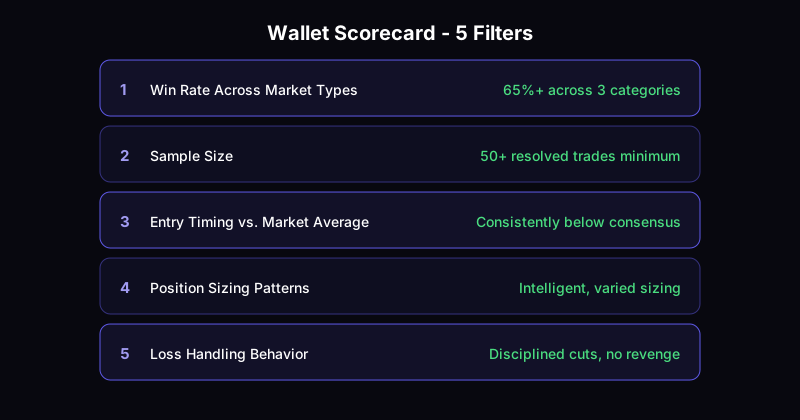
Before you copy trade any Polymarket wallet, run it through these five filters. Skip even one and you're gambling on someone else's luck instead of their skill.
1. Win Rate Across Market Types
A wallet that's 90% accurate on BTC 5-minute markets but has never touched a geopolitical bet is not the same as a wallet with 65% accuracy across politics, crypto, and sports. The second wallet is almost always better to copy trade.
Why? Because Polymarket's market diversity is massive right now. You've got Iran ceasefire bets, nuclear deal predictions at 51%, Premier League matches, and everything in between. A copy trading strategy built around a one-trick wallet collapses the moment that market type dries up.
When evaluating wallets to copy on Polymarket, look for consistent performance across at least 3 different categories.
2. Sample Size - The Silent Killer
This is where most copy traders on Polymarket get destroyed. They see a wallet with 5 trades, all winners, and think they've found a genius.
Five trades tells you nothing. Fifty trades starts to tell a story. A hundred trades across multiple months? Now you have something worth copying.
The US-Iran ceasefire market has been live for weeks with multiple date tranches (March 15 at 11%, March 31 at 28%). A wallet that's been trading these tranches consistently - adjusting positions as deadlines approach - shows real analytical skill. A wallet that made one big bet on March 31 and happened to be right? That's a coin flip.
3. Entry Timing vs. Market Average
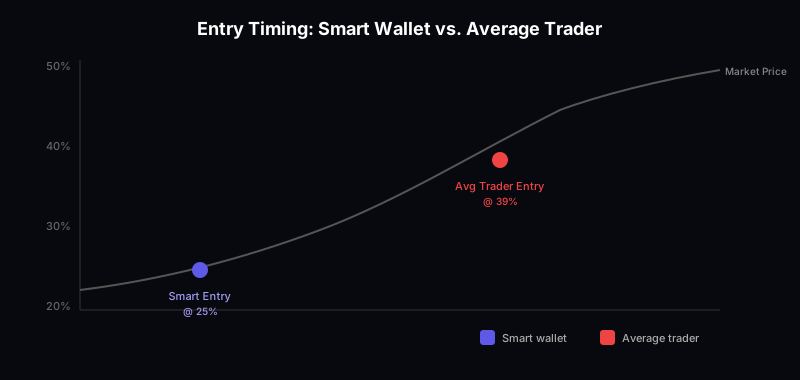
This is the single best indicator of whether a Polymarket wallet is worth copy trading. Compare their average entry price to where the market was when they entered.
Smart wallets consistently buy below market consensus. They accumulate when others are fearful and trim when others are greedy. On the Iran regime market, the best wallets were buying YES at 25-30% weeks ago. They're sitting on positions that are now worth 39% and climbing.
If a wallet's average entry is consistently worse than the market price at the time of entry, they're a momentum chaser. You'll always be buying the top if you copy trade them.
Ratio surfaces this data automatically - showing you not just what wallets bought, but when and at what price relative to the market.
4. Position Sizing Tells the Real Story
A wallet that bets $10 on everything isn't managing risk. A wallet that puts $50,000 on a single outcome is either very confident or very reckless.
The best Polymarket wallets to copy trade show intelligent sizing patterns. They size up on high-conviction plays and keep exploratory bets small. You can see this clearly in wallets trading the US-Iran nuclear deal market (currently at 51%) - the smart ones are buying small positions across multiple scenarios rather than going all-in on one outcome.
5. How Do They Handle Losses?
Every trader loses. What separates a wallet worth copy trading from one that will drain your bankroll is how they respond to losses.
Bad wallets double down after losses, chase recovery, and revenge-trade into markets they don't understand. Good wallets cut losses at predetermined levels and move to the next opportunity.
Check a wallet's behavior after its losing trades. Do positions get bigger (bad sign) or stay disciplined (good sign)?
The "3 Markets" Copy Trading Test
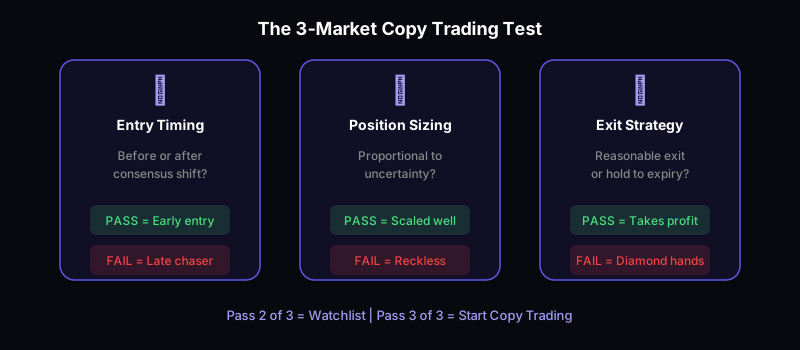
Here's a practical framework for evaluating any Polymarket wallet before you start copy trading it:
Pick 3 of their recent resolved markets. Not their best 3 - any 3 at random.
For each market, ask:
- Did they enter before or after the consensus shift?
- Was their position size proportional to the market's uncertainty?
- Did they exit at a reasonable time or hold to expiry?
If a wallet passes 2 out of 3, it's worth adding to your watchlist. If it passes all 3, start copy trading it with small size and scale up as you build confidence.
Right now on Polymarket, the Iran-related markets are perfect for this test. Multiple related markets (regime change, ceasefire dates, nuclear deals, military action timelines) let you see how a wallet thinks across connected scenarios. A wallet that's long "Iranian regime falls by June 30" at 39% AND short on the March 15 ceasefire at 11% is showing a coherent thesis. That's the kind of wallet you want to copy trade.
Where to Actually Find These Wallets
You have two options for finding the best Polymarket wallets to copy trade:
The manual way: Browse Polymarket leaderboards, click into individual wallets, export their trade history, build spreadsheets, track performance over time. It works. It's also incredibly tedious and most people give up after a week.
The smart way: Use Ratio to browse pre-analyzed wallets with track records, win rates, and performance metrics already calculated. Filter by market type, time period, and consistency. When you find a wallet worth copying, set up copy trading in seconds.
Red Flags That Scream "Don't Copy This Wallet"
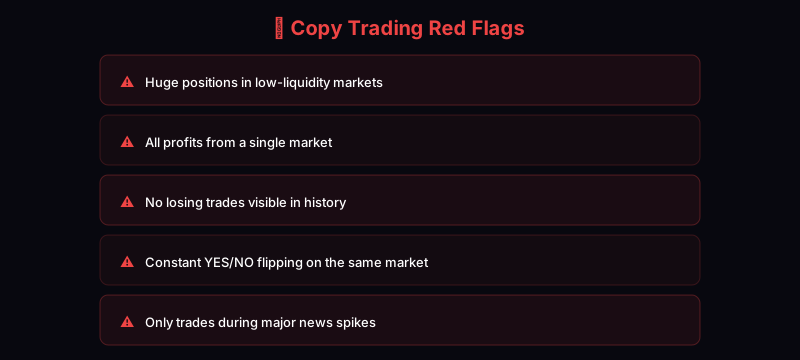
Before we wrap up, here are the instant disqualifiers when evaluating a Polymarket wallet for copy trading:
- Huge positions in low-liquidity markets - They can get in but you won't be able to follow at the same price
- All profits from a single market - One lucky bet doesn't make a copy-worthy trader
- No losing trades visible - Either they're deleting wallets after losses or the sample is too small
- Constant position flipping - Buying YES then selling to buy NO on the same market shows no conviction
- Only trades during news spikes - This is reactionary trading, not analytical trading
The Copy Trading Polymarket Playbook
Finding the best wallets to copy trade on Polymarket isn't about finding the flashiest PnL screenshots on Twitter. It's about systematic evaluation of consistency, timing, sizing, and discipline.
Use the scorecard. Run the 3-market test. Watch for red flags. And when you find wallets that pass your filters, start small and scale into your copy trading positions over time.
The wallets making money on Polymarket's Iran markets, crypto bets, and geopolitical predictions right now will still be making money on whatever markets come next. That's what makes them worth copying.
Ready to start copy trading the best wallets on Polymarket? Ratio makes it dead simple to find, analyze, and copy top-performing wallets - all from your phone.
Get Started
Ready to start copy trading?
Download Ratio and follow the best traders on Polymarket. Available on iOS and Android.