
Copy Trading Polymarket Oil and Commodity Markets: How Whale Wallets Are Printing Money on Energy Bets
Learn how to copy trade Polymarket commodity and oil markets by finding the best whale wallets, reading energy market signals, and building a copy trading strategy for high-volume prediction markets.
Oil Markets Are Polymarket's New Cash Cow for Copy Traders
Polymarket's crude oil markets are absolutely massive right now. With WTI crude surging and markets asking whether oil will hit $100 or $105 by end of March, the volume is through the roof. And where there is volume, there are whale wallets making serious moves.
If you have been focused on copy trading political markets, you are missing out. Commodity markets on Polymarket - especially oil - have become one of the most profitable categories for copy trading on Polymarket. The price movements are frequent, the markets resolve fast, and the whales playing these markets tend to have real expertise.
Here is how to find and follow the best wallets crushing Polymarket's energy and commodity markets.
Why Commodity Markets Are Copy Trading Gold
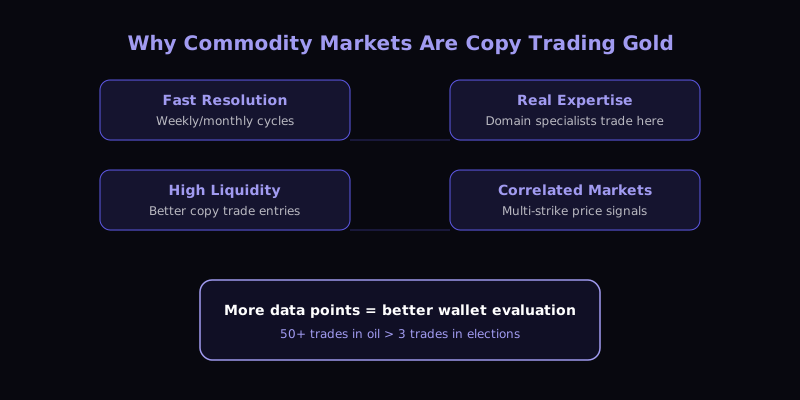
Political markets get all the attention, but commodity markets have several structural advantages for anyone running a polymarket copy trading strategy:
Frequent resolution cycles. Oil price markets resolve weekly or monthly. That means you get more data points on a wallet's performance faster. A wallet that nails 8 out of 10 weekly oil markets is statistically meaningful. A wallet that nailed one election is not.
Expertise is real and measurable. The people trading oil markets on Polymarket often have actual commodity trading backgrounds. They follow OPEC meetings, inventory reports, and geopolitical supply disruptions. When you copy trade these wallets, you are borrowing genuine domain expertise.
Tighter spreads on high-volume markets. The current crude oil markets are seeing enormous liquidity. That means when you copy a whale's position, you can actually get in at a similar price. In low-volume markets, copy trading often fails because your entry price is way worse than the whale's.
Multiple correlated markets. Right now there are oil markets at $100, $105, and $110 strike prices. A whale who buys Yes on "$100 by end of March" at 85 cents is making a statement about where they think oil is going. You can use that signal across related markets.
Step 1: Identify the Energy Market Specialists
The first rule of copy trading commodity markets is to find wallets that specialize. You do not want to copy a generalist who occasionally dabbles in oil. You want the traders who live and breathe energy markets.
Here is how to find them with a copy trading tool like Ratio:
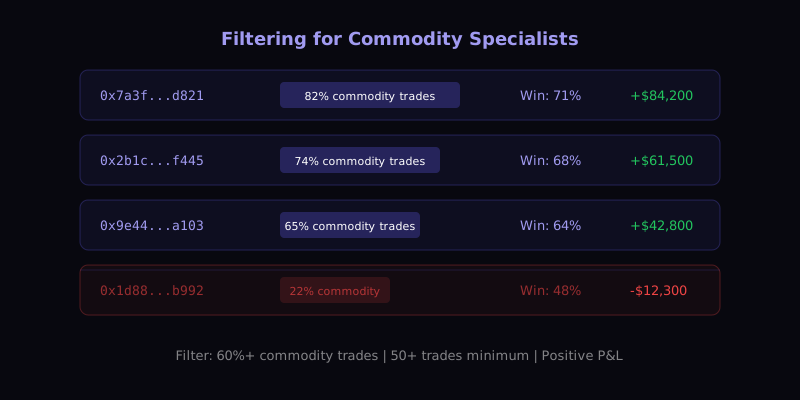
Filter by market category. Look for wallets that have 60% or more of their trades in commodity and finance markets. If a wallet trades politics, sports, crypto, AND commodities equally, their edge in any single category is diluted.
Check the trade count. You want wallets with at least 30-50 trades in commodity markets specifically. A wallet with 5 oil trades and 5 wins might just be lucky. A wallet with 50 oil trades and a 70% win rate is showing real skill.
Look at timing patterns. The best commodity copy trading targets tend to enter positions shortly after major data releases - EIA inventory reports, OPEC announcements, or geopolitical developments. If a wallet consistently enters oil positions right after news drops, they are likely processing real information, not guessing.
Watch for position sizing consistency. A whale who bets $50k on every oil market is more predictable to copy than one who randomly swings between $1k and $200k positions. Consistency in sizing usually means consistency in process.
Step 2: Read the Oil Market Context Before You Copy
Here is where most copy traders mess up with commodities: they copy the trade without understanding the context.
Right now, crude oil markets on Polymarket are pricing in some wild scenarios. The $100 target sits at 85%, meaning the market is very confident oil stays elevated. The $105 target is at 76%. These probabilities tell you something important about the copy trading opportunity.
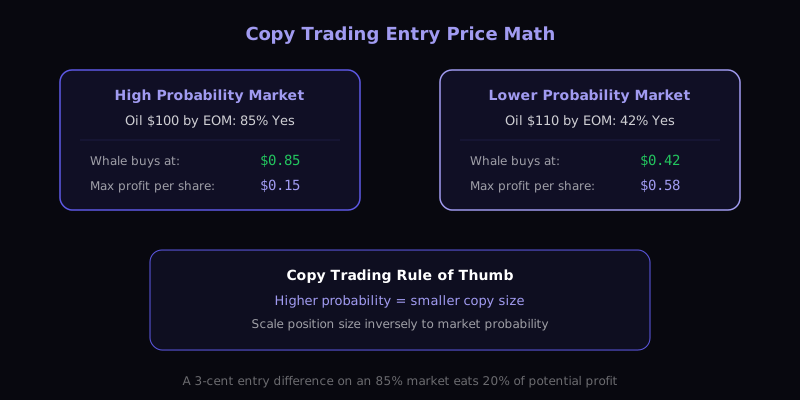
When a market is at 85% Yes, the copy trading calculus changes. If a whale buys Yes at 85 cents, they are betting on a 15-cent upside for a near-certainty. That is a different risk profile than buying Yes at 50 cents. Your copy trading strategy needs to account for this.
What to look for in whale behavior on high-probability markets:
- Whales buying large positions at 85%+ are expressing extreme confidence. Copy with smaller size since the upside is capped.
- Whales buying No at 15 cents on a "near-certain" outcome are making a contrarian bet. Only copy this if their contrarian track record is strong.
- Whales building positions across multiple strike prices ($100 AND $105 AND $110) are creating a structured view on where oil is heading. This is sophisticated and worth copying.
The key to profitable polymarket copy trading in commodities is matching your position size to the probability. Do not copy a whale's $100k position dollar-for-dollar on a 90% probability market. Scale it down proportionally.
Step 3: Build Your Commodity Copy Trading Watchlist
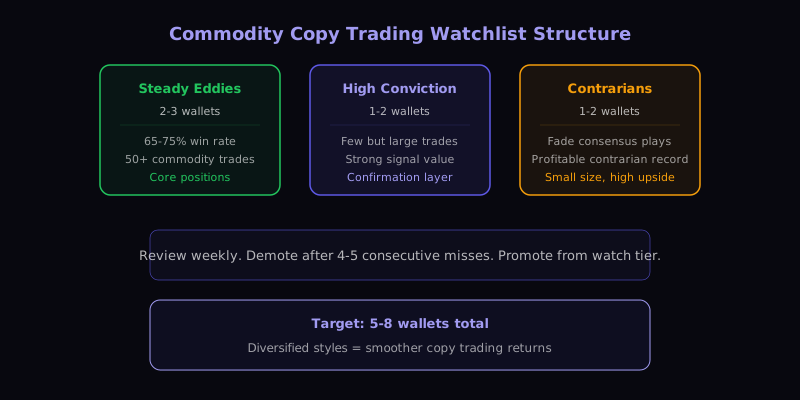
A proper copy trading watchlist for commodity markets should have 5-8 wallets with different characteristics:
2-3 "Steady Eddie" wallets. These are the traders with 65-75% win rates across 50+ commodity trades. They do not hit home runs, but they consistently grind out profits. These are your core copy targets.
1-2 "High conviction" wallets. These traders make fewer trades but with larger sizes. When they enter a commodity market, it means something. Watch for these wallets to confirm your Steady Eddie copies.
1-2 "Contrarian" wallets. These wallets have strong track records of successfully fading the market consensus. When oil is at 85% Yes and they buy No, they have historically been right often enough to be profitable. Copy these sparingly but pay attention to their signals.
Maintaining your watchlist:
Every week, review your commodity wallets' performance. Commodity markets resolve frequently, so you get fast feedback. If a wallet starts underperforming - missing 4-5 oil markets in a row - demote them from your active copy list. If a new wallet emerges with strong energy market performance, add them to a "watch" tier before promoting to active copy status.
Step 4: Timing Your Copy Trades in Fast-Moving Markets
Commodity markets on Polymarket move faster than political markets. Oil prices react to breaking news in minutes. This creates a unique challenge for copy trading: by the time you see a whale enter a position, the price may have already moved.
Here is how smart copy traders handle timing:
Set up alerts. Use Ratio to get notified the moment a watched wallet enters a commodity position. Speed matters more in these markets than in political ones.
Pre-position based on whale patterns. If you notice your target wallets consistently buy oil Yes positions after EIA reports show inventory draws, you can start positioning slightly before the data release. You are not front-running the whale. You are learning their pattern and acting on the same information.
Accept slightly worse entries. In commodity copy trading, you will almost never get the exact same price as the whale. If they enter at 76 cents and you get in at 78 cents, that is fine. Your edge comes from their analysis, not from matching their exact entry.
Use limit orders. Instead of market buying when you see a whale trade, place a limit order at a price you are comfortable with. If the market comes to you, great. If it runs away, skip that trade. There will be more.
The Iran and Geopolitical Overlay
Right now, Polymarket's oil markets are heavily influenced by the Iran situation. The Strait of Hormuz markets, Iran sanctions discussions, and broader geopolitical tension are all feeding into oil price expectations.
The best commodity copy traders are cross-referencing oil wallets with geopolitical wallets. If a whale is buying Yes on oil $105 AND Yes on escalation in the Strait of Hormuz, they have a coherent thesis. That is a stronger copy signal than either trade alone.
This kind of multi-market whale analysis is exactly what makes polymarket copy trading tools so valuable. Manually tracking a wallet's positions across multiple correlated markets is nearly impossible. Having a tool that shows you the full picture of a whale's portfolio changes everything.
Common Mistakes in Commodity Copy Trading
Mistake 1: Copying oil trades without checking the timeline. A whale buying Yes on "$105 by end of March" in early March has a very different risk profile than the same trade on March 25th. Always check when the market resolves relative to when the whale entered.
Mistake 2: Ignoring the bid-ask spread. High-probability oil markets sometimes have wide spreads. A whale might get filled at 84 cents but the current ask is 87 cents. That 3-cent difference eats into an already slim potential profit margin.
Mistake 3: Over-concentrating in one commodity. If all your copy trades are in oil markets, you are not diversifying your copy trading portfolio. Look for wallets that also trade gold, interest rate, and equity index markets on Polymarket to balance your exposure.
Mistake 4: Copying into already-resolved information. If oil just spiked $3 on breaking news and a whale buys Yes at the new higher probability, the information is already priced in. The best copy trades catch whales positioning BEFORE the information becomes consensus.
Your Commodity Copy Trading Action Plan
- Open Ratio and filter for wallets with strong commodity market track records
- Build a watchlist of 5-8 energy-focused wallets with different trading styles
- Set up alerts for when these wallets enter new positions
- Start with small position sizes - 10-20% of what the whale trades
- Review weekly and adjust your watchlist based on actual results
- Cross-reference oil trades with geopolitical market positions for stronger signals
Commodity markets on Polymarket are only getting bigger. The traders who build expertise in copy trading this category now will have a serious edge as these markets grow. Stop ignoring the oil whales. Start copying them.
Get Started
Ready to start copy trading?
Download Ratio and follow the best traders on Polymarket. Available on iOS and Android.