
Copy Trading Polymarket Parlays: How Smart Wallets Stack Multi-Leg Bets for Huge Payouts
Learn how to copy trade parlay markets on Polymarket. Find wallets that consistently hit multi-leg bets and build your own parlay copy trading strategy in 2026.
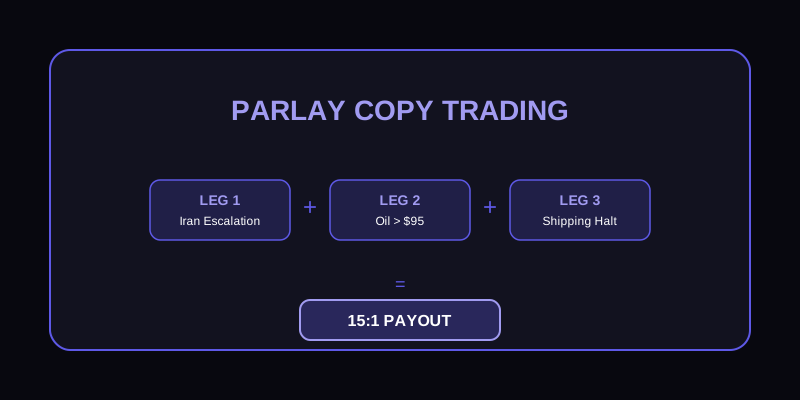
Parlays Are Polymarket's High-Risk, High-Reward Playground
If you've been browsing Polymarket lately, you've probably noticed the parlay section getting busier. Parlays let you combine multiple outcomes into a single position, and the payouts can be wild. Instead of betting on Duke to win the NCAA Tournament at 20%, you stack Duke winning + Michigan losing in the second round + a specific Final Four matchup and suddenly you're looking at 200:1 odds.
The problem? Most people are terrible at parlays. They stack correlated legs, ignore the math, and treat it like a lottery ticket.
But some wallets are quietly crushing it.
And that's where copy trading parlays gets interesting.
Why Parlay Copy Trading Is Different From Regular Copy Trading
When you copy trade someone on a standard binary market, the logic is simple. They buy YES on "Will the Fed cut rates in April?" at 35 cents, you follow at roughly the same price, and you're both exposed to the same outcome.
Parlays add layers of complexity that change the copy trading calculus entirely.
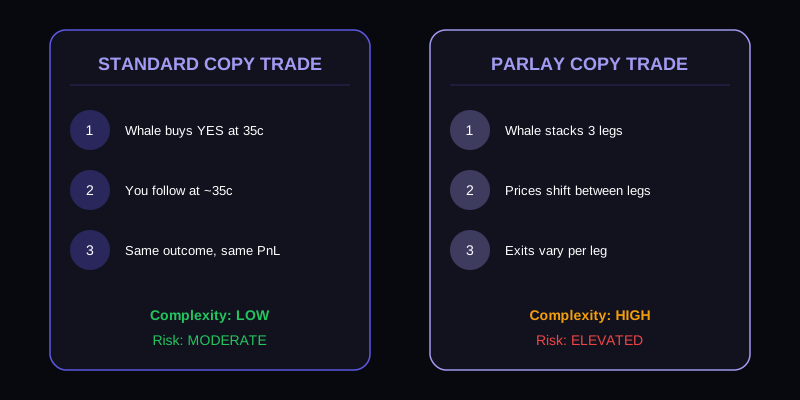
Timing matters more. Each leg of a parlay has its own price movement. A wallet might enter a parlay when leg 1 is at 40% and leg 2 is at 55%. By the time you see their position, those prices might have shifted to 45% and 60%, completely changing the expected value.
Correlation is everything. The best parlay traders understand which outcomes are correlated and which are independent. A wallet stacking "Iran deal signed" + "Oil drops below $60" isn't making two separate bets. They're making one thesis with amplified exposure. If you copy that trade, you need to understand you're copying the thesis, not just the individual legs.
Exit strategies are harder. With a single market, you can mirror a wallet's exit. With parlays, some legs might resolve before others. The wallet you're copying might hedge by selling one leg while holding another. That's nearly impossible to replicate in real time without automation.
How to Find Wallets Worth Copy Trading on Parlays
Not every profitable wallet is a good parlay copy target. Here's what to look for.
Track Record on Multi-Leg Positions
Start by filtering for wallets that have a history of parlay-style positions. You want to see:
- At least 20+ multi-leg positions over the past 3 months
- A hit rate above 15% on 3+ leg parlays (sounds low, but that's actually excellent given the odds)
- Consistent position sizing, not someone who got lucky once with a huge bet
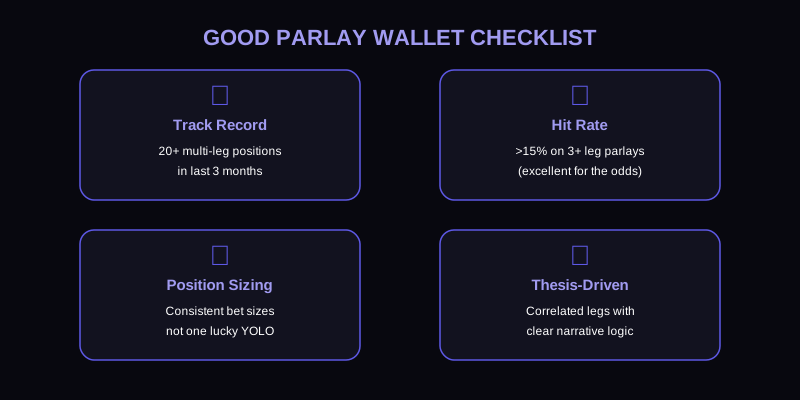
Look for Thesis-Based Parlays, Not Random Stacking
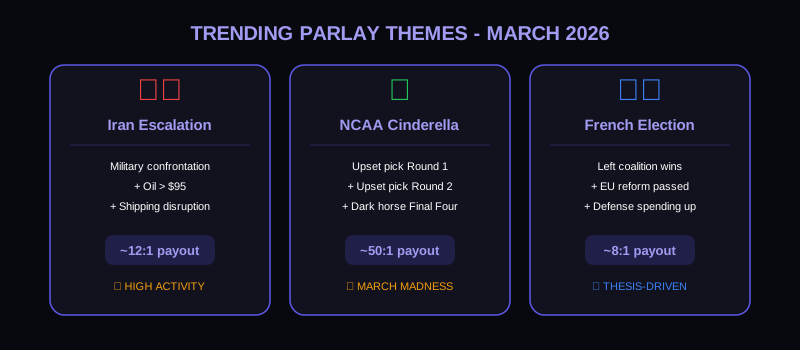
The wallets worth copying build parlays around a central thesis. For example, right now some of the sharpest wallets on Polymarket are running parlays around the Iran-Strait of Hormuz situation:
- "US-Iran military confrontation before June" YES
- "Oil above $95 in Q2" YES
- "Strait of Hormuz shipping disruption" YES
These legs are connected by a single geopolitical thesis. The trader isn't just stacking random outcomes. They have a view on escalation and they're expressing it across correlated markets for amplified returns.
Compare that to a wallet stacking "Duke wins NCAA" + "Bitcoin above $120k" + "French left-wing coalition wins." That's three unrelated bets taped together. The only reason to parlay them is for the payout multiplier, and that's usually a losing strategy long term.
Check Their Singles Record First
A wallet that's profitable on single markets is much more likely to be a smart parlay builder. If someone can't pick winners in individual markets, stacking multiple picks together isn't going to magically fix that.
Check their overall win rate on binary markets first. If they're above 55% on single-market positions with decent volume, their parlays are probably thesis-driven rather than hope-driven.
The Copy Trading Parlay Playbook
Here's a practical framework for copying parlay traders on Polymarket.
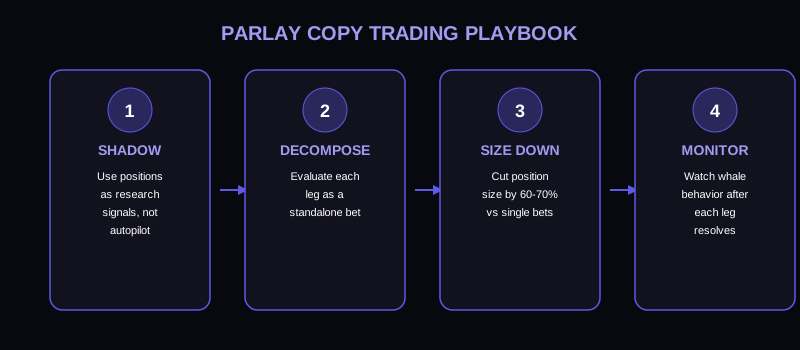
Step 1: Shadow, Don't Mirror
Instead of blindly copying every parlay a wallet enters, use their positions as research signals. If a sharp wallet builds a 3-leg parlay around French election outcomes, that's a signal to go research the French election yourself. Maybe you agree with 2 of the 3 legs but not the third. You can build your own modified version.
This is the difference between copy trading and copy thinking. The best copy traders treat whale wallets as idea generators, not autopilot buttons.
Step 2: Decompose the Parlay
When you spot a parlay position you like, break it into individual legs and evaluate each one:
- Would you take leg 1 as a standalone bet?
- Would you take leg 2 as a standalone bet?
- Do you understand the correlation between them?
- What happens if one leg hits but the others don't?
If you wouldn't take at least 2 of the legs individually, the parlay probably isn't worth copying.
Step 3: Size Down Aggressively
Parlays are inherently higher variance. Whatever position size you'd use for a single-market copy trade, cut it by 60-70% for parlays. A sharp wallet might allocate 5% of their portfolio to a parlay because they have a huge bankroll and can absorb the loss. You probably can't.
The math works out. If you're copying parlays at smaller size but catching the big payouts, your risk-adjusted returns can still be excellent.
Step 4: Set Up Alerts for Leg Resolution
As individual legs of a parlay resolve, the value of the remaining position changes dramatically. If the first leg hits, the remaining legs are suddenly much more valuable. This is often a great time to take partial profit or hedge.
Watch what the original wallet does after each leg resolves. Do they hold? Do they hedge? Do they add to the position? Their behavior after resolution is often more informative than their initial entry.
Current Parlay Opportunities Worth Watching (March 2026)
Here's what the smart money is stacking right now.
The Iran Escalation Stack
Multiple high-performing wallets are building parlays around the Strait of Hormuz situation. The common thesis: tensions escalate through spring, disrupting shipping and spiking oil prices. Legs typically include military confrontation markets, oil price targets, and shipping disruption outcomes.
The NCAA Tournament Cinderella Stack
March Madness is here and parlay activity is spiking. The interesting wallets aren't betting on favorites. They're building upset-heavy parlays with 2-3 underdog legs. The expected value on these is usually negative, but the best wallets are selective about which upsets they stack.
The French Election Policy Stack
With French elections heating up, some wallets are building parlays that combine election outcome markets with policy impact markets (EU reform, defense spending, economic indicators). These thesis-driven parlays are exactly the kind worth studying.
The Biggest Mistake: Copying Parlay Size Without Copying Parlay Logic
Here's where most people go wrong. They see a whale wallet drop $50,000 on a 4-leg parlay paying 15:1 and think "I should follow that." But they don't ask why the whale built that specific combination.
That whale might be hedging a larger position elsewhere. The parlay might be a small speculative piece of a portfolio that's heavily positioned in the opposite direction on individual legs. Without seeing the full picture, you're copying one brushstroke and thinking you've replicated the painting.
This is why tools matter. Manual wallet tracking can show you individual positions, but understanding how parlays fit into a wallet's overall strategy requires seeing the complete picture.
How Ratio Makes Parlay Copy Trading Actually Viable
Tracking parlay positions across dozens of wallets, decomposing their legs, monitoring correlation, and setting up alerts for resolution... doing all of that manually is a full-time job.
Ratio is built for exactly this kind of analysis. Instead of flipping between wallet trackers and spreadsheets, you can follow top-performing wallets and see their complete position structure, including how parlays fit into their broader strategy.
The social layer matters too. When sharp traders in the Ratio community discuss their parlay theses, you get the reasoning behind the position, not just the position itself. That context is the difference between blindly copying a bet and understanding an investment thesis.
Whether you're building your own parlays inspired by whale wallets or directly following positions, having the right infrastructure turns parlay copy trading from gambling into strategy.
Check out Ratio to see how top wallets are stacking their Polymarket parlays right now.
Get Started
Ready to start copy trading?
Download Ratio and follow the best traders on Polymarket. Available on iOS and Android.