
The Copy Trading Portfolio: How To Follow Multiple Polymarket Wallets Without Blowing Up
Learn how to build a diversified copy trading portfolio on Polymarket. This polymarket copy trading strategy shows you how to follow multiple wallets, manage risk, and size positions like the best traders.
The Problem With Following Just One Wallet
Most people who copy trade Polymarket make the same rookie mistake. They find one wallet with impressive returns, follow it exclusively, and then wonder why their account is down 40% in two weeks.
Here is what happened. That one wallet hit a rough patch. Maybe they had a bad read on the Iran regime market. Maybe they sized too aggressively on a Texas primary outcome. Whatever the reason, a single wallet is a single point of failure.
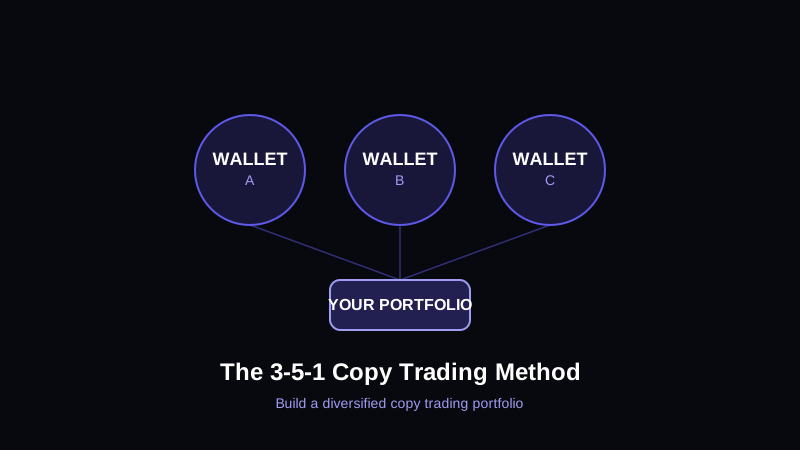
The solution is building a copy trading portfolio. Not one wallet. Not two. A diversified group of wallets that gives you exposure to different strategies, different markets, and different risk profiles.
This is how professional copy traders on Polymarket actually make money. And this guide walks you through exactly how to build one.
The Three Wallet Archetypes You Need
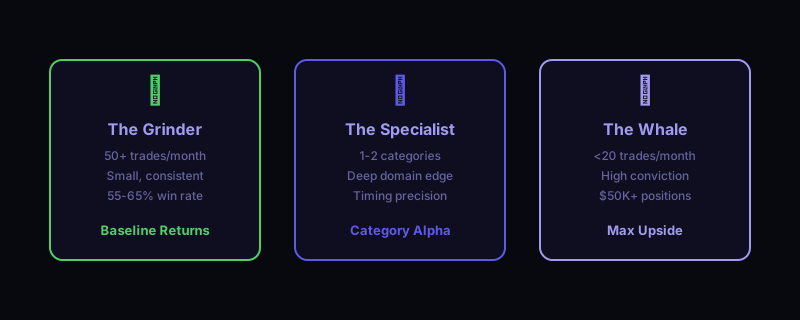
Every copy trading portfolio on Polymarket should contain three types of wallets. Missing any one of these archetypes creates a blind spot in your strategy.
Archetype 1: The Grinder
Grinder wallets make lots of small, consistent trades. They are not swinging for home runs. They are picking up small edges across dozens of markets and letting volume do the work.
What grinder wallets look like:
- 50+ trades per month
- Small position sizes (1-3% of their total portfolio per trade)
- Win rates between 55-65%
- Active across multiple market categories
Why you need them in your copy trade Polymarket portfolio: Grinders provide your baseline returns. They smooth out the volatility from your other wallet types. When your high-conviction wallets are in a drawdown, your grinder allocation keeps your portfolio steady.
How to find them: Look for wallets on Ratio with high trade counts and moderate profit. The best polymarket wallets to copy in this category will not have the flashiest numbers, but their equity curves will be remarkably smooth.
Archetype 2: The Specialist
Specialist wallets focus on one or two market categories and dominate them. Maybe they are political junkies who nail every election market. Maybe they are crypto natives who consistently predict token price movements.
What specialist wallets look like:
- 80%+ of trades in 1-2 categories
- Deep knowledge shown through timing (they enter before major news events)
- Often inactive for weeks, then suddenly make several trades when their specialty heats up
Why you need them: Specialists give you alpha in specific domains that generalist wallets miss. Right now, with Iran markets at $7M+ volume and the Texas Senate primary heating up, political specialists are having their moment.
The catch: Only copy their trades within their specialty. A political specialist betting on crypto markets is just another random trader. This is where having a structured polymarket copy trading strategy matters more than just blindly following wallets.
Archetype 3: The Whale
Whale wallets make fewer trades but with massive conviction. When they move, they move big. These are the wallets that take $50K+ positions on single outcomes.
What whale wallets look like:
- Fewer than 20 trades per month
- Large position sizes (10-25% of portfolio per trade)
- Often early entrants in new markets
- Strong research backing (you can tell because they scale in over days, not hours)
Why you need them: Whales provide your highest-upside trades. A single whale call that hits can make your entire month. But they also carry the most risk per trade, which is why they should be the smallest allocation in your copy trading portfolio.
Portfolio Construction: The 50/30/20 Framework
Here is the exact framework for building your polymarket copy trading strategy around multiple wallets:
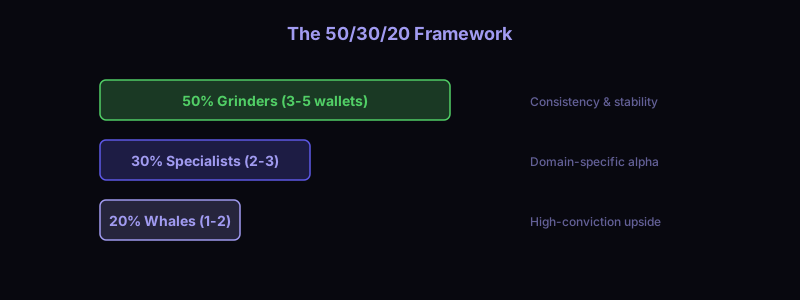
50% allocated to Grinder wallets (3-5 wallets). This is your foundation. When a grinder wallet makes a trade, you copy it at 50% of your per-trade budget. The diversification across multiple grinders means no single bad trade hurts much.
30% allocated to Specialist wallets (2-3 wallets). Only copy trades within their specialty. When a political specialist bets on the Iran regime market or the Texas primary, follow them. When they venture outside politics, ignore it.
20% allocated to Whale wallets (1-2 wallets). Copy their trades at reduced size. If a whale puts 15% of their portfolio on a single position, you put 3-5% of yours. This gives you exposure to their high-conviction ideas without matching their risk.
This framework works because it balances consistency (grinders) with alpha (specialists) and upside (whales). Most people who copy trade Polymarket fail because they are 100% allocated to whale-style wallets. That is not a portfolio. That is gambling.
Position Sizing Rules for Copy Trading
Even with the right wallets, poor position sizing will destroy your returns. Here are the rules:
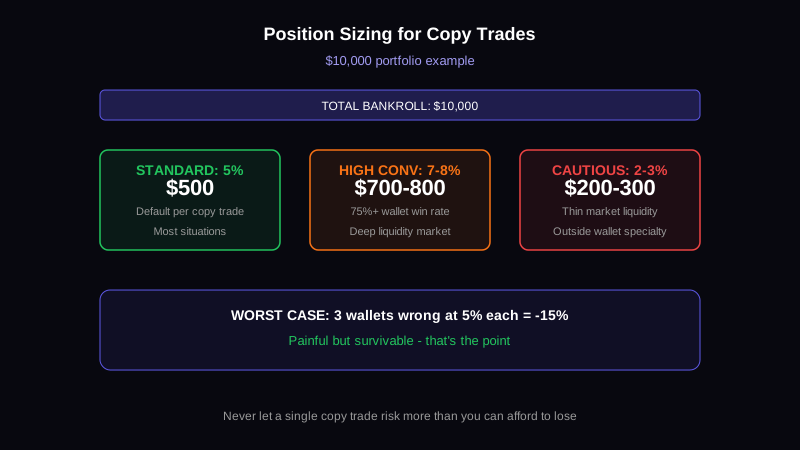
Rule 1: Never risk more than 5% of your total portfolio on a single copy trade. No matter how confident the wallet you are following seems, cap your individual position at 5%. Markets have a way of humbling even the best traders.
Rule 2: Scale your copy size to the wallet's historical accuracy in that market type. If a specialist has a 70% win rate in political markets, copy them at full allocation. If they are venturing into a category where they have only a 52% win rate, reduce your copy size by half.
Rule 3: Reduce size when multiple wallets converge on the same trade. This sounds counterintuitive. If three wallets all love the same trade, should you not go bigger? No. Because if they are all wrong, you are triple-exposed. When multiple wallets converge, take the trade at your standard size. Do not stack it.
Rule 4: Always keep 20-30% of your portfolio in cash. Prediction markets are full of sudden opportunities. If the Iranian regime situation escalates overnight and creates a new wave of markets, you want dry powder to deploy. Being fully invested in copy trades means missing the best entries.
Rebalancing Your Copy Trading Portfolio
Your portfolio is not set-and-forget. You need to review and rebalance regularly.
Weekly check: Performance review. Every Sunday, review how each wallet in your portfolio performed that week. Are your grinders still grinding? Are your specialists still beating the market in their domain? Are your whales maintaining their edge?
Monthly check: Wallet rotation. Once a month, evaluate whether any wallets should be removed or replaced. A grinder whose win rate has dropped below 52% for two consecutive months should be rotated out. A specialist who has gone silent for 6+ weeks might have moved to a different platform.
Ratio tracks all of these metrics automatically, so your weekly and monthly reviews take minutes instead of hours.
Quarterly check: Allocation adjustment. Every three months, reassess your 50/30/20 split. If political markets are dominating Polymarket volume (like they are right now with midterm positioning and Iran), you might temporarily shift to 40/40/20 to increase your specialist allocation.
Correlation Risk: The Silent Portfolio Killer
Here is something almost nobody talks about in polymarket copy trading strategy discussions: correlation risk.
If all your grinder wallets tend to trade the same markets at the same time, they are not really diversifying your portfolio. You effectively have one big grinder position, not five small ones.
How to check for correlation:
- List the last 20 trades from each wallet in your portfolio
- Count how many trades overlap (same market, same direction, within 48 hours)
- If more than 30% of trades overlap between any two wallets, they are too correlated
When you find correlated wallets, replace one of them with a wallet that trades different markets or uses a different timing strategy. The goal is to build a portfolio where each wallet contributes unique trades, not redundant ones.
Real Example: Building a March 2026 Portfolio
Let me walk through what a copy trading portfolio might look like right now, using current Polymarket markets as context.
Grinder allocation (50%): You would want 3-4 wallets that are actively trading across the current hot markets. These wallets should be making multiple trades per week in Iran markets, Texas primary markets, tariff impact markets, and crypto price markets.
Specialist allocation (30%): Given that geopolitics is driving massive volume on Polymarket right now, you would want at least one geopolitical specialist who has a track record on Iran and Middle East markets. A second specialist focused on US political primaries would cover the Texas Senate race and upcoming midterm markets.
Whale allocation (20%): One or two high-conviction wallets that have historically nailed big geopolitical or political calls. These wallets might only trade 2-3 times in March, but when they do, you want exposure.
You can identify all of these wallet types through Ratio, which categorizes wallets by trading style and tracks their performance by market category.
Common Portfolio Mistakes to Avoid
Mistake 1: Over-diversification. Following 30+ wallets sounds safe but creates noise. You end up taking contradictory positions (one wallet is YES on Iran regime change, another is NO) and the trades cancel each other out. Stick to 6-10 wallets maximum.
Mistake 2: Performance chasing. Do not add a wallet to your portfolio just because it had one amazing week. Look for sustained performance over at least 8-12 weeks before including a wallet in your copy trade Polymarket strategy.
Mistake 3: Ignoring trading costs. Every trade on Polymarket has slippage and fees. If you are copying a grinder who makes 100 tiny trades per month, make sure their edge is big enough to cover transaction costs. A 55% win rate with high frequency can still lose money after fees on small positions.
Mistake 4: Emotional overrides. You will be tempted to override your portfolio rules. A whale you follow will take a position you disagree with, and you will skip it. Then it wins big. Stick to your system. The whole point of copy trading on Polymarket is outsourcing decision-making to wallets with proven edges.
Start Building Your Portfolio Today
You now have the framework for building a diversified copy trading portfolio on Polymarket. The 50/30/20 split across grinders, specialists, and whales gives you the best balance of consistency and upside.
Start by identifying 2-3 wallets in each category using Ratio. Observe their trades for a week before committing real money. Then begin copy trading at small sizes and scale up as you validate the portfolio's performance.
The best polymarket wallets to copy are not the ones with the biggest profit numbers. They are the ones that fit a role in your portfolio and deliver consistent, uncorrelated returns. Build the system, follow the rules, and let the portfolio do the work.
Get Started
Ready to start copy trading?
Download Ratio and follow the best traders on Polymarket. Available on iOS and Android.