
Copy Trading Polymarket During Volatile Markets: How The Best Wallets Print Money in Chaos
Learn how to copy trade Polymarket during volatile events like oil spikes, geopolitical crises, and sports playoffs. Discover which wallets thrive in chaos and how to build a copy trading strategy for high-volatility markets.

Why Volatile Markets Are a Copy Trader's Best Friend
Most people panic when Polymarket markets start swinging wildly. Oil prices spike, geopolitical tensions escalate, and suddenly every market on the platform is moving 10-20% in a single day.
But if you know how to copy trade Polymarket the right way, volatile markets are where you make the most money. The reason is simple: volatility creates mispricings, and the best polymarket wallets to copy are the ones that consistently exploit those mispricings before the crowd catches on.
Right now in March 2026, we are seeing exactly this kind of environment. Crude oil markets are pricing $110 by end of month at 45%, the Iran situation is creating ripple effects across geopolitical markets, and Champions League betting is swinging with every match result. The wallets that navigate this chaos profitably are the ones you want in your copy trading portfolio.
How Whale Wallets Behave Differently During Volatility
The first thing you notice when you study top Polymarket wallets during volatile periods is that they do the opposite of what retail traders do.
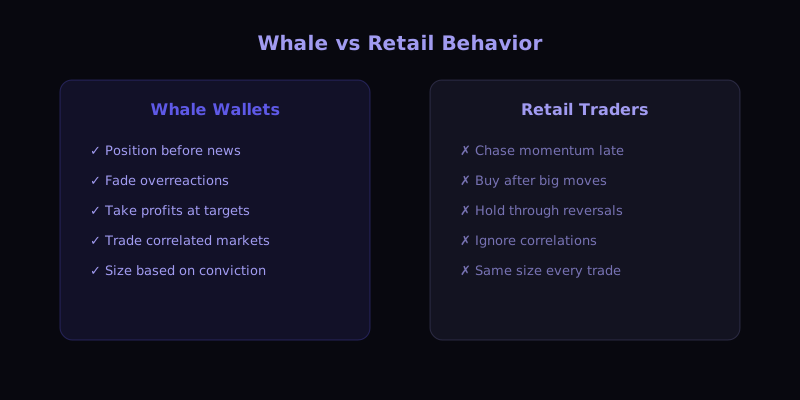
Retail traders chase momentum. They see oil spiking and buy YES on $110 crude after it has already moved from 20% to 45%. The best polymarket wallets to copy are already positioned before the move happens, or they are fading the overreaction.
Here is what a solid polymarket copy trading strategy looks like during volatile periods:
- Early positioning - Top wallets enter before the crowd, often when probabilities are mispriced by 15-20%
- Contrarian fades - When a market overshoots on news, skilled traders sell into the panic
- Quick exits - They do not hold through the entire move; they take profits at rational levels
- Cross-market plays - They trade correlated markets simultaneously (oil + geopolitics + tariffs)
Using Ratio to track wallet activity during these spikes lets you see exactly which wallets are buying and selling in real-time, so you can follow the smart money instead of the herd.
Finding Wallets That Thrive in Chaos
Not every profitable wallet is good at trading volatile markets. Some wallets crush it in slow, grinding markets but fall apart when things get chaotic. Your copy trade Polymarket approach needs to account for this.
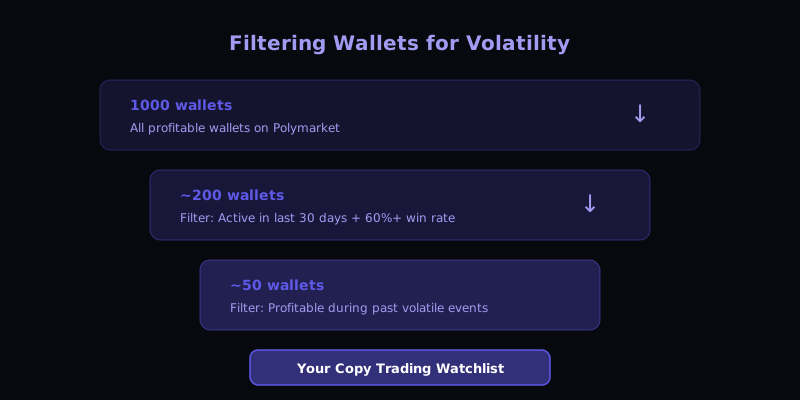
Here is how to filter for volatility-ready wallets:
1. Check Performance During Past Volatile Events
Look at how wallets performed during previous high-volatility periods. Did they increase their win rate? Did they size up appropriately? A wallet that went from 60% win rate to 40% during the last major geopolitical event is probably not someone you want to copy during the current Iran tensions.
2. Look for Category Specialists
The best approach to copy trading Polymarket whales during volatile times is to find category specialists. A wallet that exclusively trades geopolitical markets and has been profitable for 6+ months is far more valuable to copy on Iran markets than a generalist who dabbles in everything.
Ratio breaks down wallet performance by category, so you can find the crude oil specialists, the politics experts, and the sports analytics wizards separately.
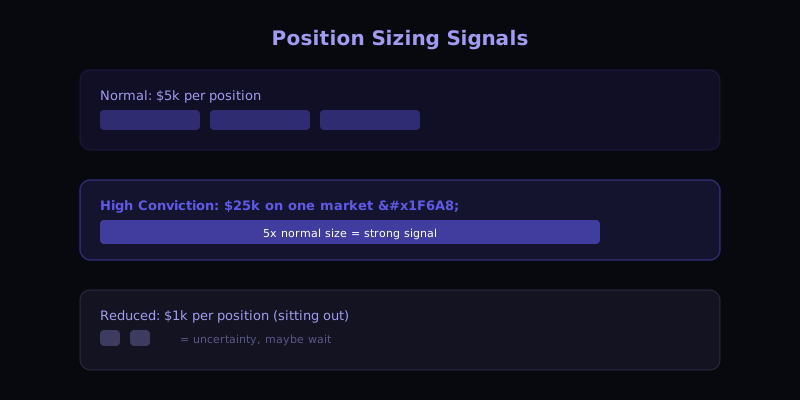
3. Watch Position Sizing Patterns
Smart wallets adjust their sizing based on conviction and volatility. If you see a wallet that normally puts $5k per position suddenly sizing up to $25k on a specific market, that is a high-conviction signal worth paying attention to.
4. Track Entry Timing
The difference between a good copy trade and a bad one often comes down to timing. The best polymarket wallets to copy tend to enter positions:
- Before major news catalysts (they are researching ahead)
- During temporary dips in probability (buying the fear)
- When liquidity is thin and prices are inefficient (late night or early morning)
Building a Volatile Market Copy Trading Playbook
Let me walk you through a practical polymarket copy trading strategy for the current market environment.
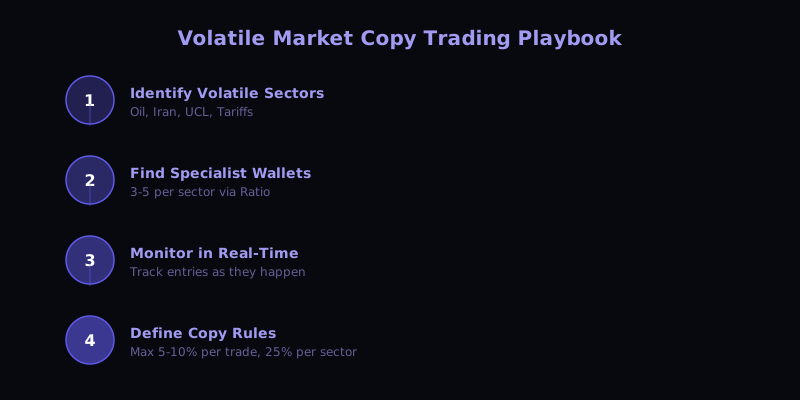
Step 1: Identify the Volatile Sectors
Right now, the hottest sectors on Polymarket are:
- Commodities - Crude oil markets with $28M+ volume and wild swings
- Geopolitics - Iran-related markets creating cascading effects
- Sports - Champions League with $272M volume and shifting odds
- Finance - Tariff impacts and Fed decisions driving uncertainty
Step 2: Find 3-5 Specialist Wallets Per Sector
Do not try to find one wallet that trades everything. Instead, build a roster:
- 2-3 wallets that specialize in commodities and finance
- 2-3 wallets that focus on geopolitics
- 2-3 wallets for sports markets
Use Ratio to identify these specialists based on their historical category performance and current activity levels.
Step 3: Set Up Real-Time Monitoring
During volatile periods, timing matters more than usual. You need to know when your tracked wallets are making moves, not find out hours later.
Step 4: Define Your Copy Rules
This is where most people mess up their copy trade Polymarket approach. You need rules:
- Max allocation per copied trade - Never put more than 5-10% of your bankroll on a single copied position
- Confirmation threshold - Wait for 2+ tracked wallets to take similar positions before copying
- Exit rules - Define when you will exit, do not just wait for the wallet to exit first
- Sector limits - Cap your total exposure to any single volatile sector at 25-30%
The Correlation Trap: What Most Copy Traders Miss
Here is something that catches a lot of people off guard when copy trading Polymarket during volatile periods: correlated positions.
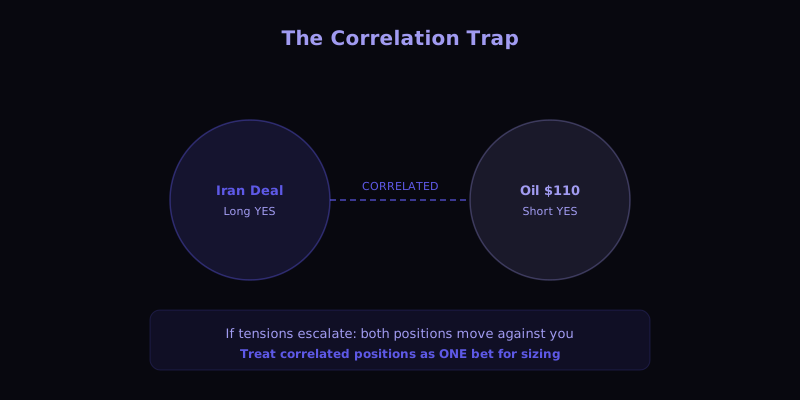
If you are copying a geopolitics whale who is long on "Iran deal by June" and also copying a commodities whale who is short on "$110 oil by March," you might think you are diversified. But these positions could be highly correlated. If Iran tensions escalate, both positions might move against you simultaneously.
The fix:
- Map out how your copied positions relate to each other
- Treat correlated positions as a single combined bet for sizing purposes
- Use Ratio to visualize your total portfolio exposure across correlated markets
When NOT to Copy Trade During Volatility
Not every volatile moment is a copy trading opportunity. Here are the red flags:
- Wallets are sitting on the sidelines - If the best wallets are not trading, that is information. The smart move might be to wait too.
- Liquidity has dried up - When spreads widen dramatically, copy trading becomes expensive. Your fills will be worse than the wallet you are copying.
- News is breaking faster than markets can price - In the first 30 minutes of a major event, even whale wallets are guessing. Wait for the dust to settle.
- You are copying more than 3 positions simultaneously - During chaos, fewer positions with higher conviction beats many scattered bets.
Putting It All Together
The wallets that consistently profit during volatile Polymarket periods share a few traits: they research ahead of the curve, they size according to conviction, they fade overreactions, and they manage correlations.
Your job as a copy trader is not to blindly mirror every trade. It is to identify these skilled wallets, understand their approach, and selectively copy their highest-conviction plays.
Start by heading to Ratio to find wallets that have been active and profitable during the current volatile period. Filter by category, check their recent performance, and build your watchlist of 10-15 wallets across different market sectors.
The chaos is not going anywhere. The question is whether you are positioned to profit from it alongside the smartest wallets on Polymarket, or whether you are the liquidity they are trading against.
Get Started
Ready to start copy trading?
Download Ratio and follow the best traders on Polymarket. Available on iOS and Android.