
Copy Trading vs Manual Trading on Prediction Markets: Which Actually Makes You More Money?
An honest comparison of copy trading vs manual trading on prediction markets. When to follow the pros, when to go solo, and how to combine both for maximum edge.
You've been staring at Polymarket for twenty minutes. Iran markets are moving. Oil is spiking. NCAA brackets are chaos. You know there's money to be made, but should you trust your own analysis or just follow someone who clearly knows what they're doing?
This is the copy trading vs manual trading debate, and in prediction markets, it hits different than in stocks or crypto. The dynamics are unique, the edge decays faster, and the right answer probably isn't what you think.
Let's break it down honestly.
What Is Copy Trading on Prediction Markets?
Copy trading means automatically mirroring the positions of traders who've proven they can pick winners. Instead of analyzing whether crude oil will hit $105 by month-end or whether Michigan wins March Madness, you find someone with a verified track record and let their research become your research.
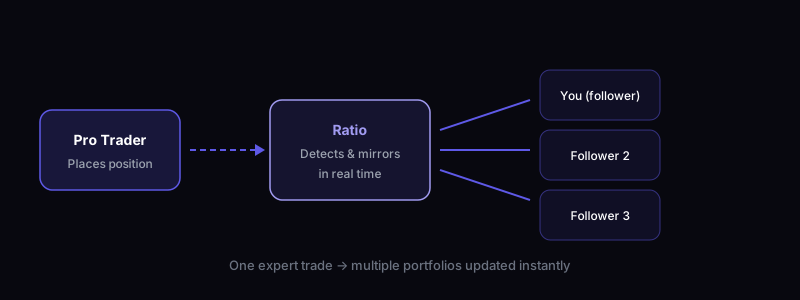
On platforms like Ratio, copy trading works in real time. You pick a trader, set your parameters, and their moves become your moves. No lag, no manual replication, no sitting at your desk refreshing pages.
Manual trading is the opposite. You do your own research, form your own opinions, and place your own bets. You're the analyst, the risk manager, and the execution desk all in one.
Both approaches can make money. But they make money in very different ways.
The Case for Copy Trading
You Don't Need to Be an Expert in Everything
Prediction markets span politics, sports, geopolitics, commodities, crypto, entertainment, and weather. Nobody is an expert in all of these. The trader who crushes NCAA tournament picks might be clueless about Iran sanctions. The geopolitics wizard probably doesn't follow oil futures.
Copy trading lets you access specialized knowledge without having it yourself. You're essentially hiring analysts — except they're paid by their own performance, not your subscription fee.
Time Is the Real Cost
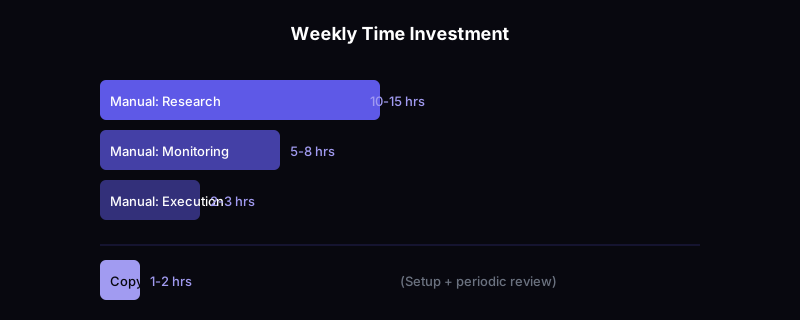
Here's what manual traders underestimate: the time cost is enormous. To trade Iran markets well right now, you need to follow diplomatic channels, military movements, oil supply data, and congressional sentiment. That's a part-time job.
Copy trading compresses all of that into a follow button. The best copy trading apps like Ratio make this as simple as scrolling a leaderboard and tapping "follow."
Emotional Distance Is an Edge
When you've spent three hours researching a position, you're emotionally invested. You'll hold too long, average down when you shouldn't, and ignore evidence that contradicts your thesis. It's human nature.
Copy trading creates healthy emotional distance. You're following a system, not defending your ego. When the trader you follow exits a position, you exit too — no agonizing, no "but I really think..."
The Case for Manual Trading
You Keep 100% of Your Edge
When you discover something the market hasn't priced in — maybe you noticed a pattern in how Strait of Hormuz escalations affect oil, or you have genuine expertise in Slovenian politics — that edge is entirely yours. No sharing, no dilution, no crowd following you into the same position.
You Control Your Risk Exactly
Manual trading means you decide your position sizes, entry timing, and exit strategy down to the cent. Copy trading, even with good platforms, introduces variables you don't control. What if the trader you follow has a different risk tolerance? A different bankroll size? Different time horizon?
You Learn Faster
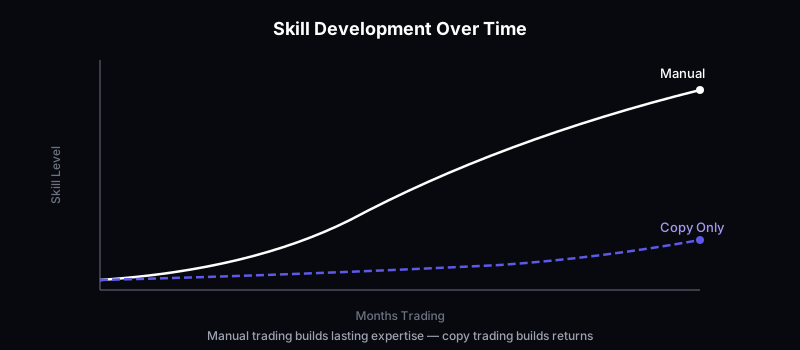
There's no substitute for having skin in the game with your own analysis. Every win teaches you what good research looks like. Every loss teaches you where your blind spots are. Copy trading can make you money, but manual trading makes you better.
The Numbers Don't Lie: What the Data Shows
Here's what most people get wrong about this debate — they think it's either/or. The data from prediction market platforms tells a different story.
Pure manual traders on platforms like Polymarket show a wide performance distribution. The top 10% crush it. The bottom 50% lose money consistently. The median manual trader slightly underperforms the market.
Pure copy traders cluster in a tighter band. Fewer spectacular wins, but also fewer catastrophic losses. The median copy trader slightly outperforms the median manual trader, mostly because they avoid the biggest mistakes.
Hybrid traders — people who copy trade in categories they don't understand and trade manually where they have edge — consistently outperform both groups.
This is the insight that changes everything.
The Hybrid Approach: Why the Best Traders Do Both
Smart prediction market traders in 2026 don't pick one approach. They use both strategically.
Here's how it works in practice:
Copy trade when:
- The market category is outside your expertise
- You don't have time to research properly
- The market is moving fast and you need to act now
- You've identified a trader with a proven edge in that specific category
Trade manually when:
- You have genuine domain knowledge
- You've spotted something the crowd hasn't
- The market is thin enough that your analysis can find mispricing
- You're building skills in a new category
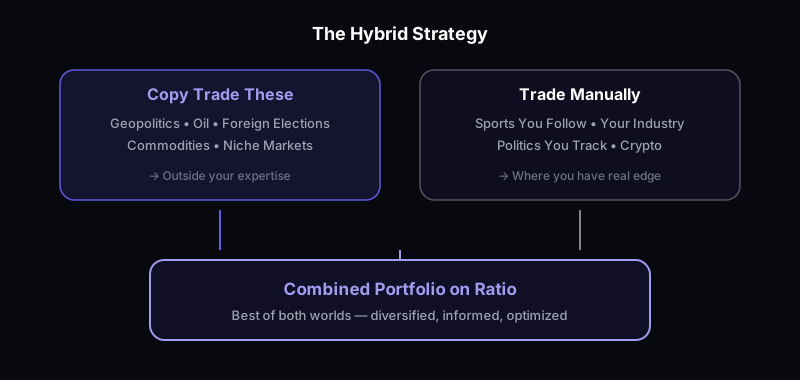
Ratio is built for exactly this hybrid approach. You can copy top traders in geopolitics while placing your own bets on sports. You can follow a whale on oil markets and trade NCAA picks yourself. The platform doesn't force you into a box.
Common Mistakes in Both Approaches
Copy Trading Mistakes
Following too many traders. If you're copying 15 people, their signals cancel each other out. Pick 2-3 specialists in different categories.
Ignoring the context. A trader might be right about Iran 80% of the time but wrong when they venture into crypto markets. Check their category-specific record, not just overall performance.
Setting and forgetting forever. Markets change. Traders go cold. Review your copy trading lineup monthly at minimum.
Manual Trading Mistakes
Overtrading. Not every market needs your opinion. If you don't have an edge, you don't have a trade.
Ignoring position sizing. Betting 30% of your bankroll because you're "really confident" is how accounts go to zero.
Anchoring to your research. Just because you spent four hours on analysis doesn't mean you're right. Be willing to take the loss.
How to Get Started With the Right Approach
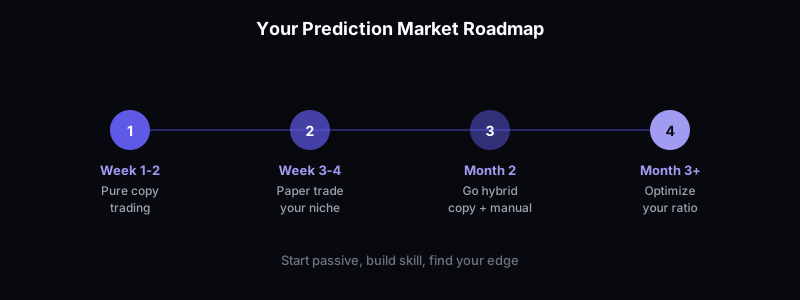
If you're new to prediction markets, here's the honest playbook:
Week 1-2: Start with copy trading. Use Ratio to follow 2-3 traders with strong track records in different categories. Watch what they do, when they enter, how they size positions.
Week 3-4: Start paper trading manually in one category you know well. Sports picks if you follow sports. Crypto if you're in that world. Politics if you're a news junkie.
Month 2 onward: Go hybrid. Copy trade where you lack expertise, trade manually where you have it. Adjust the ratio (no pun intended) as you learn.
Which Prediction Market App Supports Both?
This is where platform choice matters. Most prediction market apps are built for manual trading only. You place your own bets, period. Some newer platforms offer copy trading but strip away the manual option.
Ratio is one of the few best prediction market apps that genuinely supports both. The copy trading tools are first-class — real-time mirroring, transparent track records, granular controls. But you can also trade manually on any market, and the platform doesn't penalize you for mixing approaches.
The leaderboard isn't just a vanity metric — it's your scouting tool. Filter by category, timeframe, and risk level. Find the specialist, follow them where they're strong, and bring your own game everywhere else.
The Bottom Line
Copy trading vs manual trading isn't really the right question. The right question is: where do I have an edge, and where should I borrow someone else's?
The best prediction market traders in 2026 are pragmatic. They copy trade crude oil markets because they don't have time to track OPEC politics. They trade NCAA brackets manually because they've watched every game this season. They follow a geopolitics whale on Iran markets and trade Trump tweet markets based on their own read of the news cycle.
That's not a compromise. That's optimization.
Start with Ratio, figure out where your edge lives, and build from there. The market doesn't care about your approach — it only cares whether you're right.
Get Started
Ready to start copy trading?
Download Ratio and follow the best traders on Polymarket. Available on iOS and Android.