
How To Find The BEST Polymarket Wallets To Copy Trade (Without Getting Rekt)
Learn how to find profitable Polymarket wallets to copy trade, avoid the traps that wreck most copy traders, and build a system for consistent wins on prediction markets.
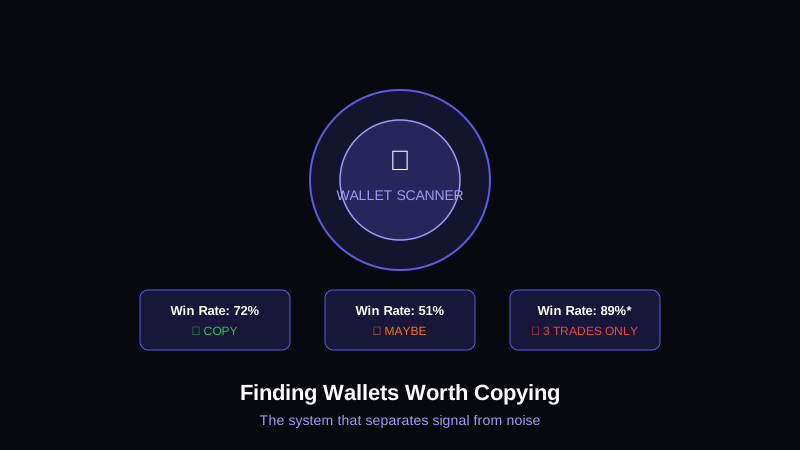
Most People Copy Trade Polymarket Wrong
Here's the uncomfortable truth about copy trading on Polymarket - most people who try it lose money. Not because copy trading doesn't work, but because they pick the wrong wallets to follow.
They see a wallet with a huge profit number, hit "follow," and wonder why they're bleeding cash two weeks later. The problem isn't the strategy. The problem is the selection process.
If you want to copy trade Polymarket profitably, you need a system for finding wallets that are actually worth copying. Not wallets that got lucky once. Not wallets that look impressive on the surface. Wallets with a real, repeatable edge.
This post is that system.
Step 1: Ignore Total Profit (Seriously)
The first thing most people look at when evaluating a Polymarket wallet to copy trade is total profit. It's the biggest number on the screen. It feels important.
It's also the most misleading metric in copy trading prediction markets.
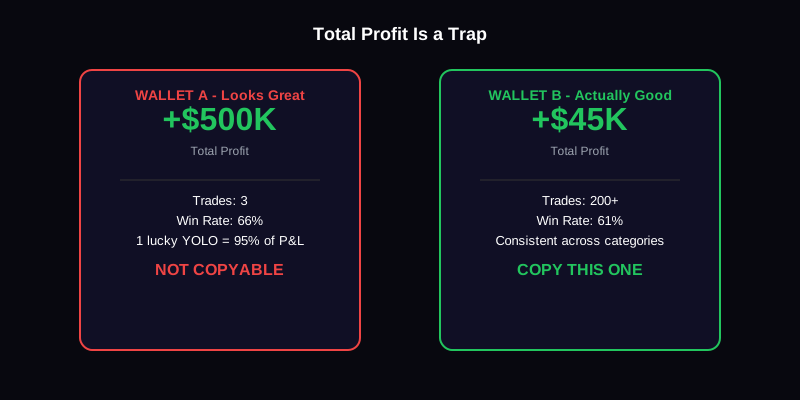
Here's why. A wallet could show $500K in total profit, but that number might come from a single massive bet on a market like "US strikes Iran by March 15" (currently at 59% on Polymarket) that happened to hit. That's not skill. That's a coin flip with a big bankroll.
When you're looking for the best Polymarket wallets to copy, what you actually want is consistency. A wallet that makes $2K across 200 trades is infinitely more copy-worthy than one that made $500K on a single YOLO.
The metrics that actually matter for copy trading:
- Win rate across 50+ resolved markets - anything less is too small a sample
- Average return per trade - not total return, per-trade return
- Drawdown history - how bad did it get during losing streaks?
- Trade frequency - can you actually keep up with their pace?
Step 2: Filter by Market Category
Not all Polymarket wallets trade the same types of markets. And this matters way more for copy trading than most people realize.
Some wallets crush it in political markets - things like the Texas Democratic Senate Primary (where Talarico is sitting at 68%) or geopolitical markets like the Iran strike timelines. Other wallets specialize in crypto markets, sports, or culture.
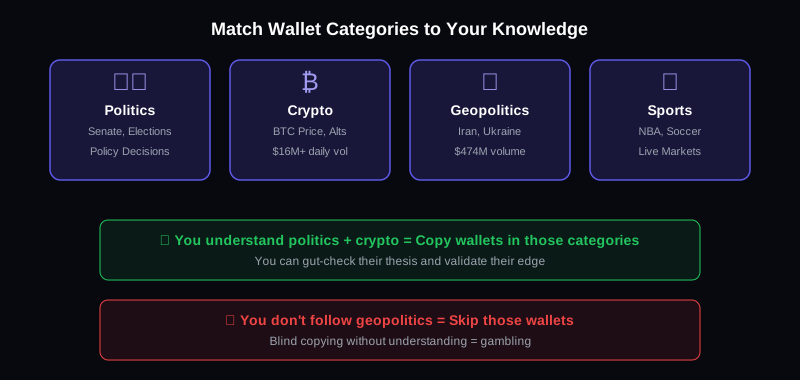
Here's the copy trading strategy that works: only copy wallets in categories you can verify.
If you follow a political specialist and they take a position, you should be able to gut-check their thesis. If you're copying a crypto wallet and they load up on a BTC position (the 5-minute BTC markets on Polymarket see $16M+ in daily volume), you should understand why.
Copy trading on Polymarket isn't about blindly following. It's about finding someone whose analysis you can validate and whose edge makes sense to you.
The Category Matching Framework
Before you copy trade any Polymarket wallet, ask yourself:
- What categories do they trade? Check their last 20 trades.
- Do I understand those categories? If not, skip this wallet.
- Is their edge logical? Political insiders have political edges. Crypto natives have crypto edges. If a wallet seems to dominate every category equally, something's off.
- Does the category have enough liquidity? Low-liquidity markets mean your copy trades will move the price against you.
Step 3: Check Trade Timing and Slippage Risk
This is the step that separates amateur copy traders from profitable ones on Polymarket.
When you copy trade, you're always entering after the wallet you're following. If they buy "Yes" on a market at 53 cents and the price moves to 57 cents before you can follow, you just gave up 4 cents of edge. On a market that resolves at $1, that's the difference between a 88% return and a 75% return.
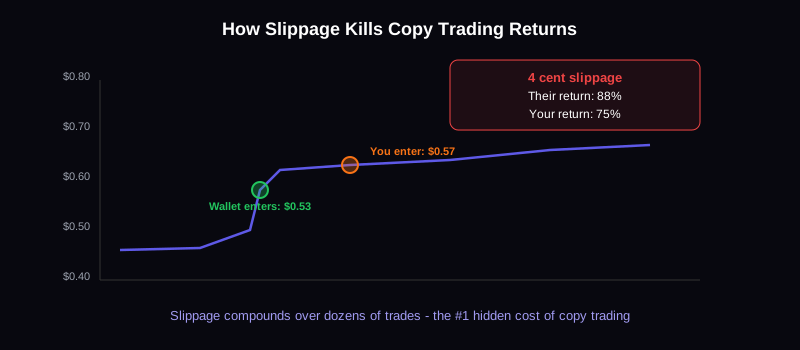
The best Polymarket wallets to copy trade have these timing characteristics:
- They trade in liquid markets - high volume markets like the Iran strikes ($474M volume) have enough depth that your follow-up trade won't move the price much
- They don't front-run news - wallets that trade milliseconds after breaking news are impossible to copy profitably
- They build positions gradually - wallets that enter over hours or days give you time to follow
- They trade during your waking hours - if you can't execute within a few hours of their trade, your edge disappears
How to Measure Slippage Before You Commit
Here's a practical polymarket copy trading strategy for testing slippage:
- Pick 3-5 wallets you're considering copying
- Paper trade their next 10 positions each
- Record the price when they entered vs. when you would have entered
- If the average slippage is more than 3-5 cents, that wallet trades too fast for you to copy
Step 4: Watch for Red Flags
Some Polymarket wallets look great on paper but are terrible to copy trade. Here's what to watch out for.
The Hedger - This wallet takes positions on both sides of correlated markets. Their P&L looks smooth, but when you copy only the trades you can see, you're getting one side of a hedged position. Dangerous.
The Insider - Wallets that consistently enter positions minutes before major news breaks. Their returns are real, but you'll never copy them fast enough. Their edge is information speed, and by definition, you can't copy speed.
The Whale Manipulator - Large wallets that move markets with their entries, then exit when retail follows. If a wallet's entries consistently cause 5%+ price moves, be very careful. You might be their exit liquidity.
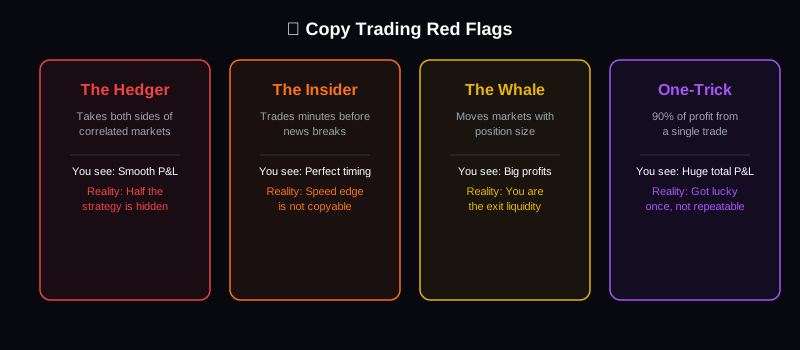
The One-Trick Pony - A wallet with 90% of their profit from a single trade. Even if they're brilliant, you can't copy trade a sample size of one. Look for wallets with profits distributed across many positions.
Step 5: Build a Copy Trading Portfolio
The final piece of the polymarket copy trading puzzle - don't just copy one wallet. Build a portfolio.
The smartest copy traders on Polymarket follow 3-5 wallets, each specializing in different market categories. One might focus on politics, another on crypto prices, another on geopolitical events.
This does two things:
- Diversifies your risk - if one wallet has a bad month, others can offset it
- Increases your opportunity set - more wallets means more trades to potentially follow
Here's how to structure your copy trading portfolio:
- 2-3 "core" wallets - high win rate, moderate frequency, categories you understand well
- 1-2 "satellite" wallets - higher risk/reward, maybe less consistent but bigger when they hit
- Rebalance monthly - drop wallets that underperform, add new ones you've been paper trading
The Copy Trading Shortcut
Look, finding and tracking Polymarket wallets manually is a grind. You're checking on-chain data, calculating win rates, monitoring for new trades, and trying to execute before slippage eats your edge.
That's exactly why tools like Ratio exist. Instead of spending hours on wallet analysis, you can see what top traders are doing and follow their moves - all from your phone. Available at ratio.you.
The wallets are out there. The edge is real. You just need the right system to find them - and the discipline to stick with it.
Quick Recap: Your Wallet Selection Checklist
Before you copy trade any Polymarket wallet, run through this:
- [ ] Win rate over 50+ resolved markets (not just total profit)
- [ ] Consistent returns, not one big lucky trade
- [ ] Trades in categories you understand
- [ ] Trades in liquid markets (minimal slippage risk)
- [ ] No red flags (hedging, insider timing, market manipulation)
- [ ] You've paper traded them for at least 10 positions
- [ ] They fit into your broader copy trading portfolio
Follow this system, and you'll be miles ahead of the 90% of copy traders who just chase the biggest profit numbers. The best polymarket wallets to copy aren't the flashiest - they're the most consistent.
Get Started
Ready to start copy trading?
Download Ratio and follow the best traders on Polymarket. Available on iOS and Android.