
Polymarket Alternatives: The Best Prediction Market Apps in 2026 (Honest Comparison)
A no-BS comparison of every Polymarket alternative worth knowing about in 2026. We cover Kalshi, Polycule, Polygun, Kreo, Stand.trade, and Ratio with honest pros and cons.
Polymarket is the biggest prediction market platform in the world. That's not up for debate. With hundreds of millions in monthly volume, markets on everything from the NCAA Tournament to SpaceX's IPO valuation, and a user base that's grown massively since 2024, it's the default.
But "biggest" doesn't mean "best for everyone." Polymarket has real limitations. The interface is intimidating for new users. There's no built-in social layer. Copy trading doesn't exist natively. And depending on where you live, regulatory access can be complicated.
So what are the actual alternatives? Not theoretical ones. Real platforms that real people use in 2026. Let's break them down honestly.
First: What Makes a Good Prediction Market App?
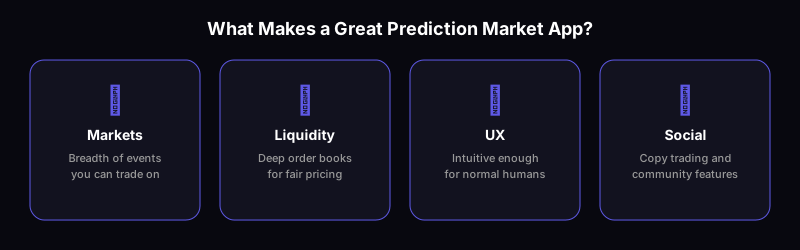
Before comparing platforms, let's establish what actually matters. A prediction market app needs to nail four things:
Market selection. Can you trade on the things you care about? Politics, sports, crypto, tech, culture? The more markets available, the more opportunities you have.
Liquidity. Having a market doesn't matter if nobody's trading it. Thin order books mean bad prices and slippage. You want deep liquidity so you can enter and exit positions without moving the market.
User experience. Can you actually figure out how to use it? This sounds basic, but most prediction market platforms were built by crypto developers for crypto developers. Regular people bounce within minutes.
Social and copy trading features. This is the emerging battleground. The ability to see what other traders are doing, follow successful wallets, and learn from the community. It's what separates a trading tool from a trading experience.
The Platforms: Honest Reviews
Polymarket
What it is: The incumbent. Decentralized prediction market built on Polygon.
Pros:
- Unmatched liquidity and market selection
- On-chain transparency (every trade is verifiable)
- Active community and creator ecosystem
- New markets pop up for breaking events within hours
Cons:
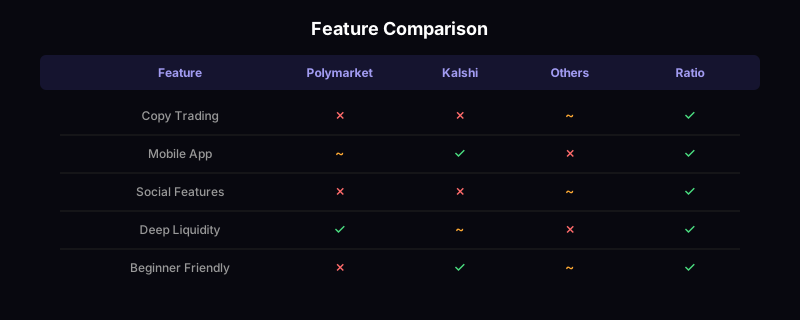
- No native mobile app that matches modern UX standards
- No built-in copy trading or social features
- Steep learning curve for non-crypto users
- Wallet management and USDC bridging confuse beginners
- Regulatory gray area in the US
Best for: Experienced traders who want maximum market access and don't mind a rough interface.
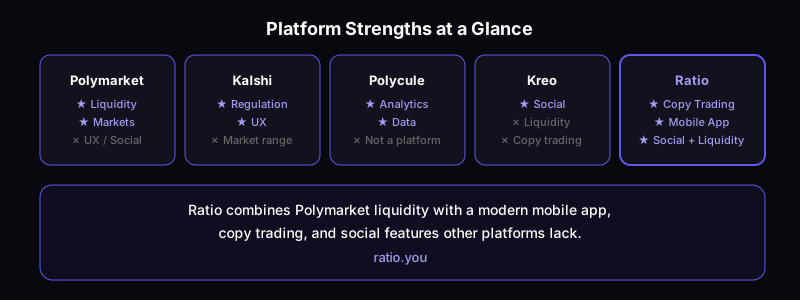
Polymarket is the Amazon of prediction markets. It has everything, but navigating it can feel like work. If you already know your way around crypto wallets and DEX interfaces, it's the obvious choice for raw market access.
Kalshi
What it is: CFTC-regulated prediction market for US users.
Pros:
- Fully regulated in the US (legal clarity)
- Clean, professional interface
- Direct bank deposits (no crypto required)
- Expanding market selection
Cons:
- Significantly less market variety than Polymarket
- Lower liquidity on most markets
- No copy trading or social features
- Fee structure can eat into returns on small trades
- Some popular markets (especially political ones) still restricted
Best for: US traders who want regulatory peace of mind and don't mind fewer options.
Kalshi took the "do it legally" route, which is admirable. But regulation comes with limitations. You won't find the same breadth of quirky, fast-moving markets you get on Polymarket. It's more buttoned-up, which is either a pro or con depending on what you're looking for.
Polycule
What it is: Analytics and social layer for Polymarket traders.
Pros:
- Excellent wallet analytics and performance tracking
- Leaderboards showing top performers
- Portfolio visualization tools
- Community discussion features
Cons:
- Not a trading platform itself (you still trade on Polymarket)
- No automated copy trading
- Can feel like a lot of data without clear action steps
- Requires existing Polymarket knowledge
Best for: Data-oriented traders who want to research wallets before manually copying their trades on Polymarket.
Polycule is genuinely useful if you're deep in the Polymarket ecosystem. Think of it as the Bloomberg terminal for prediction markets. The problem is, it's a research tool, not a trading tool. You still have to go to Polymarket and execute everything yourself.
Polygun
What it is: Polymarket wallet tracker and analytics platform.
Pros:
- Detailed wallet tracking across Polymarket
- Historical performance data
- Market-specific analytics
Cons:
- Interface is built for power users
- No mobile app
- No copy trading functionality
- Steep learning curve
- Limited community features
Best for: Advanced users who want granular data on specific Polymarket wallets.
Polygun does one thing (wallet tracking) and does it okay. But if you're not already a Polymarket power user, you'll spend more time figuring out the tool than actually using it. There's no onramp for beginners.
Kreo
What it is: Social prediction market platform with community features.
Pros:
- Social-first design with user profiles
- Growing community
- Some copy trading capabilities
- Cleaner UX than raw Polymarket
Cons:
- Smaller market selection
- Lower liquidity than Polymarket
- Copy trading features still basic
- Newer platform with less track record
Best for: Social traders who prioritize community over maximum market access.
Kreo gets the social aspect partly right. You can see what other users are trading, there are profile pages, and the community vibe is there. But the copy trading isn't sophisticated enough yet, the market selection is thinner, and the liquidity can't match Polymarket.
Stand.trade
What it is: Independent prediction market platform with its own order books.
Pros:
- Clean, modern interface
- Built-in chat and social features
- Fast market creation
Cons:
- Separate from Polymarket (different liquidity pool)
- Much smaller user base and volume
- Limited market variety
- Copy trading not a core feature
Best for: Users who want a self-contained prediction market experience outside the Polymarket ecosystem.
Stand.trade is trying to build their own thing rather than building on top of Polymarket. Respect for the ambition, but in prediction markets, liquidity is everything. Being separate from the largest liquidity pool in the space is a significant disadvantage.
Ratio
What it is: Mobile-first copy trading app for prediction markets.
Pros:
- Purpose-built mobile app (iOS and Android)
- Real copy trading: follow wallets and automatically mirror trades
- Social layer with community, discussion, and shared insights
- Built on Polymarket liquidity (so you get the biggest market selection)
- Beginner-friendly onboarding with easy USDC funding
- Trader profiles with verified performance metrics
- Can filter traders by market category (politics, sports, finance, etc.)
Cons:
- Newer entrant (still building track record)
- Copy trading means you're trusting someone else's judgment
- Dependent on Polymarket for underlying markets
Best for: Anyone who wants the power of Polymarket's markets with a modern app experience and copy trading built in.
Full disclosure: this blog is on the Ratio site. But here's the honest case for why it exists.
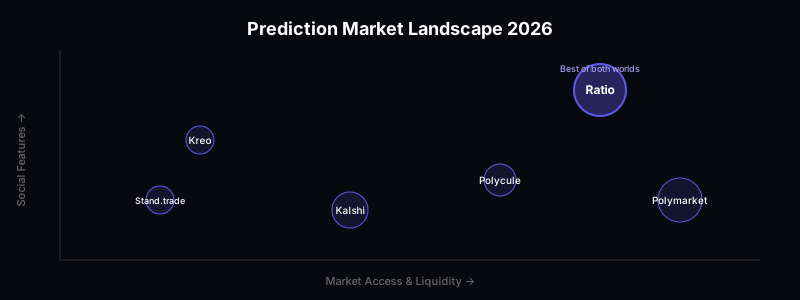
The prediction market space has a UX problem. Polymarket has the liquidity and the markets, but using it feels like work. The analytics tools (Polycule, Polygun) help you research, but you still have to do everything manually. Kalshi is regulated but limited. Kreo and Stand.trade are trying but don't have the scale.
Ratio bridges the gap. It connects to Polymarket's liquidity, so you're not giving up market access. But it wraps everything in a mobile app with copy trading as a first-class feature. You can find traders who are actually profitable, see exactly what they're doing, and mirror their positions automatically.
The social layer is the key differentiator. It's not just about data. It's about community. You can discuss markets, share insights, and learn from other traders. Think of it as what would happen if Robinhood, eToro's copy trading, and Polymarket had a baby.
The Real Question: What Do You Actually Need?
Here's a framework for picking the right platform:
"I want maximum market access and I know what I'm doing."
Use Polymarket directly. It has the liquidity and the markets. Pair it with Polycule for research if you want analytics.
"I'm in the US and I need regulatory clarity."
Start with Kalshi. You'll have fewer markets but zero legal ambiguity.
"I want to trade prediction markets but I don't have time to research everything myself."
This is where Ratio shines. Copy trading lets you leverage other people's expertise while still maintaining control over your portfolio.
"I just want to check it out casually with friends."
Ratio again. The social layer makes it fun rather than intimidating. You can follow friends, compete on leaderboards, and learn together.
"I'm a data nerd who wants to build my own models."
Polycule or Polygun for research, Polymarket for execution.
Where Prediction Markets Are Heading
The prediction market space in 2026 is where stock trading was in 2015. We're past the "is this real?" phase and into the "which tool should I use?" phase. That's a sign of maturity.
The next wave isn't about more markets or better odds. It's about accessibility. The platforms that win will be the ones that make prediction market trading feel as natural as scrolling Instagram or checking your stock portfolio.
Copy trading is the bridge. It takes the collective intelligence of thousands of experienced prediction market traders and makes it accessible to everyone. Instead of spending months learning order books, resolution criteria, and wallet analysis, you can start by following people who've already put in that work.
That's the bet Ratio is making. Not that prediction markets need better data (they have it). Not that they need more markets (Polymarket handles that). They need a better way to participate. A social, mobile-first experience that makes the whole thing feel less like DeFi and more like investing with friends.
Getting Started
If you've been prediction-market-curious but haven't jumped in yet, here's the move:
- Download Ratio and create an account
- Browse the top traders across different categories
- Follow 2-3 traders whose style matches your interests
- Fund your account with a small amount (even $25 works)
- Enable copy trading and watch how your portfolio builds
You'll learn more in a week of copy trading than in a month of reading guides. And you'll have access to every market on Polymarket without needing to figure out Polygon bridges, MetaMask wallets, or USDC swaps.
The prediction market revolution is happening. The only question is whether you'll participate from the sidelines or get in the game.
Get Started
Ready to start copy trading?
Download Ratio and follow the best traders on Polymarket. Available on iOS and Android.