
How To Filter Polymarket Wallets Like a Pro Copy Trader (5 Signals That Actually Matter)
Stop copy trading random Polymarket wallets. Learn the 5 signals professional copy traders use to filter wallets, avoid traps, and build a copy trading strategy that consistently profits on prediction markets.
Most Polymarket Copy Traders Are Doing It Wrong
Here is an uncomfortable truth: the majority of people who try to copy trade on Polymarket lose money. Not because copy trading does not work. It absolutely does. But because they skip the most important step.
They never learn how to filter wallets.
They find a wallet with a big profit number, start copy trading it, and three weeks later wonder why they are down 30%. The wallet had one lucky bet on a Trump market. Or it was wash trading. Or its edge disappeared two months ago.
Professional copy traders on Polymarket do not just find wallets. They filter them obsessively. And the difference between a good filter and no filter is the difference between consistent profits and random gambling.
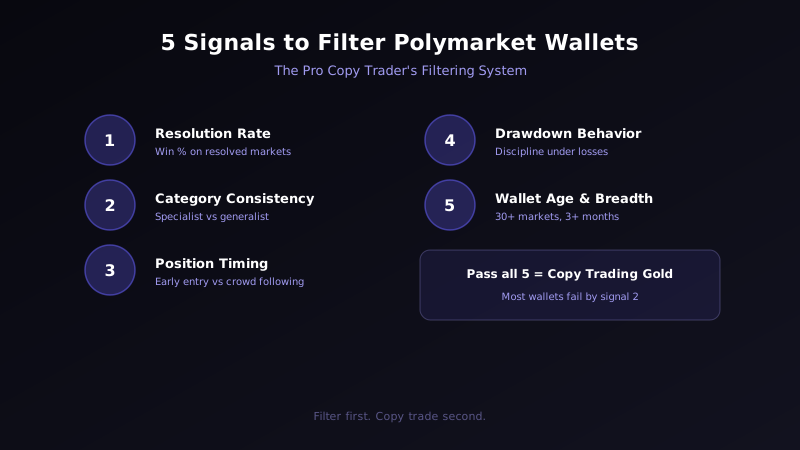
Let me show you the 5 signals that actually matter.
Signal 1: Resolution Rate Over Raw Profit
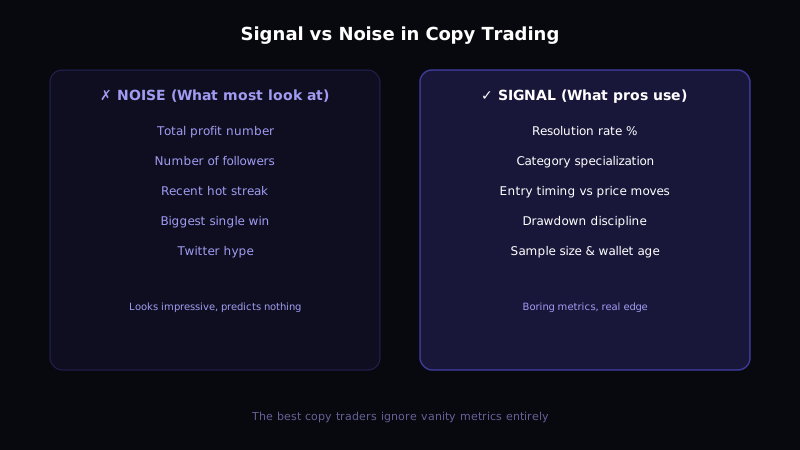
The first thing most people look at when evaluating a wallet to copy trade is total profit. That is exactly the wrong metric to start with.
Why? Because a wallet can show $100,000 in profit from a single massive bet that happened to hit. That tells you nothing about whether you should copy trade them going forward.
Resolution rate is the copy trading metric that matters. This is the percentage of resolved markets where the wallet ended up on the winning side.
Here is how to think about it:
- Below 55% resolution rate: Not worth copy trading. You could flip a coin.
- 55-65% resolution rate: Interesting. Worth monitoring for copy trading.
- Above 65% resolution rate: Strong copy trading candidate. Dig deeper.
Right now, with markets like Oscars 2026 predictions, Champions League outcomes, and crude oil price targets all resolving regularly, there is a rich dataset to evaluate. A wallet that has been copy-trade-worthy will have dozens of resolved positions you can audit.
Ratio calculates resolution rates automatically, so you do not need to manually track every market a wallet has touched.
Signal 2: Category Consistency
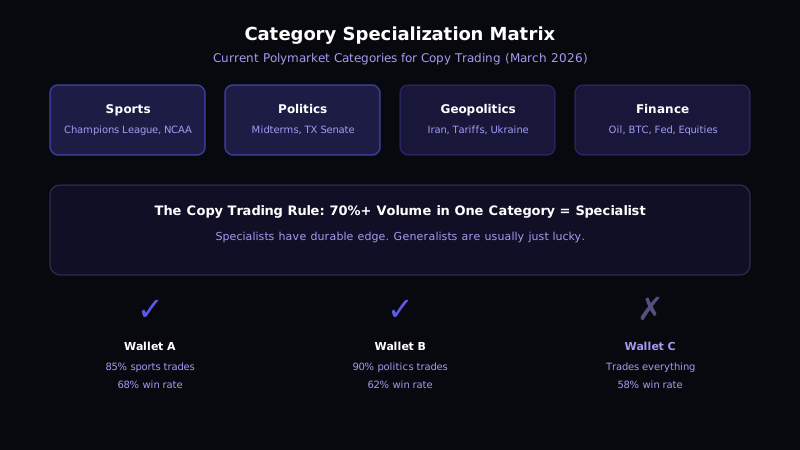
The second copy trading filter is category focus. Polymarket has markets spanning crypto, sports, politics, geopolitics, entertainment, and more. The wallets you want to copy trade have deep expertise in specific categories.
Look at the current Polymarket landscape:
- Sports: Champions League ($279M volume), conference tournaments
- Politics: Midterm primaries, Texas Senate, government shutdown
- Geopolitics: Iran tensions, tariffs, Ukraine, China
- Entertainment: Oscars 2026
- Finance: Crude oil, BTC movements, equities, Fed decisions
A wallet that is profitable across ALL of these categories is either a genius or (more likely) on a lucky streak. A wallet that dominates Champions League markets with a 70% hit rate? That is copy trading gold.
The copy trading principle: narrow expertise beats broad guessing.
Signal 3: Position Timing Relative to Market Movement
This is the signal that separates copy trading beginners from pros. It is not just WHAT a wallet buys. It is WHEN.
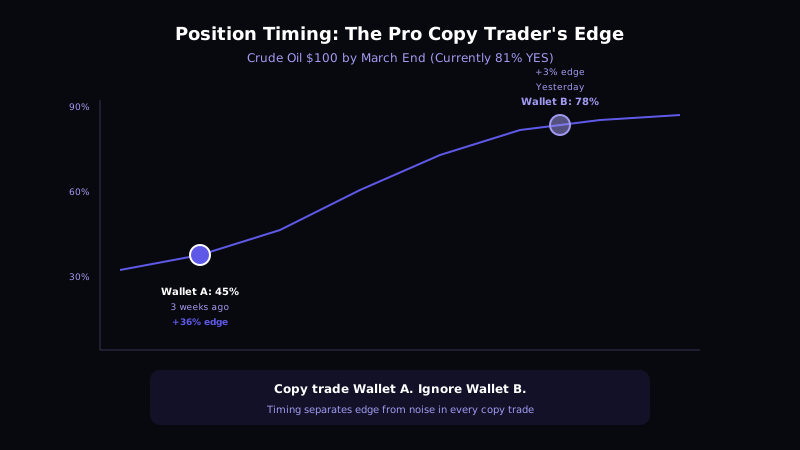
Imagine two wallets both made money on "Will crude oil hit $100 by end of March?" (currently at 81% YES on Polymarket):
- Wallet A bought YES at 45% three weeks ago. They saw the setup early.
- Wallet B bought YES at 78% yesterday. They followed the crowd.
Both profitable. But only Wallet A has copy trading edge. Wallet B just captured 3 cents of value on an obvious trade.
When you evaluate wallets to copy trade on Polymarket, you need to see their entry timing. Did they get in before the move, or after?
Ratio shows you this timing data visually. You can see exactly when a wallet entered relative to the price chart. It turns copy trading from guesswork into data analysis.
How to Use Timing Data in Your Copy Trading
Once you identify wallets that consistently enter early:
- Set up alerts for when those wallets take new positions
- Act within the first few hours of their entry
- Do not wait for confirmation from other wallets. Early copy trading captures the most value
- Track the spread between their entry and yours. If it is consistently more than 5%, you are too slow
Signal 4: Drawdown Behavior
Every wallet has losing streaks. What matters for copy trading is how the wallet behaves during drawdowns.
There are two types of wallets you will encounter:
Type A: The Disciplined Trader. During a losing streak, they reduce position sizes, stick to their category, and wait for high-conviction setups. These wallets recover. They are excellent to copy trade long-term.
Type B: The Tilt Trader. After losses, they increase size, chase markets outside their expertise, and start revenge trading. A sports specialist suddenly buying Iran geopolitics markets at random. These wallets blow up. Copy trading them will blow you up too.
You can spot the difference by looking at a wallet's history after their worst losing periods. Did they:
- Maintain consistent position sizes? (Good for copy trading)
- Stay in their category? (Good for copy trading)
- Increase bet sizes dramatically? (Run away)
- Start trading random new categories? (Definitely run away)
This drawdown analysis is critical for copy trading on Polymarket because prediction markets can have extended periods where even smart traders are wrong. The 2026 midterm markets, for example, will be volatile for months. You need to copy trade wallets that can weather that storm.
Signal 5: Wallet Age and Market Breadth
The final copy trading filter is deceptively simple but eliminates 80% of bad candidates.
How long has the wallet been active, and across how many markets?
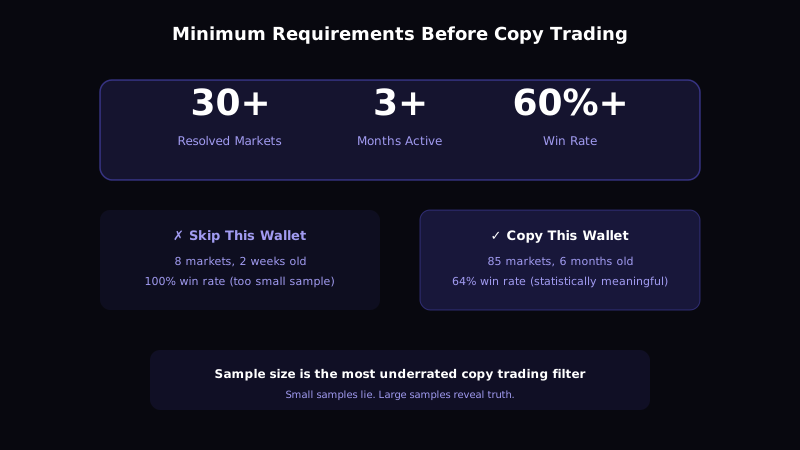
A wallet that has been trading Polymarket for 6+ months across 50+ markets and maintains a strong resolution rate is fundamentally different from a wallet that started last month and hit 3 bets in a row.
The math of copy trading requires sample size. Here is the minimum you should require:
- At least 30 resolved markets before you start copy trading a wallet
- At least 3 months of activity to see how they handle different market conditions
- Activity across multiple market cycles (not just one trending topic)
With Polymarket's current volume across Champions League, crude oil, BTC, midterms, and Oscars, there are plenty of markets resolving regularly. Wallets that have been active through all of this have a meaningful track record you can evaluate for copy trading.
Putting It All Together: Your Copy Trading Filter System
Here is the exact process to filter Polymarket wallets for copy trading:
Step 1: Start with wallets that have 30+ resolved markets and 3+ months of history. This eliminates most noise.
Step 2: Check resolution rate. Below 55%? Move on. Above 60%? Keep going.
Step 3: Verify category focus. Are 70%+ of their trades in one or two categories? Good. Scattered everywhere? Skip.
Step 4: Analyze timing. Are they entering positions before major moves or chasing after? Use Ratio to visualize this.
Step 5: Check drawdown behavior. Look at their worst month. Did they stay disciplined or go on tilt?
If a wallet passes all 5 filters, you have found a copy trading candidate worth your capital.
The Copy Trading Stack
Your ideal Polymarket copy trading portfolio looks like this:
- 2 wallets specializing in sports/entertainment markets
- 1-2 wallets focused on politics/geopolitics
- 1 wallet that trades finance/commodities (crude oil, Fed, equities)
This gives you diversified copy trading exposure across Polymarket's major categories. When sports markets are quiet, your politics copy trades keep working. When geopolitics heats up (like the current Iran situation), you have a specialist.
Ratio lets you build exactly this kind of multi-wallet copy trading portfolio, with real-time tracking and automated alerts when your followed wallets make moves.
Stop copy trading random wallets. Start filtering like a pro. The five signals are right there. Use them.
Get Started
Ready to start copy trading?
Download Ratio and follow the best traders on Polymarket. Available on iOS and Android.