
The Polymarket Copy Trading Portfolio: How To Build a Diversified Wallet Watchlist That Actually Makes Money
Learn how to construct a copy trading portfolio on Polymarket by combining multiple whale wallets across categories. A step-by-step polymarket copy trading strategy for consistent returns.
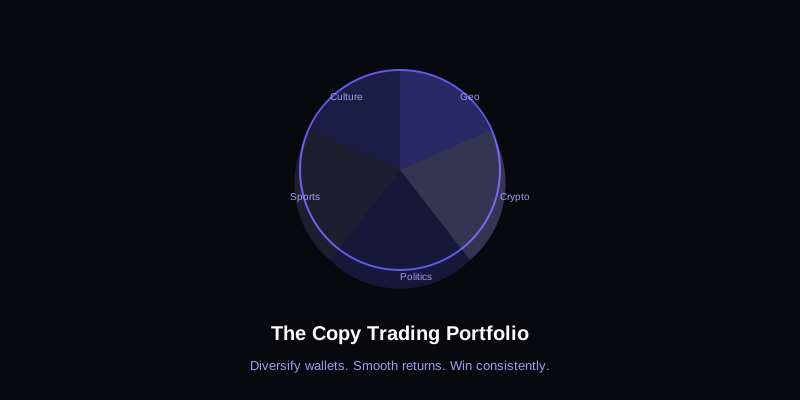
The Single Wallet Trap
Most people who try to copy trade on Polymarket make the same mistake: they find one profitable wallet and go all-in on copying it.
It works great. Until it does not.
That one wallet has a bad week, takes a concentrated position in a market they misread, or just goes inactive. Suddenly your entire polymarket copy trading strategy is dead in the water.
The fix is obvious when you think about it: you would never put your entire stock portfolio into one company. So why would you copy trade from just one wallet?
Portfolio Thinking for Copy Trading
The best polymarket wallets to copy are not individually perfect. They are perfect in combination. This is the mental shift that turns copy trading from gambling into a real strategy.
Think of each wallet you copy as a "fund" in your portfolio. Each fund has:
- A specialty (crypto, politics, sports, entertainment)
- A risk profile (conservative scalper vs. aggressive swing trader)
- A track record (win rate, profit factor, consistency)
- Correlation to your other wallets (do they make the same bets?)
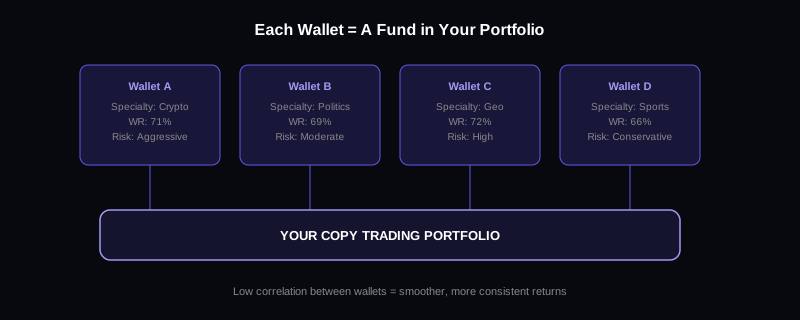
When you combine wallets intentionally, something powerful happens: the losers get diluted by the winners, and your overall returns smooth out. This is the same reason index funds beat most stock pickers.
Step 1: Define Your Category Buckets
Polymarket right now has markets across wildly different categories. To copy trade polymarket with a portfolio approach, start by defining 4-5 category buckets:
Bucket 1: Geopolitics and Conflict
Iran regime change (32%, $12M volume), US military intervention, tariff escalation, global elections. These are high-volatility, information-heavy markets.
Bucket 2: Crypto and Finance
BTC 5-minute markets ($43M volume), ETH price targets, Fed rate decisions, IPO markets. Fast-moving, data-driven.
Bucket 3: Entertainment and Culture
Oscars 2026 (Best Picture "One Battle After Another" at 74%), movie box office, celebrity markets. Less volatile, more predictable.
Bucket 4: Politics (Domestic)
Midterms, Texas Senate, government shutdown, Trump-related markets. Medium volatility, high liquidity.
Bucket 5: Sports
Live sports markets, season outcomes, tournament brackets. High frequency, lots of data.
Allocating Across Buckets
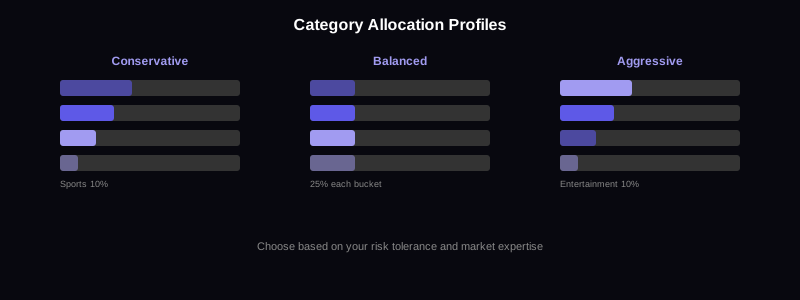
Your polymarket copy trading strategy should allocate based on your risk tolerance:
- Conservative: 40% politics/entertainment, 30% geopolitics, 20% crypto, 10% sports
- Balanced: 25% across each active bucket
- Aggressive: 40% crypto, 30% geopolitics, 20% politics, 10% entertainment
Step 2: Select 2-3 Wallets Per Bucket
This is where Ratio becomes essential. For each category bucket, you want to identify wallets that:
- Have a 65%+ win rate in that specific category
- Have been active in the last 30 days (dormant wallets are useless to copy)
- Show consistent sizing (not one big lucky bet)
- Trade frequently enough to generate signals (at least 3-5 trades per month in category)
Why 2-3 per bucket? Because even within a category, wallets disagree. When two of your three crypto wallets buy the same position, that is a stronger signal than one wallet alone.
Wallet Selection Criteria Scorecard
For each potential wallet, score them 1-5 on:
| Criteria | What to look for |
|----------|-----------------|
| Win Rate | 65%+ in target category |
| Consistency | Profitable in 4+ of last 6 months |
| Activity | 3+ trades per month |
| Sizing | Consistent position sizes, no single mega-bets |
| Transparency | Clear entry/exit patterns you can follow |
Total score of 20+ out of 25? Add them to your copy trading portfolio.
Step 3: Set Copy Parameters Per Wallet
Not every wallet in your portfolio deserves the same allocation. Your polymarket copy trading strategy needs per-wallet parameters:
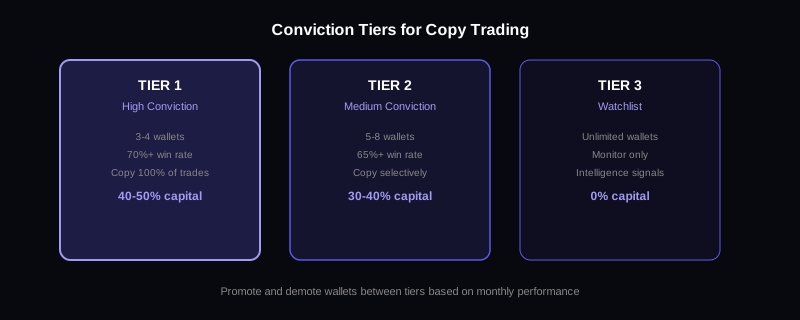
Conviction Tiers
Tier 1 - High Conviction (your best 3-4 wallets):
- Copy 100% of their trades in their specialty
- Allocate 40-50% of your total copy trading capital
- These are wallets with 70%+ win rates and 6+ months of consistency
Tier 2 - Medium Conviction (5-8 wallets):
- Copy selectively (only when they trade in their strong category)
- Allocate 30-40% of capital
- Good track records but less history or more variance
Tier 3 - Watchlist (unlimited):
- Do not copy automatically
- Monitor for signals and intelligence
- Potential future Tier 1 or 2 additions
Position Size Scaling
When a Tier 1 wallet puts $50,000 into a market, you probably should not match that dollar-for-dollar. Instead, set a scaling factor:
- Calculate what percentage of their portfolio the trade represents
- Apply that same percentage to your allocated capital for that wallet
- Cap any single copy trade at a maximum you set in advance
This prevents a whale's large absolute position from blowing up your smaller portfolio.
Step 4: Monitor Correlation
The silent killer of copy trading portfolios is correlation. If all your wallets are making the same bets, you do not have diversification. You have concentration with extra steps.
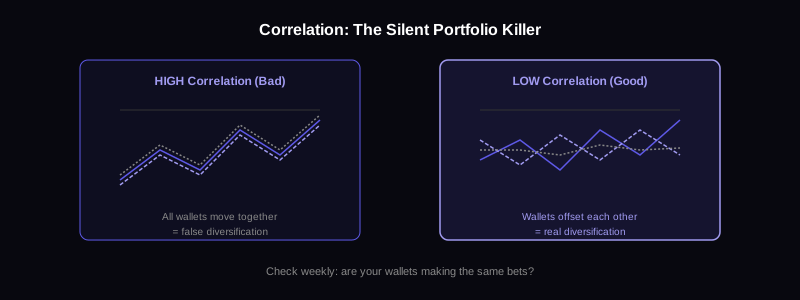
How To Spot Dangerous Correlation
Check weekly:
- Are multiple wallets entering the same market on the same side?
- Do your geopolitics wallets overlap with your politics wallets on the same events?
- When one wallet loses, do others lose simultaneously?
Right now on Polymarket, the Iran markets and tariff markets are somewhat correlated (both tied to US foreign policy under Trump). If your geopolitics wallets and your finance wallets are all taking positions driven by the same underlying factor, you are more concentrated than you think.
The Correlation Fix
When you spot high correlation:
- Reduce position sizes across the correlated wallets
- Add a wallet that trades uncorrelated categories (like sports or entertainment)
- Consider dropping one of the correlated wallets in favor of a contrarian approach
Step 5: Rebalance Monthly
Your copy trading portfolio is not set-and-forget. Markets shift, wallets go cold, and new opportunities emerge. Here is your monthly review checklist:
Performance Review:
- Which wallets are performing above/below expectations?
- Has any wallet's win rate dropped below 60%?
- Are any wallets inactive (no trades in 2+ weeks)?
Allocation Adjustment:
- Promote strong Tier 2 wallets to Tier 1
- Demote underperforming Tier 1 wallets
- Drop wallets with deteriorating track records
Category Rebalancing:
- Are you overweight in any category because it had good returns?
- Are there new hot categories on Polymarket you should add exposure to?
- Has volume shifted away from any of your current buckets?
Using Ratio's wallet analytics makes this monthly review take minutes instead of hours. You can see performance breakdowns, category splits, and recent activity all in one place.
Real Example: A Balanced Copy Trading Portfolio
Here is what a well-constructed polymarket copy trading portfolio might look like:
Geopolitics (25% allocation):
- Wallet A: Iran/Middle East specialist, 72% win rate, Tier 1
- Wallet B: Elections specialist, 68% win rate, Tier 2
Crypto (25% allocation):
- Wallet C: BTC/ETH markets, 65% win rate, Tier 2
- Wallet D: DeFi/crypto events, 71% win rate, Tier 1
Politics (25% allocation):
- Wallet E: US domestic politics, 69% win rate, Tier 1
- Wallet F: Global elections, 66% win rate, Tier 2
Entertainment/Other (25% allocation):
- Wallet G: Awards/culture, 74% win rate, Tier 1
- Wallet H: Sports, 63% win rate, Tier 2
That is 8 wallets across 4 categories, with a mix of conviction tiers. When one category has a bad week, the others can compensate. When one wallet goes cold, you have a backup in the same category.
The Compound Effect of Portfolio Copy Trading
Here is what most people miss about building a polymarket copy trading portfolio: the compound effect.
A single wallet might have a 65% win rate. That means 35% of the time, you lose. Over a bad stretch, that can feel terrible.
But a portfolio of 8 wallets, each with 65% win rates and low correlation? Your probability of having a losing month drops dramatically. The math works the same way it does for any diversified portfolio - uncorrelated return streams smooth out volatility.
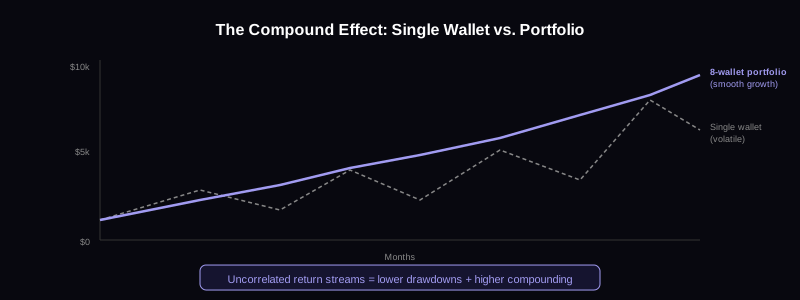
This is why institutional traders never rely on one strategy. And it is why your copy trading should never rely on one wallet.
Getting Started Today
- Open Ratio and start screening wallets by category performance
- Pick your 4-5 category buckets based on what is active on Polymarket right now
- Select 2-3 wallets per bucket using the scorecard criteria above
- Set your allocation and copy parameters for each wallet tier
- Review correlation to make sure you are genuinely diversified
- Rebalance monthly and keep refining your portfolio
The wallets are out there. The data is transparent. The best polymarket wallets to copy are making money right now across Iran, Oscars, BTC, tariffs, and dozens of other markets. The only question is whether you are going to keep guessing with one wallet or build a real portfolio.
Build the portfolio. Let the whales do the work.
Get Started
Ready to start copy trading?
Download Ratio and follow the best traders on Polymarket. Available on iOS and Android.