
7 Red Flags That a Polymarket Wallet Is NOT Worth Copy Trading
Not every profitable wallet is worth copy trading on Polymarket. Learn the 7 red flags that separate genuinely skilled traders from lucky gamblers, bots, and manipulators so your copy trade polymarket strategy actually works.
Copy Trading the Wrong Wallet Will Wreck You Faster Than Not Copy Trading at All
Copy trading on Polymarket is one of the best strategies for newer traders. You find wallets with proven track records, mirror their positions, and profit from someone else's research and expertise. Simple, right?
Not quite. The uncomfortable truth about copy trading Polymarket is that the wallet you're following matters more than anything else. Follow the right wallet and you look like a genius. Follow the wrong one and you'll lose money faster than if you'd just picked positions randomly.
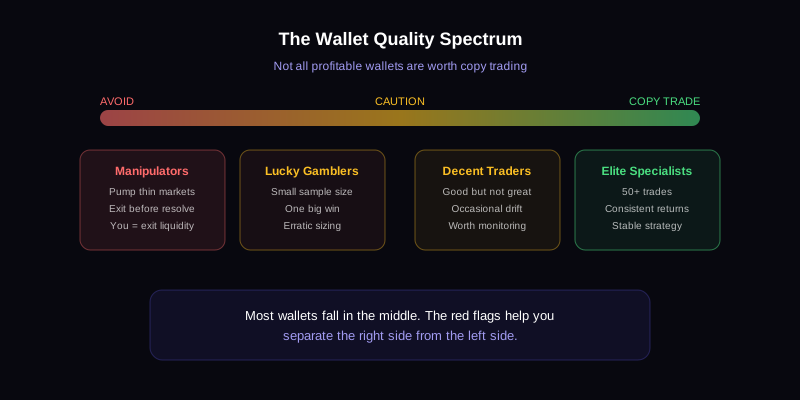
The problem is that "profitable" doesn't always mean "skilled." Some wallets look amazing on the surface but are terrible candidates for copy trading. They might be profitable due to luck, manipulation, or strategies that don't translate to copy trading.
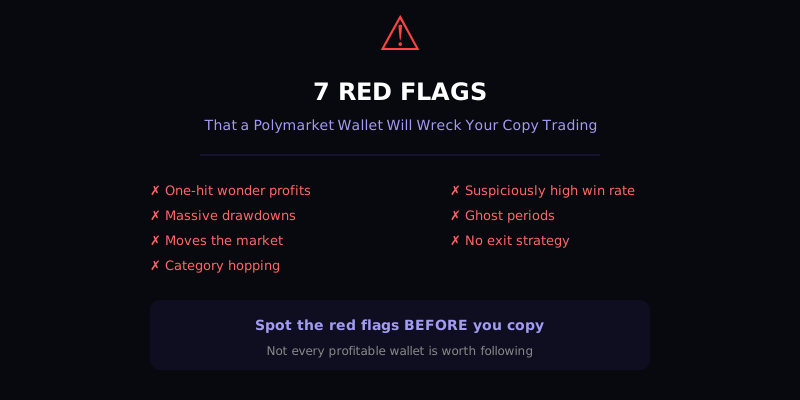
Here are 7 red flags that should make you think twice before you copy trade any Polymarket wallet.
Red Flag #1: Insane Win Rate With Very Few Trades
You're scanning wallets to copy trade and you find one with a 95% win rate. Amazing, right? Then you check the trade count: 12 resolved positions.
This is the single most common trap in Polymarket copy trading. A small sample size makes any win rate meaningless. Someone flipping a coin could go 10/12 just by luck. You need at least 30-50 resolved trades before a win rate tells you anything useful about whether a wallet is worth copy trading.
Here's the math that matters. A trader with a 65% win rate over 200 trades is infinitely more reliable to copy trade than one with a 90% rate over 15 trades. The first has a statistically meaningful track record. The second might just be on a hot streak that ends the moment you start copying.
What to do: Set a minimum trade count filter before you even look at win rates. If you're building a copy trading Polymarket strategy, 50 resolved trades should be your baseline.
Red Flag #2: All Profits Come From One Massive Trade
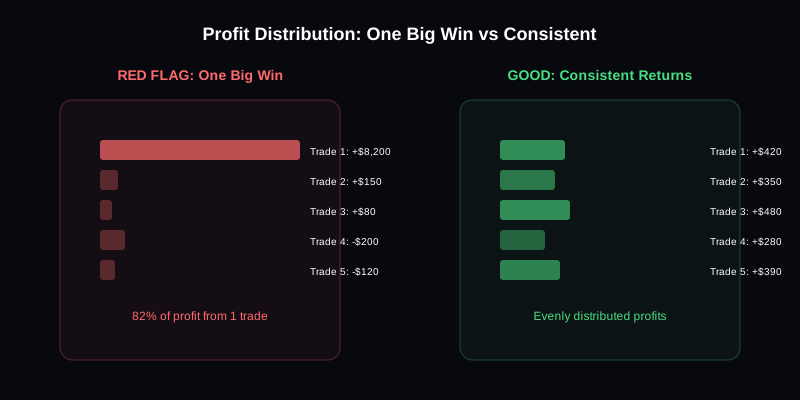
Pull up the PnL breakdown of any wallet you want to copy trade. If 70%+ of their total profits come from a single position, that's a huge red flag.
This happens more than you'd think on Polymarket. A wallet buys a massive position on something like "US forces enter Iran" at 5 cents, it resolves YES, and suddenly they have a six-figure profit. Their overall stats look incredible. But strip out that one trade and they're barely breaking even.
One big win doesn't make someone worth copy trading. It makes them someone who got lucky once on a high-risk position. You can't copy trade luck.
What to do: Look at the distribution of profits, not just the total. The best polymarket wallets to copy have consistent returns across many trades, not a single home run padded by mediocre results.
Red Flag #3: The Wallet Only Buys Heavy Favorites
Some wallets have amazing win rates because they only buy positions priced at 85 cents or higher. They're "predicting" outcomes that the market already considers near-certain.
On the surface, this looks great for copy trading. They win almost every time! But the math doesn't work. When you buy YES at 90 cents, you're risking 90 to make 10. One loss wipes out nine wins. The expected value is often negative or barely positive.
These wallets aren't skilled. They're just harvesting small premiums while taking on massive tail risk. When the upset happens (and it always does eventually), the losses are catastrophic. If you're copy trading this wallet, you eat that loss too.
What to do: Check the average entry price of positions. If a wallet consistently enters above 80 cents, their win rate is inflated by market pricing, not skill. The best copy trade Polymarket opportunities come from wallets that find value at mid-range prices (30-70 cents).
Red Flag #4: Erratic Position Sizing
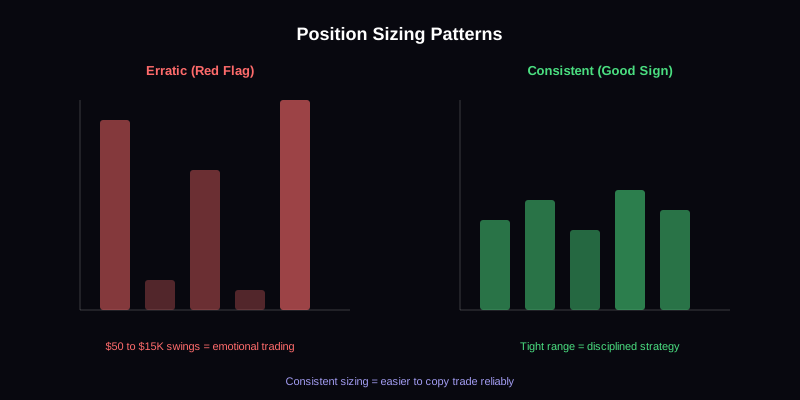
A wallet you're considering for copy trading takes a $500 position, then a $50 position, then a $15,000 position, then $200. The sizing looks random. This is a red flag for copy trading.
Skilled traders who are worth copy trading have relatively consistent position sizing or a clear sizing strategy (like sizing up with conviction). Random sizing suggests emotional trading, which means their wins might be skill but their losses might be tilt.
More importantly, erratic sizing makes it nearly impossible to copy trade effectively. When they put $15K into a position, should you scale that same proportion? What about the $50 trades? Are those throwaway bets or deliberate small positions?
What to do: Before you copy trade any wallet, look at their last 20 positions and note the sizing. If it varies by more than 10x without a clear pattern, that's a wallet that's hard to reliably copy trade.
Red Flag #5: They Trade Markets That Are Hard to Copy
Some Polymarket markets move fast. BTC 5-minute up/down markets, for example, resolve in minutes. By the time you see a wallet's position and try to copy trade it, the market has already moved. You're entering at a worse price, and in fast markets, that spread kills your edge.
This is a structural problem with copy trading. Some strategies are inherently not copyable because they depend on speed of execution, not just direction.
Current trending markets on Polymarket like the BTC 5-minute markets ($42M volume) are perfect examples. A bot or high-frequency trader might profit on these consistently, but that doesn't make them worth copy trading. By the time you see their trade, it's too late.
What to do: Focus your copy trading strategy on markets with longer time horizons. Political outcomes, geopolitical events (like the Iran and Lebanon markets trending right now), tournament winners (UCL, Oscars), and monthly economic outcomes are all much better for copy trading because you have time to enter after seeing the signal.
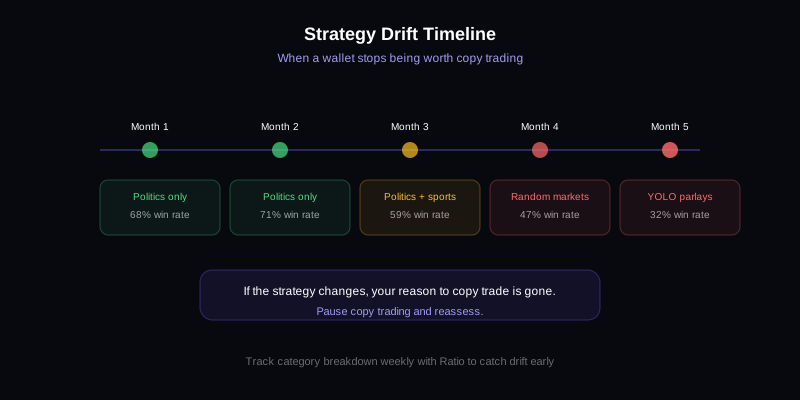
Red Flag #6: Sudden Strategy Changes
You've been copy trading a wallet for a month. They've been making steady, methodical trades on political markets. Then suddenly they dump their entire balance into a parlay on three sports events.
Strategy drift is a major red flag when you're copy trading on Polymarket. People change. They get bored with their edge and start gambling. They see a hot market and FOMO in. They go on tilt after a loss and try to make it back fast.
This is particularly dangerous because the reason you started copy trading them no longer applies. You followed them for their political market expertise, not their sports gambling. But if you have automated copy trading set up, you might mirror the sports bet before you realize what happened.
What to do: Review your copy trading wallets weekly. If a wallet starts trading outside their usual pattern, pause copy trading them until you understand why. Ratio can help you track this by showing you changes in a trader's activity patterns and category breakdown over time.
Red Flag #7: The Wallet Might Be Front-Running or Manipulating
This is the most serious red flag for copy trading on Polymarket. Some wallets accumulate large positions in thin markets, create buzz about the market (on Twitter, Discord, Telegram), wait for followers and copy traders to push the price up, and then sell into the demand.
If you're copy trading this wallet, you're the exit liquidity.
How to spot potential manipulation:
- They take large positions in very low-volume markets
- Shortly after their entry, social media posts appear pumping the same market
- The price spikes after their entry (from copy traders piling in)
- They exit before the market resolves, taking profit from the price movement rather than the outcome
What to do: Be skeptical of wallets that primarily trade in thin, obscure markets. The best polymarket wallets to copy trade in liquid, high-volume markets where manipulation is much harder. Stick to markets with $1M+ in volume for your copy trading strategy.
How to Vet Wallets Before Copy Trading
Now that you know the red flags, here's a quick checklist to run before you add any wallet to your copy trading portfolio:
- Sample size check: 50+ resolved trades minimum
- Profit distribution: No single trade accounts for more than 20% of total PnL
- Entry prices: Average entry between 25-75 cents (showing they find actual value)
- Sizing consistency: Position sizes within a reasonable range
- Market type: Primarily trades markets with multi-day or longer resolution
- Strategy stability: Consistent category focus over the past 2-3 months
- Liquidity: Trades in markets with significant volume
If a wallet passes all seven checks, it's a strong candidate for your copy trading Polymarket strategy. If it fails even two or three, think hard before committing your capital.
The Safe Way to Start Copy Trading Any Wallet
Even after vetting, start small. Allocate no more than 2-3% of your bankroll to copy trading any single new wallet. Track their performance for 2-4 weeks before scaling up. This way, if you missed a red flag, the damage is limited.
The best copy trade Polymarket approach is patient and methodical. Build your wallet roster slowly, vet rigorously, and scale only what's proven.
Tools for Spotting Red Flags
Doing this analysis manually is possible but tedious. Ratio streamlines the entire vetting process by giving you detailed trader profiles with category breakdowns, profit distributions, sizing patterns, and track record depth, all the signals you need to avoid the red flags above.
Whether you use Ratio or your own spreadsheet, the principle is the same: spend more time vetting who you copy trade than deciding what markets to trade. The wallet selection IS your strategy.
The Bottom Line
Copy trading Polymarket is powerful, but only if you're copy trading the right wallets. A beautiful win rate can hide a terrible copy trading candidate. Profits can come from luck, manipulation, or strategies that simply don't work when copied.
Before you mirror a single trade, run it through the red flags. Your future self will thank you.
Get Started
Ready to start copy trading?
Download Ratio and follow the best traders on Polymarket. Available on iOS and Android.