
7 Red Flags That a Polymarket Wallet Will WRECK Your Copy Trading Returns
Not every profitable Polymarket wallet is worth copy trading. Learn the 7 warning signs that a wallet will lose you money - and how to spot them before it's too late.
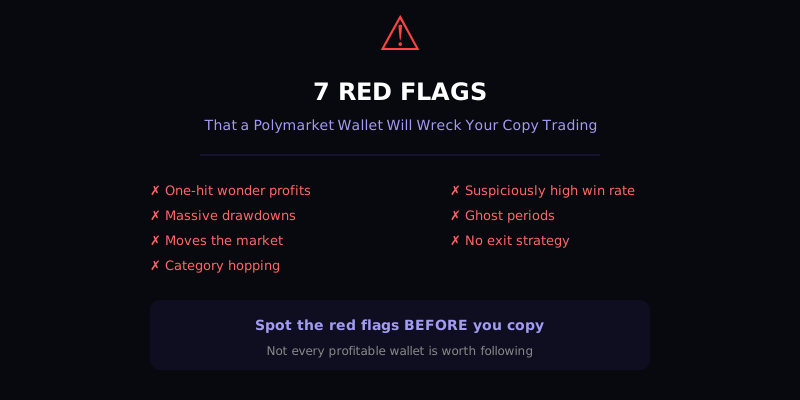
The Hidden Trap in Polymarket Copy Trading
You found a Polymarket wallet with a killer track record. High win rate. Big profits. Looks like free money to copy trade, right?
Not so fast.
Some of the most "successful" wallets on Polymarket are actually copy trading traps. They look great on paper but will absolutely wreck your returns if you follow them. The difference between a profitable copy trading strategy and a money pit often comes down to spotting warning signs that most people miss entirely.
I've been refining my polymarket copy trading strategy for months, and these are the 7 red flags I check before copying any wallet. Miss even one and you could be setting yourself up for serious losses.
Red Flag #1: The One-Hit Wonder Portfolio
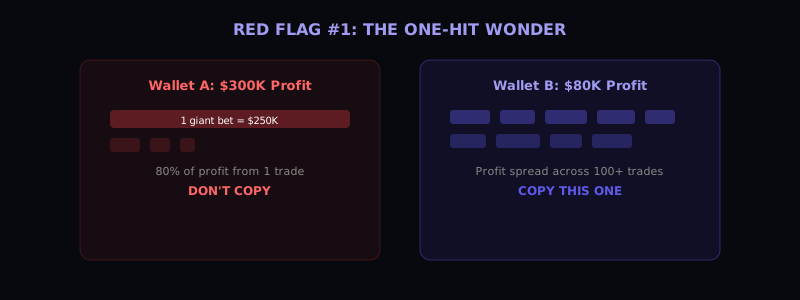
This is the most common trap in copy trading on Polymarket. A wallet shows $300K in profit, but when you dig into the trade history, 80% of those gains came from a single position.
Look at the recent Khamenei removal market - it resolved YES with over $104M in volume. Wallets that went heavily into that single trade at the right time looked like geniuses. But one correct prediction on a binary outcome isn't a copy trading strategy. It's a coin flip that happened to land right.
How to spot it: Before you copy trade any Polymarket wallet, count how many individual resolved trades contributed to their profit. If fewer than 10 trades account for more than 50% of total gains, walk away. The best polymarket wallets to copy make money across dozens of smaller wins, not a handful of lucky bets.
Red Flag #2: Massive Drawdowns Between Wins
A wallet might show positive returns overall, but the path to those returns matters enormously for copy trading.
Picture this: a wallet is up $50K, then drops to -$30K, then climbs back to $60K. Their lifetime profit looks fine. But if you started copy trading during that drawdown - which is statistically likely - you experienced a gut-wrenching 60% loss before anything recovered.
How to spot it: Look at the wallet's equity curve over time, not just the endpoint. For copy trading prediction markets, you want smooth, upward-trending performance. Wild swings mean you'll need iron discipline (and deep pockets) to survive the bad streaks.
Red Flag #3: Trading Markets They Can Move
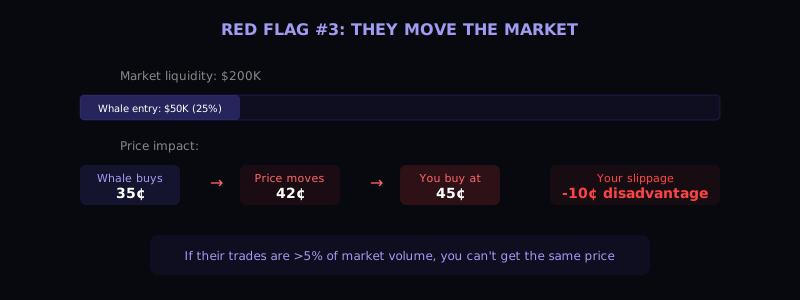
This red flag is specific to copy trading on Polymarket and it catches people constantly.
Some wallets trade in low-liquidity markets where their entry alone shifts the price significantly. When a whale drops $50K into a market with only $200K in total liquidity, the price jumps immediately. They get in at 35 cents, but the price is already 42 cents by the time their order fills completely - and it's 45+ cents by the time you try to copy trade their position.
Consider the smaller sub-markets in the "Next Supreme Leader of Iran" market - individual candidates like Hassan Khomeini (22%) or Alireza Arafi (19%) have much thinner order books. A large wallet entering these markets creates instant slippage that makes copy trading unprofitable.
How to spot it: Compare the wallet's typical position sizes against market liquidity. If their trades regularly represent more than 5% of a market's total volume, you'll never get the same price they did. That makes them a terrible copy trading target regardless of their win rate.
Red Flag #4: The Category Hopper
Great copy traders on Polymarket tend to specialize. The red flag? Wallets that jump between completely unrelated markets with no apparent expertise in any of them.
One week they're trading the US-Iran ceasefire market (March 31 deadline at 51%). The next they're in Bitcoin price predictions ($80K in March at 29%). Then they pivot to the 2028 Democratic nominee (Newsom at 25%). There's no coherent thesis tying these trades together.
This pattern usually indicates someone trading on vibes rather than genuine knowledge. And when you copy trade a Polymarket wallet that's operating on vibes, you're just adding a time delay to gambling.
How to spot it: Map out the last 30 trades by category. If they're spread across 5+ unrelated categories with no concentration, that wallet lacks the informational edge that makes copy trading profitable.
Red Flag #5: Suspiciously High Win Rates
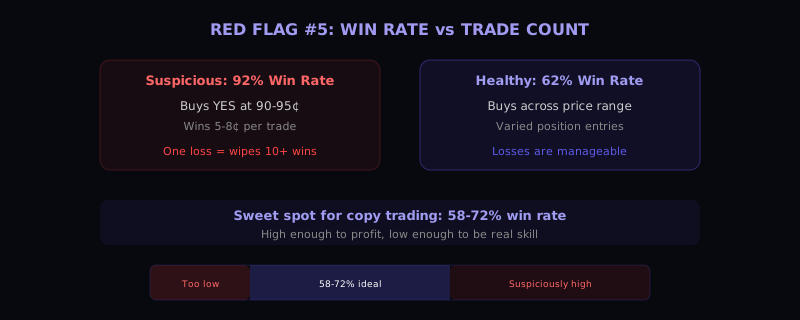
This sounds backwards, but hear me out. A wallet with a 90%+ win rate is almost never a good copy trading target on Polymarket.
Why? Because absurdly high win rates typically mean one of two things:
- They only trade heavy favorites. Buying YES at 92 cents to win 8 cents, over and over. It works until it doesn't - and when a 92% favorite loses, the loss wipes out 10+ wins. Your copy trading returns get destroyed by a single bad resolution.
- They haven't traded enough. A 95% win rate across 20 trades is meaningless noise. Across 200 trades, that would be remarkable. Check the sample size.
The best Polymarket wallets to copy typically have win rates between 58-72%. That range indicates genuine skill without the fragility of only picking near-certainties.
How to spot it: If a wallet's win rate seems too good to be true for copy trading, check the average price they're buying at. If most entries are above 80 cents, they're farming tiny margins with massive blowup risk.
Red Flag #6: Ghost Periods and Sudden Returns
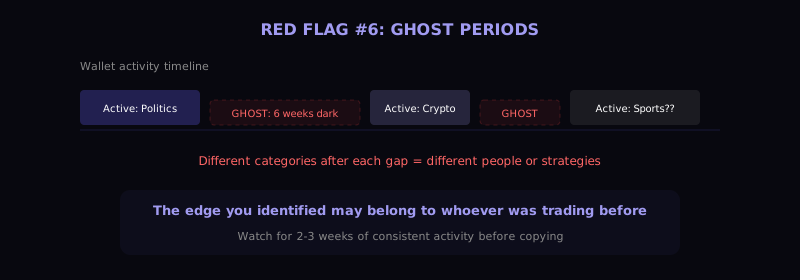
When evaluating a wallet for your polymarket copy trading strategy, look at their activity timeline carefully. Does the wallet have long periods of inactivity followed by sudden bursts of trading?
This pattern usually means one of two things - neither good for copy trading:
- Multiple users sharing a wallet. Different people with different strategies using the same address. The "edge" you identified might belong to someone who's no longer trading.
- Strategy shifts after losses. They lost money, took a break, came back with a different approach. Their historical win rate doesn't reflect their current strategy.
Either way, the track record you're basing your copy trading decision on may not represent what the wallet will do next. When you copy trade on Polymarket, you need confidence that past performance reflects a consistent approach.
How to spot it: Look for gaps longer than 2-3 weeks with no activity, followed by different trading patterns (new categories, different position sizes). That's a signal to keep watching before committing.
Red Flag #7: No Exit Strategy Visible
The final red flag is subtle but critical for copy trading prediction markets. Some wallets are great at entering positions but terrible at managing them.
They buy into the "Will the Iranian regime fall by June 30?" market (currently 36%) at a great price, but then they never take profits as the price moves in their favor. They ride it all the way to resolution, meaning they capture the maximum possible gain on wins - but also the maximum possible loss on losers.
For your copy trading to work, you need to not just enter when they enter but also exit when they exit. If a wallet has no exit strategy, you're locked into a binary outcome on every single trade - which dramatically increases your variance.
How to spot it: Check whether the wallet ever sells positions before market resolution. The best polymarket wallets to copy regularly take partial profits or cut losers early. That's the mark of a trader, not a gambler.
Building a Red-Flag Checklist for Copy Trading
Here's the simple framework I use before adding any wallet to my Polymarket copy trading watchlist:
- [ ] Profit distributed across 20+ trades (not concentrated in 1-3)
- [ ] Maximum drawdown under 30% of peak equity
- [ ] Position sizes under 5% of market volume
- [ ] 70%+ of trades in 1-2 related categories
- [ ] Win rate between 55-75% across 50+ resolved trades
- [ ] Consistent trading activity (no major gaps)
- [ ] Evidence of position management (exits before resolution)
A wallet needs to pass all seven checks. Failing even one is enough to disqualify it from your copy trading strategy.
The Uncomfortable Truth About Copy Trading Polymarket
Most wallets on Polymarket - even profitable ones - are not worth copy trading. The numbers are brutal. Maybe 5-10% of "winning" wallets have the characteristics that translate into successful copy trades.
But that's actually good news. It means if you're willing to do the work of filtering properly, you'll have an enormous edge over the 90% of copy traders who just follow the biggest profit number.
The key to how to copy trade on Polymarket profitably isn't finding the richest wallet. It's finding the most consistent one - and then having the patience to verify they're worth following before putting real money on the line.
Tools like Ratio make the monitoring and filtering process faster, but the analytical framework is what separates winning copy traders from everyone else. Learn to spot these red flags and you'll avoid the traps that catch most people in the copy trading prediction markets space.
Because in copy trading, the money isn't made by picking winners. It's made by avoiding the losers.
Get Started
Ready to start copy trading?
Download Ratio and follow the best traders on Polymarket. Available on iOS and Android.