
The Polymarket Copy Trading Timing Guide: When To Enter, When To Wait, and When To Bail
Timing is everything in Polymarket copy trading. Learn exactly when to start following a wallet, when to hold off on copying a trade, and when to stop copy trading a wallet entirely.
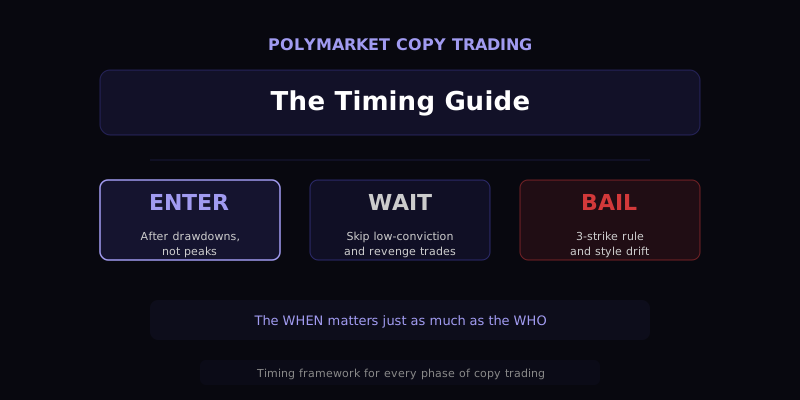
You Found a Great Wallet. Now What?
Finding profitable wallets to copy trade on Polymarket is only half the battle. The other half, the half that actually determines whether you make money, is timing.
When do you start copying? Do you mirror every single trade, or wait for specific setups? And the question nobody talks about: when do you STOP copying a wallet that was once profitable?
Get the timing wrong and even the best Polymarket wallets to copy will lose you money. Get it right and average wallets can become surprisingly profitable.
Let's break down the complete timing framework for Polymarket copy trading.
Part 1: When To Start Following a Wallet
Most people find a hot wallet on Polymarket and immediately start copying every trade. That's like seeing a poker player win three hands and betting your bankroll they'll win the fourth.
Here's a better approach:
The 14-Day Observation Window
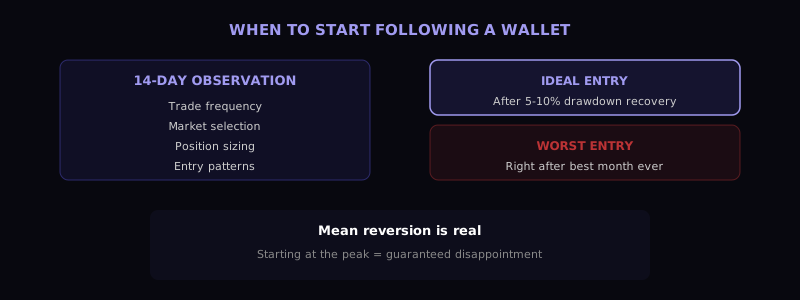
Before you copy trade any Polymarket wallet with real money, watch it for at least 14 days. During this period, track:
- Trade frequency: How often do they trade? Once a day? Ten times a day?
- Market selection: Which categories do they focus on?
- Position sizing: Are their bets consistent or wildly variable?
- Entry patterns: Do they buy early, late, or somewhere in between?
This observation period serves two purposes. First, you verify the wallet's strategy is something you can actually replicate with your capital. A wallet making $50,000 trades in low-liquidity markets is nearly impossible to copy trade without moving the price against yourself.
Second, you get a feel for the wallet's rhythm. Every profitable Polymarket trader has a cadence. Understanding it BEFORE you commit capital is the difference between copy trading and gambling.
The Entry Trigger
After your observation period, don't just flip the switch. Wait for a specific entry point:
Ideal time to start copy trading a wallet:
- After a small drawdown (5-10%) when the wallet is entering recovery mode
- At the start of a new market event when the wallet is building fresh positions
- When the wallet shifts into a market category where it historically performs best
Worst time to start copy trading a wallet:
- Right after a big winning streak (regression to the mean is real)
- During peak market uncertainty when even the best wallets are guessing
- When the wallet is heavily concentrated in a single position
If you start copying a wallet right after its best month ever, you're almost guaranteed to be disappointed. The best polymarket copy trading strategy accounts for mean reversion.
Part 2: When To Wait (Not Every Trade Deserves Your Money)
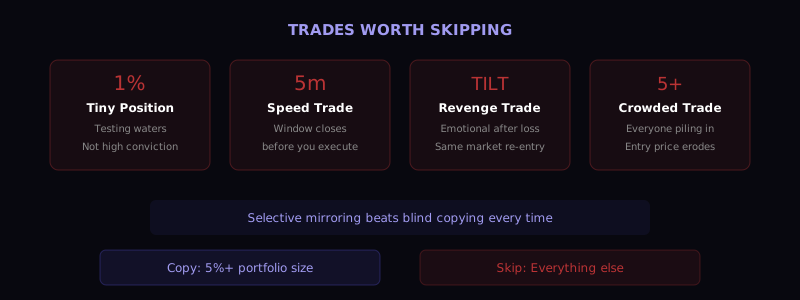
Here's something that separates profitable copy traders from everyone else on Polymarket: selective mirroring.
You don't have to copy every single trade. In fact, you probably shouldn't.
Trades Worth Skipping
The Tiny Position
If a wallet you're following puts 1% of their portfolio into a position, that's them testing the waters. It's not a high-conviction play. You can safely skip these. Focus your copy trading on positions where the wallet deploys 5% or more of their capital.
The Speed Trade
Polymarket's BTC 5-minute markets and other short-duration events move too fast for most copy trading setups. By the time you see the trade and execute, the opportunity window has closed. Unless you're using automated tools through Ratio, skip anything with a resolution window under 24 hours.
The Revenge Trade
This is crucial to spot. A wallet that just took a big loss and immediately enters a new position in the same market is probably revenge trading. It's emotional, not analytical. Skip it and wait for their next trade in a DIFFERENT market.
The Crowded Trade
If you notice through Ratio that multiple wallets you follow are all entering the same position at the same time, that's a crowding signal. When too many copy traders pile into the same side of a Polymarket bet, the entry price deteriorates and the potential upside shrinks.
One or two wallets entering the same position? That's confirmation. Five wallets all buying at the same time? That's a crowded trade. Wait for the price to settle before entering, or skip it entirely.
The Polymarket Market Cycle and Copy Trading Timing
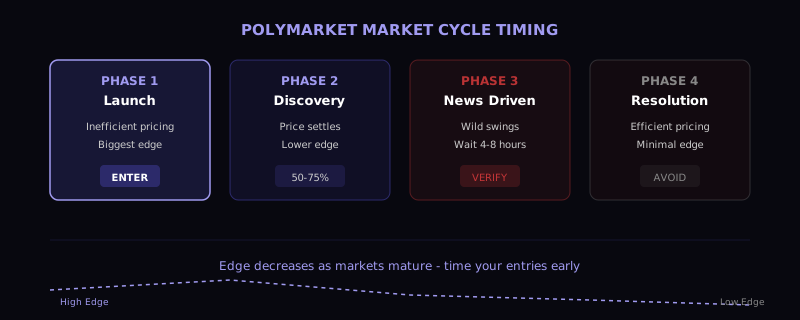
Every Polymarket market goes through predictable phases, and your copy trading timing should adjust accordingly:
Phase 1 - Market Launch (Best for Entry)
When a new market opens on Polymarket, pricing is inefficient. This is where the best wallets to copy make their biggest edges. If a wallet you follow enters a new market within the first 48 hours, strongly consider mirroring that trade.
Right now, new markets around tariffs, the Mexico cartel situation, and 2028 election primaries are in this phase. The wallets building early positions in these markets are the ones to watch.
Phase 2 - Price Discovery (Selective Entry)
After the initial rush, markets settle into a range. Trades during this phase are lower edge but lower risk. Copy these trades with reduced sizing (50-75% of your normal amount).
Phase 3 - News-Driven Moves (Wait and Verify)
When major news hits, Polymarket prices swing wildly. This is where patience pays off for copy traders. Wait 4-8 hours after a major move before mirroring any trades. The best polymarket wallets to copy will often enter AFTER the volatility spike, not during it.
Phase 4 - Pre-Resolution (Generally Avoid)
Markets approaching their resolution date become increasingly efficient. The edge available to any wallet shrinks. Unless a wallet has specific information advantage (institutional-level analysis), skip copy trading positions entered in the final 10% of a market's timeline.
Part 3: When To Bail
This is the hardest part of copy trading on Polymarket, and where most people go wrong. They either bail too early (missing recovery) or too late (riding a wallet all the way down).
The Three Strike Rule
Here's a concrete framework that works:
Strike 1: The wallet has a losing week that exceeds its historical average weekly loss by 2x or more. This is a yellow flag. Reduce your mirror percentage to 50%.
Strike 2: The wallet changes its trading pattern significantly. Maybe it starts trading markets it's never touched before, or its position sizes jump dramatically. This is an orange flag. Reduce to 25%.
Strike 3: The wallet's overall drawdown exceeds 25% from peak, OR it's been in drawdown for more than 30 days without meaningful recovery. This is a red flag. Stop copying entirely.
The Style Drift Signal
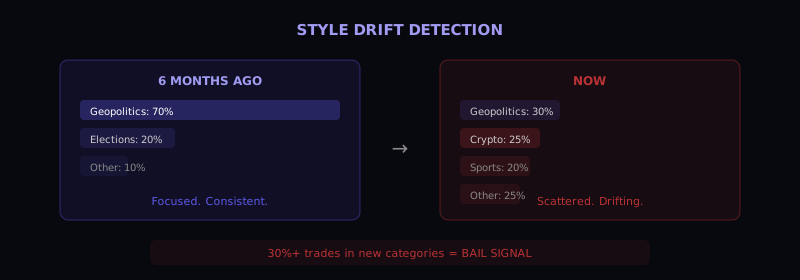
Sometimes a wallet doesn't blow up dramatically. It just... changes. The geopolitics expert starts trading crypto markets. The conservative position sizer starts making leveraged plays. The once-disciplined trader starts chasing every new market.
This is called style drift, and it's the number one reason previously profitable copy trading setups stop working.
Check your wallets through Ratio monthly. Compare their recent trading patterns to their historical ones. If more than 30% of their trades are in categories they didn't touch six months ago, that's a bail signal.
The Opportunity Cost Check
Even if a wallet isn't losing money, ask yourself: is this wallet still the best use of your copy trading capital?
Polymarket is growing fast. New wallets with strong track records emerge constantly. The best polymarket copy trading strategy involves regularly evaluating whether your current wallet lineup is still optimal.
Every quarter, compare your copy traded wallets against the top performers you're NOT following. If two or more wallets you don't follow have consistently outperformed your current lineup over the past 90 days, it's time to rotate.
Putting It All Together
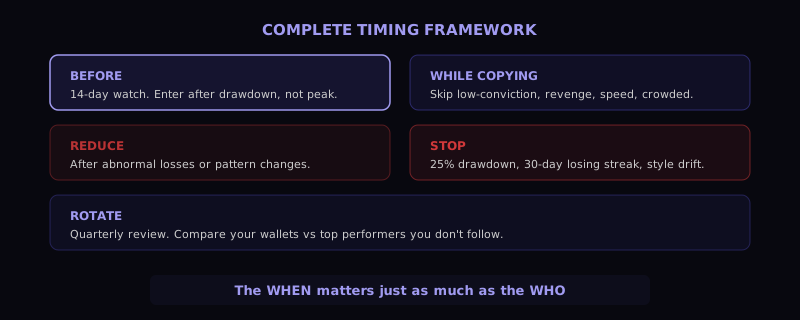
Here's your complete Polymarket copy trading timing checklist:
Before copying: 14-day observation window. Enter after a small drawdown, not a peak.
While copying: Skip low-conviction trades, revenge trades, speed trades, and crowded trades. Adjust sizing based on market cycle phase.
When to reduce: After abnormal losses or pattern changes. Use the three strike rule.
When to stop: 25% drawdown from peak, 30+ day losing streak, or significant style drift.
When to rotate: Quarterly review comparing your wallets to top performers you're not following.
The wallets and markets will always change on Polymarket. Iran might resolve, new election markets will open, and crypto volatility will ebb and flow. But this timing framework for your copy trading stays constant.
Use Ratio to track all of these signals in one place. Set up alerts for the wallets you follow, monitor their patterns, and execute your copy trades with the timing discipline that separates profitable copy traders from everyone else.
Because in Polymarket copy trading, the WHEN matters just as much as the WHO.
Get Started
Ready to start copy trading?
Download Ratio and follow the best traders on Polymarket. Available on iOS and Android.