
Polymarket Copy Trading: How To Read Whale Signals Like a Pro (March 2026)
Master polymarket copy trading by learning to decode whale wallet signals. This copy trade polymarket guide shows you exactly how to spot, analyze, and follow the best polymarket wallets to copy for consistent profits.
Why Whale Signals Are the Secret Weapon of Copy Trading on Polymarket
Copy trading on Polymarket is not about blindly following every wallet that shows a green number. It is about reading signals. Specifically, the signals that whale wallets broadcast every single time they make a trade.
Every time a large wallet moves on Polymarket, it leaves behind a trail of data. Position size, timing, market selection, entry price. If you know how to read these signals, you can build a copy trade Polymarket strategy that consistently outperforms random betting.
This guide breaks down exactly how to decode whale signals and turn them into a repeatable polymarket copy trading strategy.
What Makes a Whale Worth Copying?
Not all whales are built the same. Some are institutions running sophisticated models. Others are rich degens who got lucky once on a political market and now think they are geniuses.
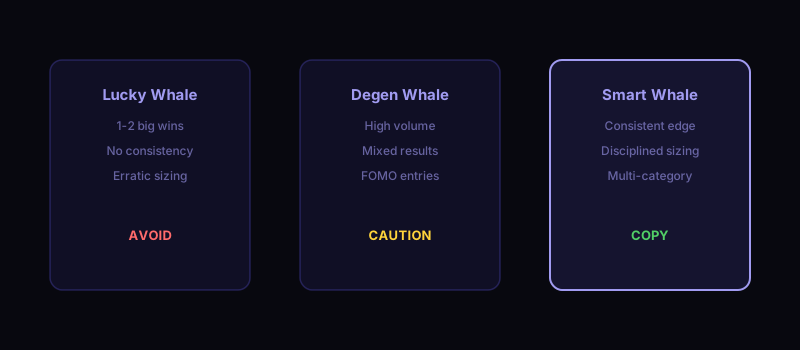
The whales you want to copy trade on Polymarket share three traits:
High win rate across multiple market categories. A wallet that crushes it in crypto markets but never touches politics or sports is a specialist. That can be valuable, but only if you copy their trades in their specialty. The best polymarket wallets to copy show consistent performance across at least 2-3 categories.
Position sizing discipline. Smart whales rarely put more than 5-10% of their bankroll on a single position. If you see a whale wallet that swings between massive bets and tiny ones with no pattern, that is not strategy. That is gambling with a big balance.
Gradual position building. The best wallets to copy on Polymarket almost never slam their full position in one trade. They scale in. They buy at 35 cents, add more at 30, and build their position over days or weeks. This is a massive signal that they have done real research and have conviction.
You can track all of this through Ratio, which surfaces exactly these metrics so you do not have to manually dig through blockchain data.
Signal #1: The Early Mover
The single most powerful whale signal in polymarket copy trading is early market entry. When a whale takes a large position within the first 48 hours of a new market going live, pay attention.
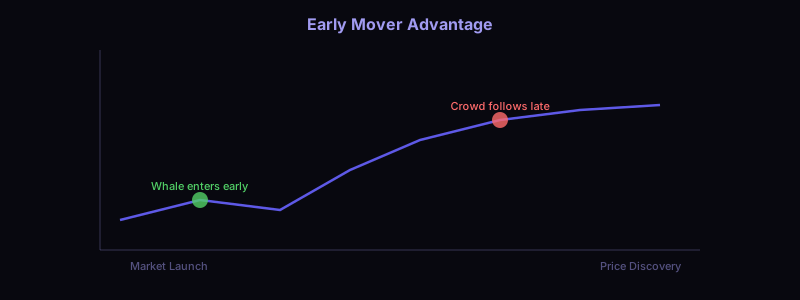
Here is why this matters. New markets on Polymarket are often mispriced. The crowd has not fully analyzed the question yet, liquidity is thin, and prices are volatile. Whales who specialize in early entries are essentially getting a discount that disappears once the market matures.
For example, when the "Will the Iranian regime fall by June 30?" market launched on Polymarket, early whale wallets grabbed YES positions around 25-30 cents. As news coverage intensified and more traders piled in, the price climbed to 39%. Those early whale positions were already up significantly before most copy traders even noticed the market existed.
How to use this signal in your copy trade Polymarket strategy:
- Set up alerts for new markets on Polymarket
- Within the first 24-48 hours, check which tracked whale wallets have taken positions
- If 3 or more independent whales are all entering on the same side, that is a strong convergence signal
- Size your copy trade at 25-50% of what you would normally bet (early markets are volatile)
Signal #2: The Contrarian Whale
This is where polymarket copy trading gets interesting. Sometimes the most profitable signal is a whale betting against the crowd.
When a market is trading at 80%+ and a whale with a strong track record starts loading up on the minority side, something is happening. Either they know something the market does not, or they have identified a structural mispricing.
Take the Texas Republican Senate Primary. The market currently shows Ken Paxton at 55% and John Cornyn at 44%. If you spotted a whale with a proven track record in political markets quietly accumulating Cornyn YES shares, that would be a signal worth investigating.
The key to this polymarket copy trading strategy is filtering. Not every contrarian bet is smart. You need to verify:
- Does this whale have a history of successful contrarian calls?
- Are they building the position slowly (conviction) or did they slam it all at once (possible mistake)?
- Is there any information asymmetry that could explain their position?
This is exactly the kind of analysis that Ratio automates for you, flagging contrarian whale moves that match historical winning patterns.
Signal #3: The Correlated Cluster
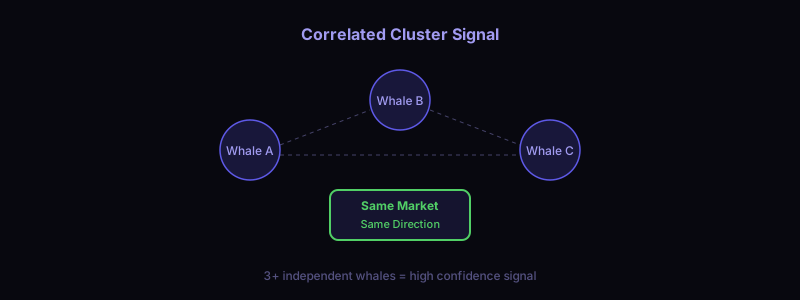
One whale buying is interesting. Three whales buying the same position within 72 hours is a signal you cannot ignore.
The correlated cluster is the highest-confidence signal in copy trading on Polymarket. When multiple unrelated whale wallets independently converge on the same trade, it usually means there is a fundamental reason driving the move.
How to spot correlated clusters:
- Track 15-20 whale wallets with proven track records
- Monitor their trades daily (or use Ratio to get alerts)
- When 3+ whales enter the same market on the same side within a short window, flag it
- Check if the whales are truly independent (some whale wallets are controlled by the same entity)
The independence check is critical for your polymarket copy trading strategy. If three wallets that always trade together all buy the same thing, that is one signal, not three. True cluster signals come from wallets with different trading styles, different market preferences, and different entry timing.
Signal #4: The Exit Signal
Most copy trading guides focus exclusively on entries. But knowing when whales EXIT is just as valuable for your polymarket copy trading strategy.
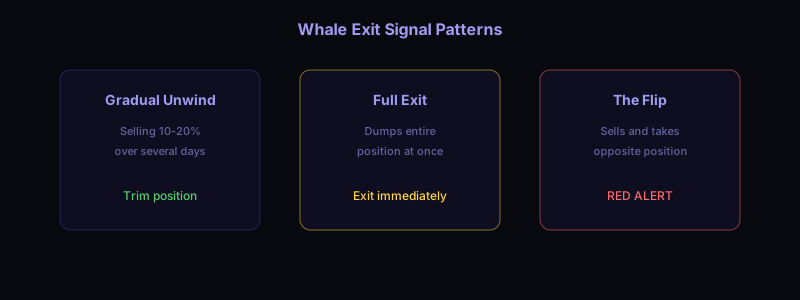
Here are the exit patterns to watch:
The gradual unwind. A whale starts selling 10-20% of their position over several days. This usually means they still believe in the trade but are taking profit or managing risk. You should probably trim your position too, but do not panic sell.
The full exit. A whale dumps their entire position in one or two trades. This is a red flag. Something changed in their analysis. If you are copy trading this wallet on Polymarket, you should strongly consider exiting immediately.
The flip. The most powerful exit signal. A whale sells their entire position and then takes a position on the opposite side. When this happens, drop everything and pay attention. A flip means the whale has received new information or completed new analysis that completely reversed their view.
Building Your Whale Signal System
Here is how to put all of this together into a working polymarket copy trading strategy:
Week 1: Build your watchlist. Identify 15-20 whale wallets that meet the criteria outlined above. Focus on consistency, position sizing discipline, and multi-category performance. Ratio makes this step dramatically easier by surfacing the best polymarket wallets to copy based on actual performance data.
Week 2: Observe without trading. Watch how your tracked whales behave. Note their patterns. Which markets do they prefer? How do they size positions? Do they enter early or wait for confirmation?
Week 3: Paper trade whale signals. When you spot a signal (early mover, contrarian, cluster, or exit), record what you would have traded and at what price. Track your hypothetical results.
Week 4+: Go live with small sizes. Start copy trading on Polymarket with real money, but keep your position sizes small (1-2% of bankroll per trade). Scale up only as you validate that your signal reading is accurate.
The Biggest Mistake in Polymarket Copy Trading
The number one mistake people make when they copy trade Polymarket is treating it as passive income. It is not. Copy trading is active research with a shortcut.
The whales you follow will have losing trades. Markets will move against you. Signals will conflict with each other. Your job as a copy trader is not to blindly replicate every move. Your job is to use whale signals as one input in your own decision-making process.
Think of whale signals as expert opinions, not gospel. The best polymarket wallets to copy are giving you high-quality data points. What you do with those data points determines whether you profit or lose.
Start Reading Whale Signals Today
You now have a framework for the four most important whale signals in polymarket copy trading: early movers, contrarian plays, correlated clusters, and exit patterns.
The next step is to start tracking. Set up your watchlist, observe the patterns, and build confidence before risking real money. Tools like Ratio can accelerate this process by doing the heavy lifting of wallet analysis, but the signal reading is a skill you develop over time.
Copy trading on Polymarket is not a magic money printer. But if you learn to read whale signals properly, it is one of the most powerful edges you can have in prediction markets.
Get Started
Ready to start copy trading?
Download Ratio and follow the best traders on Polymarket. Available on iOS and Android.