
Polymarket's Geopolitical Markets Are Exploding: Iran, Cuba, and the $435M Question
Prediction markets are pricing in US military action against Iran, Cuba, and Mexican cartels. Here's what the odds say and how traders are positioning right now.
The World's Biggest Betting Markets Are Now Geopolitical
Forget sports betting. Forget crypto price predictions. The hottest markets on Polymarket right now are about whether the United States will launch military strikes on foreign soil - and the numbers are staggering.
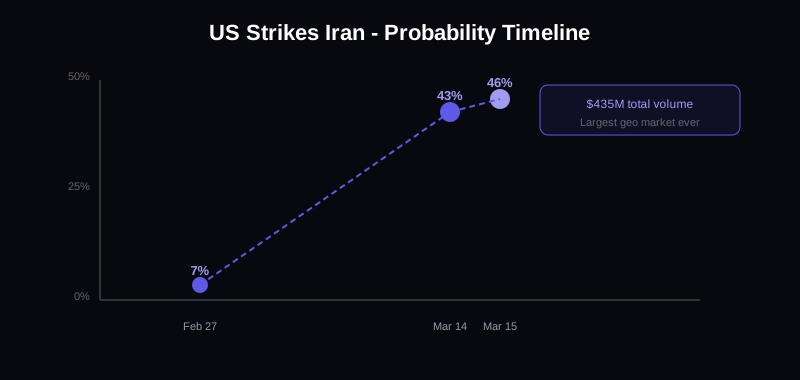
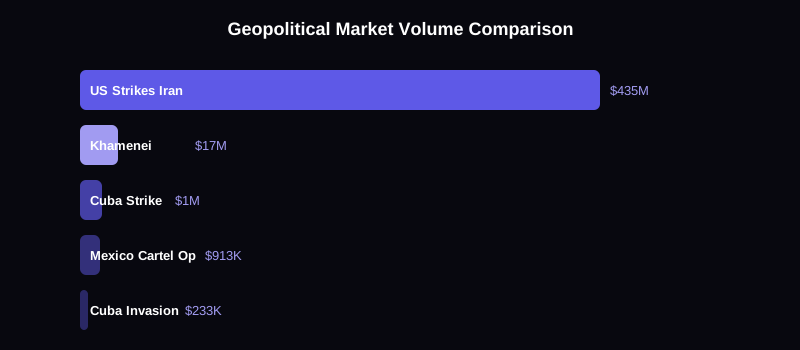
The "US strikes Iran by...?" market has attracted over $435 million in trading volume. That's not a typo. Nearly half a billion dollars is being wagered on whether American bombs will fall on Iranian targets. As of late February 2026, the market prices a 43% chance of strikes by March 14 and 46% by March 15.
This isn't some niche corner of the internet anymore. Prediction markets have become the real-time pulse of global risk assessment, and right now, that pulse is racing.
Iran: $435 Million Says This Is Serious
The Iran market is the single most-traded geopolitical market in Polymarket history. To put $435 million in volume in perspective, that's more than some entire prediction market platforms see in a year.
Here's how the odds break down:
- By February 27: 7% chance of US strikes
- By March 14: 43% chance
- By March 15: 46% chance
The steep jump between late February and mid-March tells you something important - traders believe the window for action is narrowing fast. The pricing suggests that if strikes happen, they're most likely in the first two weeks of March.
What's driving the volume? A combination of escalating rhetoric from the Trump administration, intelligence leaks suggesting military planning is advanced, and the broader regional dynamics with Iran's nuclear program. Whether you think strikes are likely or not, the market is telling you that serious money believes this is a coin flip by mid-March.
For traders, the alpha is in the daily contracts. The day-by-day pricing creates arbitrage opportunities. If you believe strikes are coming but not until later in March, you can sell the earlier dates and buy later ones - a classic calendar spread adapted for prediction markets.
Cuba: The Market Nobody Expected
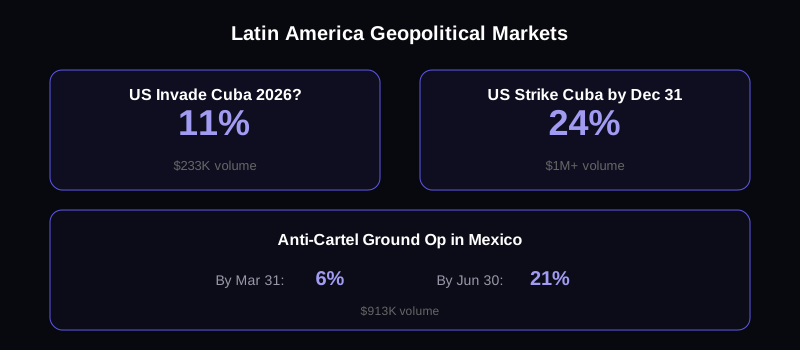
Yes, there is a real, liquid market on Polymarket asking: "Will the US invade Cuba in 2026?"
Currently priced at 11% with over $233K in volume. A separate "US strike on Cuba" market breaks it down by timeline - 6% by March 31, climbing to 24% by December 31.
A year ago, a Cuba invasion market would have been treated as a joke. Today, it's attracting real money. The context matters - tensions between the US and Cuba have escalated significantly in early 2026, with the Trump administration taking an increasingly aggressive posture toward the island nation.
Even at 11%, this market is interesting for several reasons:
- It's mispriced if you believe it's truly impossible. Buying "No" at 89 cents gives you an 11% return if nothing happens - which is most people's base case.
- The tail risk is real enough to keep Yes above zero. Events that seem impossible until they happen are exactly what prediction markets are designed to price.
- Volume is growing daily. More attention means more liquidity and better pricing.
Mexico: Cartels Meet Prediction Markets
The cartel wars have their own market now. "U.S. anti-cartel ground operation in Mexico by...?" is live and actively traded with $913K in volume:
- By March 31: 6% chance
- By June 30: 21% chance
The steady climb from 6% to 21% over a three-month window tells you that traders see this as a slow-burn possibility rather than an imminent event. The Trump administration has repeatedly floated the idea of designating cartels as terrorist organizations and using military force, but the logistics and diplomatic fallout of ground operations in a neighboring country are enormous.
The smart trade here might be patience. If cartel violence escalates or there's a major incident involving American citizens, these numbers could spike overnight. Having a position before that happens is where the edge lives.
Tariffs: The Court Wildcard
While military markets grab headlines, the tariff market is quietly fascinating. "Will the Court Force Trump to Refund Tariffs?" sits at 18% with $179K in volume.
This is a sleeper. Multiple legal challenges to Trump's tariff authority are working through the courts, and a ruling forcing refunds would be an economic earthquake. At 18%, the market says it's unlikely but far from impossible.
For traders who follow legal proceedings closely, this market offers genuine edge. Court watchers who can assess the likelihood of specific rulings have an information advantage over the general market.
The Khamenei Question - $17 Million in Volume
One of the most fascinating markets on the platform right now: "Khamenei out as Supreme Leader of Iran by March 31?" - currently at 18% with a whopping $17 million in trading volume.
This market is directly connected to the Iran strikes question. If regime change is part of the calculus, the Khamenei market becomes a leading indicator. Traders are using it as a proxy for the severity of potential US action - strikes alone might not move the needle, but a broader campaign targeting leadership would.
The $17 million in volume suggests this isn't casual speculation. Serious money is positioning on both sides.
What This Means for Prediction Market Traders
Geopolitical markets are fundamentally different from other prediction markets. Here's what you need to know:
Volatility is the feature, not the bug. These markets can move 20-30% on a single news cycle. That creates opportunity but also risk. Position sizing matters more here than anywhere else.
Information asymmetry is real. Intelligence community leaks, diplomatic back-channels, and military positioning create genuine information edges. Traders plugged into geopolitical analysis have an advantage.
Liquidity follows attention. The Iran market didn't start at $435 million - it grew as the situation escalated. Getting into these markets early, before volume spikes, is where the biggest returns come from.
Correlated markets create opportunities. The Iran strikes market, Khamenei leadership market, and oil price markets all move together. Understanding these correlations lets you build smarter positions.
How to Trade Geopolitical Markets Smarter
The biggest mistake new traders make with geopolitical markets is treating them like sports bets - pick a side and hope. The better approach:
- Use the daily contracts for tactical trades. If you have a view on timing, express it through specific date contracts rather than broad yes/no positions.
- Watch the volume, not just the price. A market moving from 10% to 15% on thin volume means less than one moving from 10% to 12% on massive volume.
- Follow the whales. Large wallet movements in these markets often precede major price moves. Tools exist to track this on-chain.
- Hedge your positions. If you're long on Iran strikes, consider what that means for related markets and position accordingly.
Why Copy Trading Is the Edge in Geopolitical Markets
Here's the thing about geopolitical prediction markets - the information landscape is brutal. Breaking news drops on Twitter, intelligence leaks surface on Telegram, military analysts post threads at 3 AM, and by the time you've read three articles, the market has already moved 15%.
Solo trading these markets is like trying to drink from a firehose. You need to monitor dozens of sources, understand complex geopolitical dynamics, and react in real time. Most people simply can't do that alongside a full-time job.
Copy trading solves this. Instead of trying to become a geopolitical analyst overnight, you follow traders who already are. The best Polymarket wallets in the Iran market didn't stumble into a $435 million pool by accident - they have information networks, analytical frameworks, and track records you can verify on-chain.
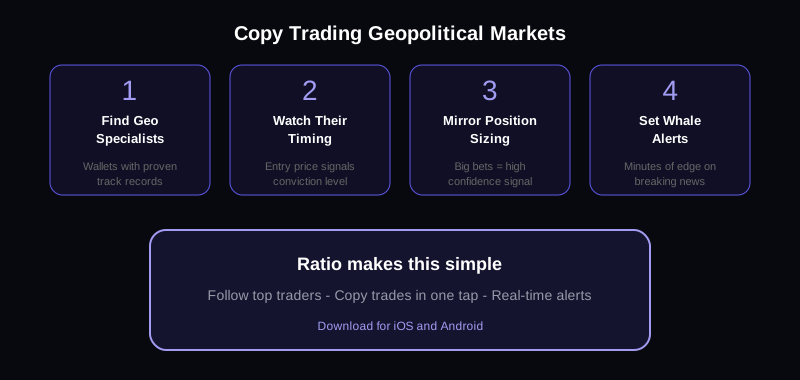
The copy trading workflow for geopolitical markets looks like this:
- Identify wallets with proven geopolitical track records. Not every profitable Polymarket trader knows geopolitics - filter for wallets that consistently trade and win in this category.
- Watch their timing, not just their direction. A whale buying "Iran strikes by March 14" at 30% tells you something very different than buying at 43%.
- Mirror position sizing, not just direction. When a top trader puts 20% of their portfolio into one geopolitical trade, that confidence signal matters.
- Set up alerts for whale movements. In these fast-moving markets, getting a notification when a tracked wallet makes a move can be worth thousands of dollars.
Ratio makes all of this dead simple. Instead of manually tracking wallets on Polygonscan and setting up custom bots, you get a social feed of top trader activity, one-tap copy trading, and real-time alerts when the whales move. Whether it's the Iran market, Cuba tensions, or tariff court cases - follow the smartest money in the room.
Download Ratio for iOS or Android and start copy trading the geopolitical experts before the next market-moving headline drops.
The Bottom Line
Prediction markets have evolved from election odds into the world's most transparent geopolitical risk dashboard. With hundreds of millions in volume flowing through markets about US military action, regime change, and trade wars, this is no longer a novelty - it's a serious financial instrument.
The traders who will profit most from these markets are the ones with the best information networks, the fastest reactions, and the discipline to manage risk in highly volatile conditions. Whether you're trading directly or following experienced geopolitical traders through social platforms, the opportunity is massive.
The question isn't whether geopolitical prediction markets are here to stay. It's whether you're positioned to profit from them.
Get Started
Ready to start copy trading?
Download Ratio and follow the best traders on Polymarket. Available on iOS and Android.