
Polymarket Tariff Markets Explained: How to Trade the Biggest Trade War in a Decade
Tariff markets are exploding on Polymarket with over $60M in volume. Learn how these markets work, what drives their prices, the best strategies for trading them, and how they connect to everything else on the platform.
Tariff Markets Are Taking Over Polymarket. Here's Everything You Need to Know.
If you have been anywhere near Polymarket in the last few months, you have noticed something: tariff markets are everywhere. "Will new tariffs on China be announced by April?" "Will the tariff rate exceed 50%?" "Will the EU impose counter-tariffs?" These questions are generating tens of millions of dollars in trading volume, and for good reason.
We are living through the most aggressive tariff escalation in modern history. The trade war between the US and China has expanded to include the EU, Canada, and other trading partners. Every announcement sends markets scrambling. Every tweet creates new trading opportunities. And Polymarket has become the go-to platform for people who want to put real money behind their tariff predictions.
But here is the thing: most people trading tariff markets on Polymarket are doing it wrong. They are reacting to headlines instead of understanding the underlying mechanics. They are treating all tariff markets the same when they are fundamentally different. And they are missing the connections between tariff markets and every other category on the platform.
Let me fix that.
What Are Tariff Markets on Polymarket?
At the most basic level, tariff prediction markets on Polymarket let you bet on the outcomes of trade policy decisions. Will a specific tariff be implemented? Will rates hit certain thresholds? Will other countries retaliate?
But the category is actually much more nuanced than that. Let me walk you through the main types.
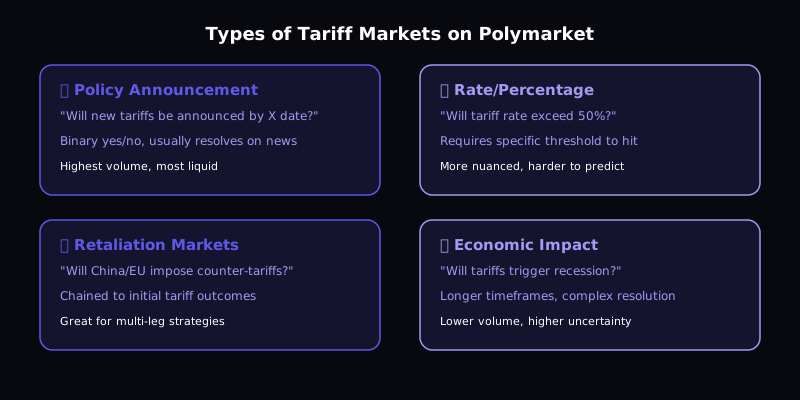
Policy Announcement Markets
These are the most straightforward tariff markets on Polymarket. They ask simple yes/no questions: "Will the US announce new tariffs on Chinese goods by April 15, 2026?" The resolution is usually tied to official government announcements or executive orders.
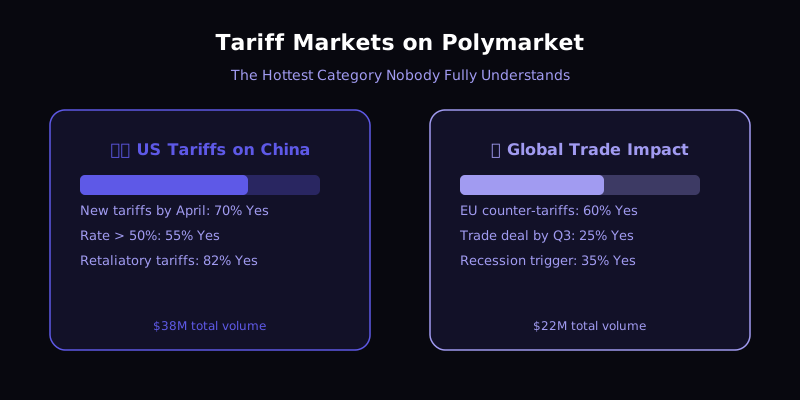
These markets tend to have the highest volume because they are easy to understand. You either think new tariffs are coming or you do not. Right now, the "new tariffs by April" market is sitting at about 70% Yes, reflecting the widespread expectation that escalation will continue.
The trading edge here comes from understanding the political timeline. When is the next trade review deadline? What has the Trade Representative signaled? Are there Congressional hearings scheduled? The traders who consistently profit in these markets follow trade policy reporters and government calendars, not just headlines.
Rate and Threshold Markets
These markets ask whether tariffs will hit specific levels. "Will the average tariff rate on Chinese imports exceed 50%?" This requires more sophisticated analysis because you need to understand not just whether tariffs will be imposed, but how aggressive they will be.
The current slate of rate markets on Polymarket shows some interesting dynamics. Markets for moderate tariff levels (like exceeding 30%) are priced quite high, while markets for extreme levels (exceeding 60%) are much more uncertain. This creates opportunities for traders who have strong views on how far the escalation will actually go.
Retaliation Markets
Some of the most interesting tariff markets on Polymarket focus on what other countries do in response. "Will China impose retaliatory tariffs within 30 days?" "Will the EU announce counter-tariffs by Q2?"
These markets are fascinating because they involve second-order thinking. You are not just predicting US policy. You are predicting how other governments will respond to US policy. And historically, the Polymarket crowd has been pretty bad at this. Retaliation markets tend to be underpriced because people focus on the initial action and underestimate the response.
Right now, the China retaliation market is at 82% Yes, which seems about right given the pattern. But the EU counter-tariff markets at 60% feel like they might be underpricing the risk. The EU has been surprisingly aggressive in recent trade disputes.
Economic Impact Markets
The longest-dated tariff markets on Polymarket ask about downstream effects. "Will tariffs contribute to a recession by 2027?" "Will consumer prices increase by more than 5% due to tariffs?"
These markets are the hardest to trade because the resolution timeframes are long and the causal links are complex. But they also offer the most interesting value opportunities for patient traders. Right now, the "tariffs trigger recession" market sits at 35%, which many economists would argue is too low given the scale of current trade disruptions.
How Tariff Markets Move (And Why Most People Get Caught Off Guard)
Here is what actually drives tariff market prices on Polymarket, and it is not what most people think.
The Announcement Cycle
Tariff markets follow a predictable cycle. A rumor leaks (usually through a reporter at Bloomberg, Reuters, or the WSJ). The market moves 10-15%. Then either the rumor gets confirmed (market moves another 5-10% toward resolution) or denied (market reverses). Finally, the official announcement happens, and the market moves to near its final value.
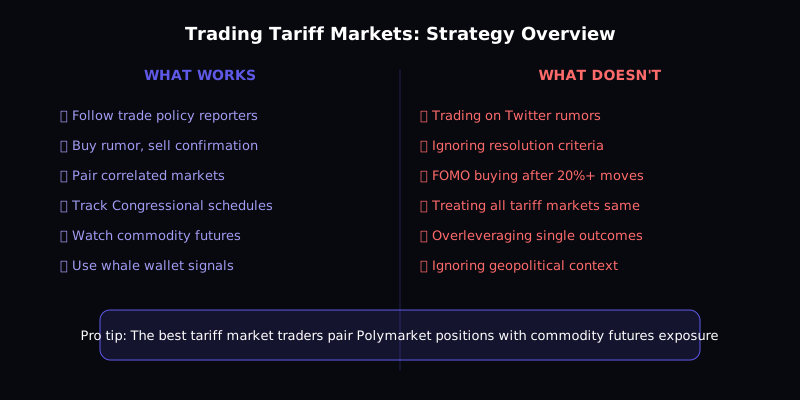
The mistake most Polymarket traders make is entering after the initial rumor move. By the time you see "BREAKING: New tariffs reportedly under consideration" on Twitter, the Polymarket price has already moved. The traders who profit consistently are the ones who were positioned before the rumor, based on their understanding of the policy timeline.
Correlated Markets Are Your Friend
This is the part that separates sophisticated tariff market traders from everyone else on Polymarket. Tariff markets do not exist in isolation. They connect to practically every other category on the platform.
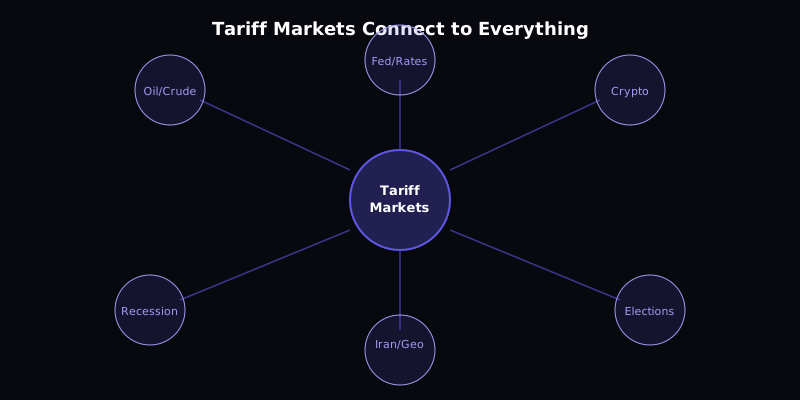
When new tariffs get announced, oil markets move (tariffs on Chinese goods affect supply chains that impact crude demand). Crypto markets react (trade war uncertainty often drives Bitcoin as a hedge). Recession probability markets adjust. Even election markets shift (tariff policy affects voter sentiment).
Smart traders on Polymarket use these correlations to their advantage. If you believe new tariffs are coming but the tariff announcement market is already priced at 70%, maybe the better trade is buying recession probability at 35% or shorting a "trade deal by Q3" market at 25%. The same thesis, better entry price.
Volume Tells a Story
Tariff market volume on Polymarket has been on a tear. What started as a niche category in early 2025 has grown into one of the platform's biggest verticals.
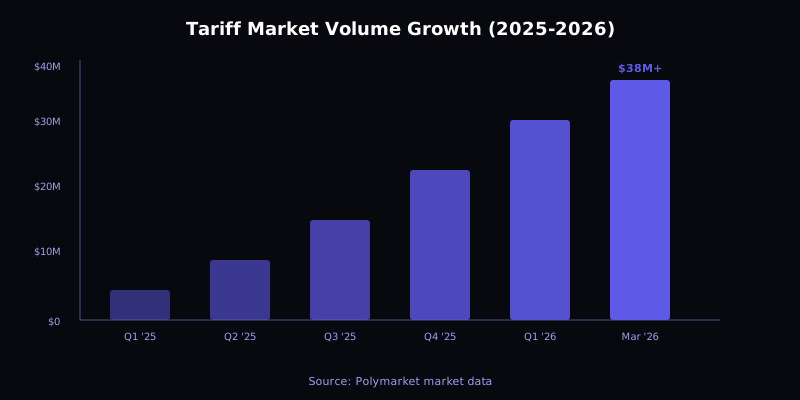
The growth is not random. It tracks real-world escalation. Every new round of tariff announcements brings more traders to Polymarket, and the increased liquidity makes the markets more accurate and more tradable. March 2026 has seen the highest tariff market volume ever, with over $38M traded in the China tariff category alone.
This volume growth matters for a practical reason: it means you can actually enter and exit meaningful positions without moving the price. Six months ago, a $10,000 order in a tariff market might move the price by 2-3%. Now, the order books are deep enough that you can trade aggressively without significant slippage.
The Best Strategies for Trading Tariff Markets on Polymarket
OK, so you understand what tariff markets are and how they work. Let me get into the specific strategies that actually make money.
Strategy 1: Follow the Policy Calendar
The single best edge in tariff market trading is knowing what is coming before the market reacts. This does not mean insider information. It means understanding the policy process.
Trade reviews happen on known schedules. Congressional hearings are announced days in advance. International trade summits have set dates. When you know a tariff-related event is coming, you can position before the market moves.
Build a calendar. Track USTR announcements, Commerce Department reviews, G7/G20 meetings, and Congressional markups. This is free information that most Polymarket traders ignore.
Strategy 2: Pair Correlated Markets
As I mentioned above, tariff markets connect to everything. The best trades often are not in the tariff markets themselves but in correlated markets that have not repriced yet.
For example: if you believe the US is about to announce a major new round of tariffs on Chinese goods, consider the second-order effects. What happens to oil prices? (They could spike on supply chain disruption fears.) What happens to the recession probability market? What happens to the "Trump approval rating above X%" market?
Often, the tariff market itself is already pricing in the announcement, but the downstream markets have not caught up. That lag is your opportunity.
Strategy 3: Watch What Whales Are Doing
Some of the best tariff market traders on Polymarket have deep expertise in trade policy. They might be former trade officials, policy analysts, or just very well-connected individuals who understand the political dynamics.
These wallets leave a trail. When a whale wallet that has been consistently right on tariff markets suddenly loads up on a position, that is a signal worth paying attention to. You do not have to do all the policy analysis yourself if you can find wallets that have already done it.
This is where tools like Ratio become particularly useful. Instead of trying to become a trade policy expert overnight, you can follow wallets that already have demonstrated edge in tariff markets. Their positioning tells you what the smart money thinks is coming.
Strategy 4: Fade the Panic
Tariff markets are emotional. When a scary headline drops ("TRADE WAR ESCALATION: US THREATENS 100% TARIFFS"), the market overreacts. Prices spike or crash beyond what the actual policy change warrants.
The best tariff market traders on Polymarket are often contrarian. They buy when everyone is panic selling. They take the other side of overreaction. This requires confidence and patience, but the returns are consistently strong.
Look for moments when tariff market prices move more than 15% on a single headline. More often than not, the market overshot, and there is a profitable trade in fading that move.
Why Tariff Markets Matter Beyond Polymarket
Tariff prediction markets are not just a trading opportunity. They are actually becoming a meaningful source of information about trade policy expectations. Journalists reference Polymarket tariff odds. Policy analysts track them. Even some government officials have acknowledged watching prediction market prices for real-time sentiment on trade policy.
This is the broader trend that Polymarket is driving: turning crowd wisdom into real-time probability estimates for events that traditional markets struggle to price. Tariff markets are one of the clearest examples of this working well.
Getting Started with Tariff Markets
If you want to start trading tariff markets on Polymarket, here is my honest advice:
Start with the simple markets. Policy announcement markets (yes/no on whether new tariffs will be announced) are the most straightforward. Get comfortable with how they move before trying rate or retaliation markets.
Read the resolution criteria carefully. Every Polymarket tariff market has specific resolution criteria. "New tariffs" might mean something different than you think. Does a tariff extension count? Does a rate increase on existing tariffs count? Know what you are actually betting on.
Do not chase moves. If a tariff market has already moved 20% on a headline, you are probably too late for that specific trade. Wait for the next opportunity.
Use the connections. Remember that tariff markets connect to oil, crypto, recession, and election markets. Sometimes the best tariff trade is not in a tariff market at all.
And if you do not want to become a trade policy expert but still want exposure to this category, consider following wallets that specialize in tariff markets through Ratio. The platform lets you track and follow the best tariff market traders on Polymarket, so you can benefit from their expertise without doing all the analysis yourself.
The trade war is not ending anytime soon. If anything, it is accelerating. That means tariff markets on Polymarket are going to keep growing, keep generating volume, and keep creating opportunities for traders who understand how they work.
Now you do.
Get Started
Ready to start copy trading?
Download Ratio and follow the best traders on Polymarket. Available on iOS and Android.