
Polymarket vs Kalshi: Which Prediction Market Is Better in 2026?
A detailed comparison of Polymarket and Kalshi - fees, markets, legality, user experience, and which one is better for different types of traders.
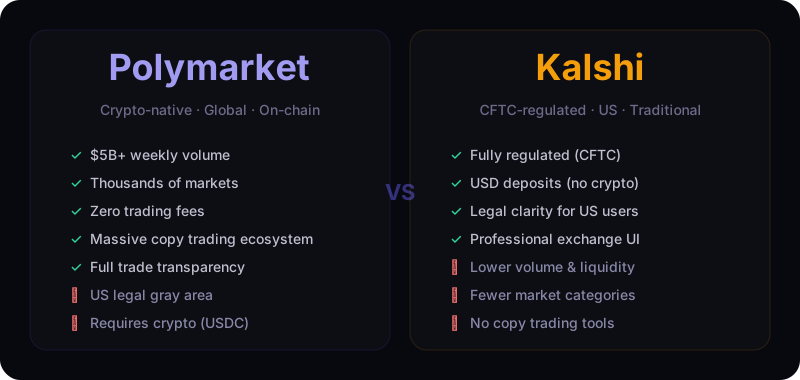
Two Platforms, Different Philosophies
Polymarket and Kalshi are the two biggest prediction market platforms in 2026, but they're built on fundamentally different foundations.
Polymarket is crypto-native. It runs on the Polygon blockchain, trades are settled in USDC, and it's accessible globally (with some restrictions). It's the wild west - more markets, more liquidity, more tools, but less regulatory clarity.
Kalshi is the regulated option. It's a CFTC-regulated exchange based in the US, trades in USD, and operates like a traditional financial platform. Fewer markets, more guardrails, and full legal clarity for American users.
Both let you bet on real-world outcomes. The question is which one fits your needs.
Market Selection
Polymarket wins here - by a lot.
Polymarket has thousands of active markets covering politics, crypto, sports, entertainment, science, world events, and more. Anyone can propose a market, so the coverage is incredibly broad. Want to bet on whether a specific tweet gets posted? There's probably a market for that.
Kalshi has a more curated selection. Markets need regulatory approval, which means fewer options but generally higher-quality, well-defined contracts. Kalshi's strength is in economics, weather, and US politics.
Bottom line: If you want variety and niche markets, Polymarket. If you want well-structured contracts in mainstream categories, Kalshi.
Liquidity and Volume
Polymarket dominates on volume. Weekly trading volume regularly exceeds $5 billion. Major markets (US elections, Fed decisions, geopolitical events) have deep order books with tight spreads.
Kalshi has grown significantly but still trails Polymarket in overall volume. Some Kalshi markets can be thin, especially in niche categories.
For copy traders, liquidity matters. If you're following a whale's trade, you need enough depth to execute at a similar price. Polymarket's liquidity makes copy trading much more viable.
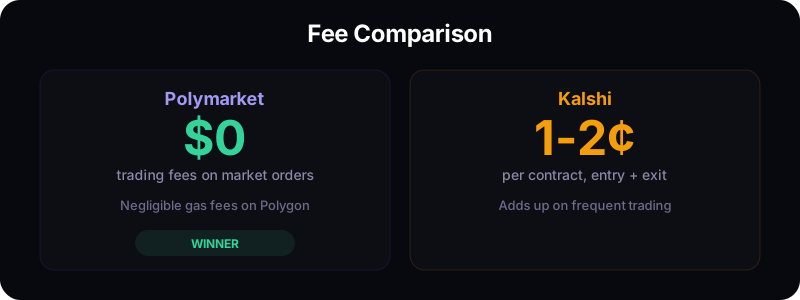
Fees
Polymarket: No trading fees on market orders. There's a small fee on limit orders that provide liquidity (which you'd only encounter if you're market making). Gas fees on Polygon are negligible.
Kalshi: Charges a fee per contract, typically 1-2¢ per contract on entry and exit. This adds up, especially on smaller positions.
Edge: Polymarket. Zero-fee trading is a significant advantage, especially for active traders and copy traders who make frequent smaller trades.
Legal Status
Kalshi: Fully regulated by the CFTC. Legal for US residents. Your funds are held in segregated accounts. This is the safest option from a regulatory perspective.
Polymarket: Operates in a gray area for US users. Polymarket settled with the CFTC in 2022 and officially restricted US access, though enforcement is limited. Non-US users can trade freely.
If you're in the US and risk-averse, Kalshi is the safer bet legally. If you're outside the US, Polymarket offers a better experience.
User Experience
Polymarket has a clean, modern interface. The web app is solid, and the ecosystem of third-party tools (analytics, bots, terminals) is massive. Mobile access is available through the web.
Kalshi has a more traditional exchange interface. Clean and professional, with a native mobile app. Less third-party tooling but a more polished first-party experience.
For social trading, neither platform has it built in. That's where Ratio comes in - it adds the social layer on top of Polymarket, letting you follow traders, see what's trending, and copy trades directly from an app.
Copy Trading Ecosystem
Polymarket has a massive copy trading ecosystem. Tools like Polycule, Stand.trade, Polywhaler, and dozens of Telegram bots let you track and mirror whale wallets. The on-chain transparency makes all of this possible.
Kalshi has almost no copy trading infrastructure. Trades aren't on-chain, so there's no way to transparently track other users' activity.
If copy trading is your strategy, Polymarket is the only real option.
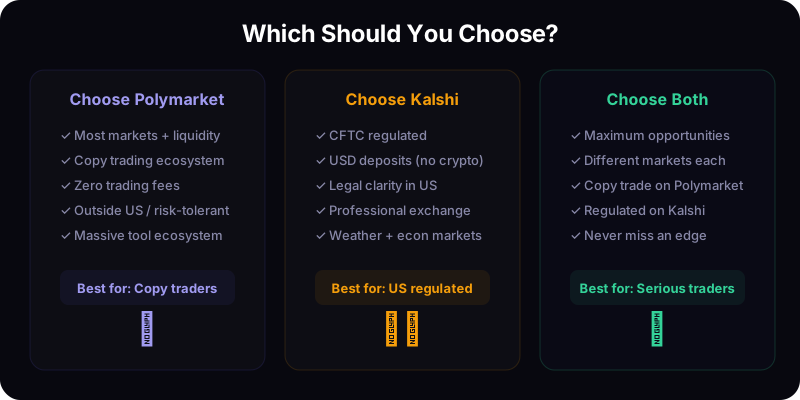
Which Should You Choose?
Choose Polymarket if you:
- Want the most markets and deepest liquidity
- Plan to copy trade or follow whale wallets
- Are outside the US (or comfortable with the legal gray area)
- Want zero trading fees
- Like having access to a massive ecosystem of tools
Choose Kalshi if you:
- Are a US resident who wants full regulatory protection
- Prefer a more traditional exchange experience
- Focus on economics, weather, or mainstream politics
- Want the peace of mind of a CFTC-regulated platform
Choose both if you:
- Want to maximize your opportunities
- Trade different categories on each platform
- Use Polymarket for social/copy trading and Kalshi for regulated markets
The Best of Both Worlds
Most serious prediction market traders use both platforms. They keep their core copy trading and social trading activity on Polymarket (through tools like Ratio) and use Kalshi for specific regulated markets.
The prediction market space is growing fast. Having accounts on both platforms means you never miss an opportunity.
Download Ratio to start social trading on Polymarket today.
Get Started
Ready to start copy trading?
Download Ratio and follow the best traders on Polymarket. Available on iOS and Android.