
The 3 Types of Polymarket Wallets You Should NEVER Copy Trade
Not every profitable Polymarket wallet is worth copy trading. Learn the 3 wallet types that look profitable but will destroy your bankroll if you copy trade them - and how to spot them before it's too late.
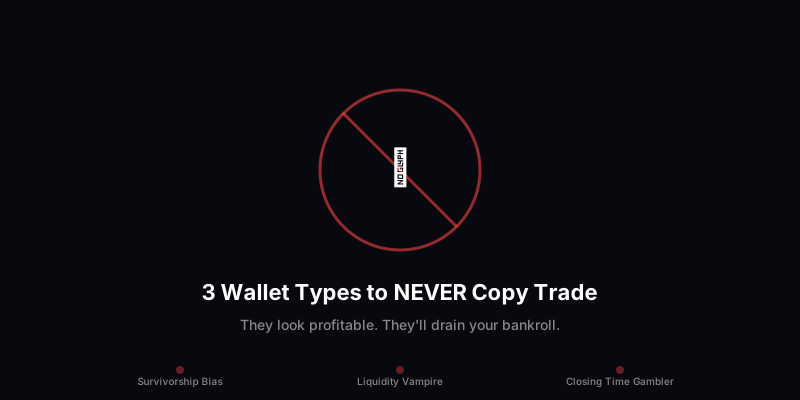
The Most Dangerous Wallets on Polymarket Look Profitable
Copy trading on Polymarket seems straightforward. Find a wallet making money, copy their trades, profit. Simple, right?
Not even close.
The wallets that look most impressive on the surface are often the worst ones to copy trade. They have big PnL numbers, flashy win streaks, and positions in every trending market. And they will absolutely destroy your bankroll if you follow them.
I've spent hundreds of hours analyzing wallet behavior across Polymarket's biggest markets - from the Iran regime bet (39% and climbing) to the BTC 5-minute markets pulling $20M in daily volume. Three wallet types consistently fool copy traders into losing money.
Here's how to spot them before they cost you.
Type 1: The Survivorship Bias Wallet
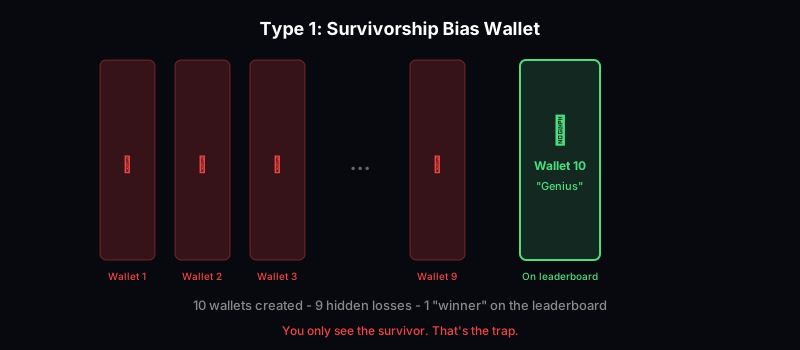
This is the most common trap in Polymarket copy trading, and almost nobody talks about it.
Here's how it works: A trader creates 10 different wallets. Each wallet takes a different aggressive position on the same market. After the market resolves, 9 wallets are underwater and 1 wallet looks like a genius.
Guess which wallet shows up on the leaderboard? Guess which wallet people try to copy trade?
You see this constantly in Polymarket's geopolitical markets. The US-Iran ceasefire market has multiple date tranches - March 15 at 11%, March 31 at 28%. A trader could spread wallets across every date, and whichever one hits looks prophetic to anyone browsing leaderboards afterward.
How to spot the survivorship bias wallet
- Short history - The wallet appeared recently and has very few trades
- Huge concentration - 90%+ of profits come from one or two positions
- No sister wallets visible - But you can sometimes find wallets with similar deposit patterns and opposite positions
- Perfect timing on a single event - They "called" exactly one thing and the account is new
The fix for your Polymarket copy trading strategy? Never copy a wallet with fewer than 30 resolved trades across at least 2 months. Period. A real edge shows up over dozens of trades, not one lucky bet.
Type 2: The Liquidity Vampire
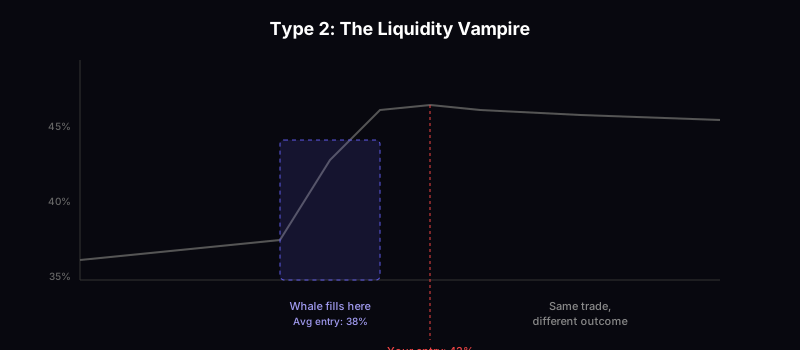
This wallet type will frustrate you more than any other when you try to copy trade on Polymarket. The Liquidity Vampire is genuinely profitable - their trades are real, their edge is real. But you physically cannot replicate their results.
Why? Because they trade in sizes that move the market.
When a Liquidity Vampire buys $500,000 of YES on the Iran regime market, they're getting filled across a range of prices - maybe 35% to 42%. Their average entry might be 38%. But by the time their order is filled, the market is sitting at 42%.
If you try to copy trade this wallet, your entry is 42%. Their entry is 38%. Same trade, completely different risk/reward.
This happens constantly on Polymarket's bigger markets. The nuclear deal market at 51% has decent liquidity, but a whale buying $200K still moves the price 3-5%. On smaller markets, the impact is even worse.
How to spot the Liquidity Vampire
- Position sizes that dwarf the market's daily volume - If a wallet puts in $100K and the market only does $50K per day, you're going to get terrible fills
- Entry prices that are consistently better than what you see on the orderbook - They got those prices by providing liquidity or sweeping thin books that have since been repriced
- Profits that correlate with position size - Their edge IS their size, not their analysis
The copy trading workaround
If you find a Liquidity Vampire with genuine analytical edge, you can still benefit from their signals. Just don't mirror their size. If they buy $500K, you buy $500. You'll get closer to their entry price and capture most of the directional move without the slippage.
Ratio handles this automatically - scaling your copy trades to appropriate sizes based on market liquidity so you don't get wrecked by slippage.
Type 3: The Closing Time Gambler
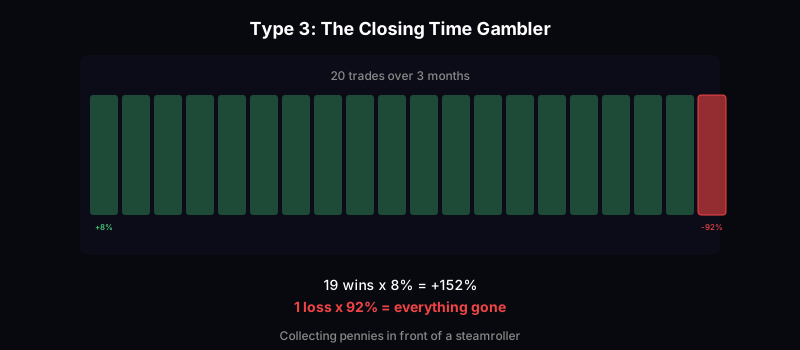
This wallet type is unique to prediction markets and makes Polymarket copy trading especially tricky. The Closing Time Gambler makes most of their money buying near-certain outcomes right before markets resolve.
Here's what it looks like in practice: A market like "US forces enter Iran by March 7" is trading at 8% with two days left. The Closing Time Gambler buys a massive NO position at 92 cents. Two days later, the market resolves NO, and they collect 8 cents per share on a huge position.
On paper, this wallet has a stellar win rate. They might be 95%+ accurate. Their PnL is consistently positive. They look like the perfect wallet to copy trade on Polymarket.
The problem? They're making 8% returns on capital locked up for days, while taking on catastrophic tail risk. If the unlikely event happens, they lose everything. And because these events are genuinely unpredictable - nobody knows for certain whether Iran gets struck on a specific date - eventually the 8% probability hits and the wallet gets wiped.
Why copy trading this wallet destroys you
When you copy trade a Closing Time Gambler, you're collecting pennies in front of a steamroller. The math looks like this:
- Win 19 trades at 8% profit each = 152% total gains
- Lose 1 trade at 92% loss = all gains wiped and then some
The Closing Time Gambler might have enough capital to survive a wipeout and keep going. You, as a copy trader with smaller capital, probably don't.
How to spot the Closing Time Gambler
- Extremely high win rate (90%+) combined with very low profit per trade
- Trades cluster near market expiry dates - they rarely enter positions early
- Heavy concentration in time-bound markets - date-specific outcomes like the Iran ceasefire tranches
- No trades on open-ended markets - they need the certainty of approaching deadlines
The tell is in the ratio of wins to average profit. If someone wins 95% of the time but averages 5-8% per winning trade, they're a Closing Time Gambler. A genuinely skilled trader might win 60% of the time but average 30-50% per winning trade.
The Copy Trading Framework: What TO Look For
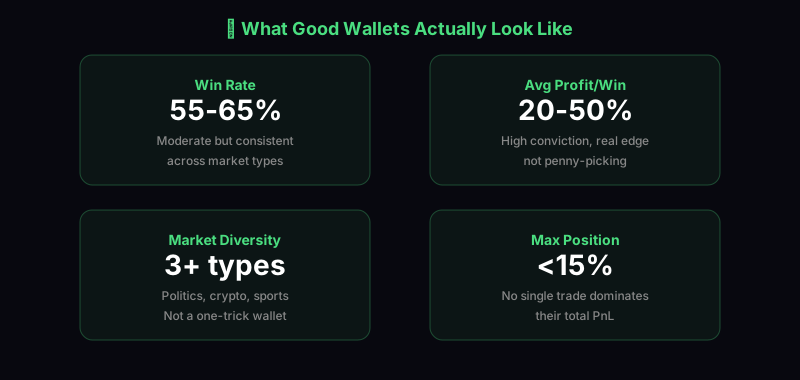
Now that you know which Polymarket wallets to avoid copy trading, here's what the best wallets actually look like:
Moderate win rate, high average profit. A 55-65% win rate with 20%+ average profit per winning trade means the wallet has genuine analytical edge. They're not gambling on certainties or lucky on one bet.
Diverse market exposure. The best wallets to copy trade on Polymarket are active across categories. They might have positions in Iran geopolitics, BTC markets, AND sports. This diversity means their edge is analytical, not domain-specific luck.
Consistent position sizing. No single trade should represent more than 10-15% of a wallet's total activity. If you see one trade dominating PnL, it's luck, not skill.
Early entries with conviction. The wallets worth copy trading on Polymarket enter positions before consensus shifts. They bought Iran regime YES at 25% when everyone was skeptical. They had nuclear deal positions before the market became front-page news.
Visible losses handled well. A wallet that takes losses and moves on is showing risk management. A wallet with no losses is showing you an incomplete picture.
Your Polymarket Copy Trading Checklist
Before you copy trade ANY wallet on Polymarket, run through this:
- Does it have 30+ resolved trades over 2+ months? (Rules out Type 1)
- Are position sizes reasonable relative to market liquidity? (Rules out Type 2)
- Is the win rate under 85% with meaningful profit per trade? (Rules out Type 3)
- Does it trade across multiple market categories?
- Can you see how it handles losses?
If a wallet passes all five checks, it's worth adding to your copy trading watchlist. If it fails even one, move on. There are thousands of wallets on Polymarket - you don't need to copy trade the risky ones.
Stop Copy Trading Blind
The difference between profitable copy trading on Polymarket and losing money isn't luck - it's knowing which wallets to avoid. The Survivorship Bias Wallet, the Liquidity Vampire, and the Closing Time Gambler will all show up on leaderboards looking impressive. Now you know how to see through the numbers.
Use Ratio to analyze wallet histories, filter out dangerous wallet types, and copy trade only the wallets that have proven, repeatable edge across Polymarket's markets.
Get Started
Ready to start copy trading?
Download Ratio and follow the best traders on Polymarket. Available on iOS and Android.