
How Prediction Markets Are Calling the Denmark Election (And Why International Events Are the Next Big Opportunity)
How Prediction Markets Are Calling the Denmark Election (And Why International Events Are the Next Big Opportunity)
Right now on Polymarket, Mette Frederiksen is sitting at 83% to remain Denmark's Prime Minister. Lars Løkke Rasmussen trails at 10%. Most American traders scrolled right past this market.
That was a mistake.
International political events are quietly becoming the most profitable corner of prediction markets in 2026. While everyone dogpiles into NCAA brackets and Trump tweet markets, the traders making real money are the ones paying attention to elections in Copenhagen, trade negotiations in Brussels, and oil politics in Tehran.
Let me explain how prediction markets work for these events, why they matter, and how you can start trading them today.
What Is a Prediction Market, Really?
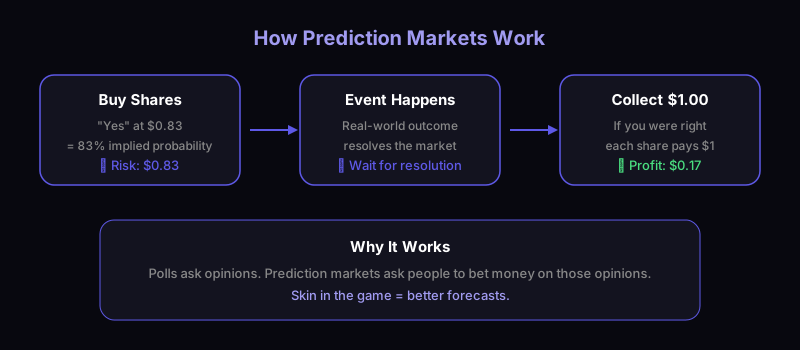
If you're new here, a prediction market is exactly what it sounds like: a market where you trade on the outcome of real-world events. Instead of buying shares of Apple, you buy shares of "Will Mette Frederiksen win the Denmark election?" at whatever price the market sets.
If the market says 83 cents for "Yes," that's the crowd saying there's an 83% chance it happens. If you think the real probability is higher or lower, you trade accordingly. If you're right, you profit. Simple as that.
The reason prediction markets work so well is that they aggregate information from thousands of people who have actual skin in the game. Polls ask opinions. Prediction markets ask people to bet money on those opinions. The difference is enormous.
Why Denmark Matters (And Why Most Traders Don't Get It)
Denmark's parliamentary election might seem niche if you're sitting in New York or LA. But here's why smart traders are paying attention:
Lower competition, bigger edge. The NCAA Tournament winner market has $18 million in volume. Everyone and their dog is trading it. The Denmark election? Far less attention from casual traders. That means mispricings last longer and edges are bigger.
Clearer information advantage. You don't need to be Danish to trade this market well. You just need to read polling data, understand coalition dynamics, and follow a few European political analysts. Most Polymarket traders aren't doing this basic homework for international markets.
Geopolitical ripple effects. Denmark's election connects to EU policy, NATO, Greenland politics, and Arctic resource disputes. These are the kinds of interconnected markets where understanding one event gives you an edge on five others.
The International Prediction Market Landscape in March 2026
Denmark is just one example. Here's what's trending globally on prediction markets right now:
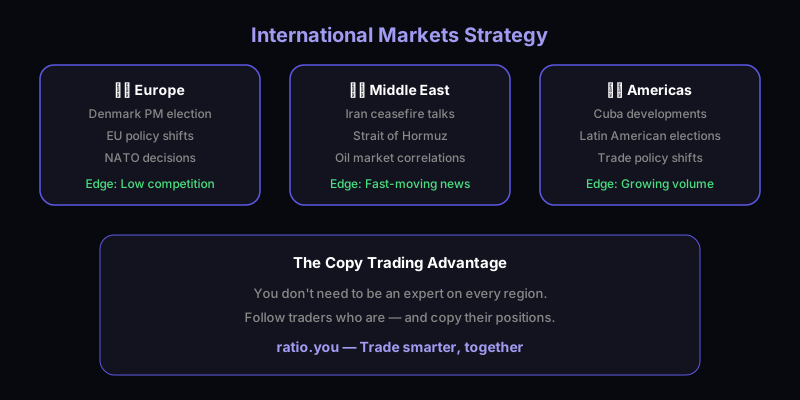
Iran and the Strait of Hormuz. Multiple markets are tracking whether Iran will disrupt oil shipping through the Strait of Hormuz, ceasefire negotiations, and broader Middle East escalation scenarios. These markets move fast on breaking news and are heavily correlated with oil commodity markets.
Cuba political developments. A quieter set of markets, but ones that have seen surprising volume growth as US-Cuba relations shift.
Global elections everywhere. From Denmark to potential UK snap elections to Latin American races, 2026 is stacking up as a massive year for international political prediction markets.
The common thread? All of these markets are under-traded relative to their information richness. That's where the opportunity lives.
How to Actually Trade International Events
Here's the practical playbook for trading international prediction markets:
Step 1: Follow the Money, Not the Headlines
The best signal in any prediction market is large wallet movements. When a wallet with a strong track record suddenly takes a big position on the Denmark election, that tells you more than any news article.
On Polymarket directly, finding these wallets is tedious. You're manually clicking through profiles, checking histories, trying to figure out who knows what they're doing. This is where tools matter.
Ratio was built specifically for this problem. Instead of manually stalking wallets, you can follow top-performing traders and see exactly what positions they're taking across international markets. When a trader who's been profitable on European politics suddenly loads up on the Denmark "No" side, you see it in real time.
Step 2: Understand the Local Context
For the Denmark election specifically:
- Mette Frederiksen (Social Democrats) has led Denmark since 2019. Her coalition government has been stable but faces pressure on immigration policy and the economy.
- Lars Løkke Rasmussen has been prime minister before and leads the Moderates, but polling shows limited coalition paths.
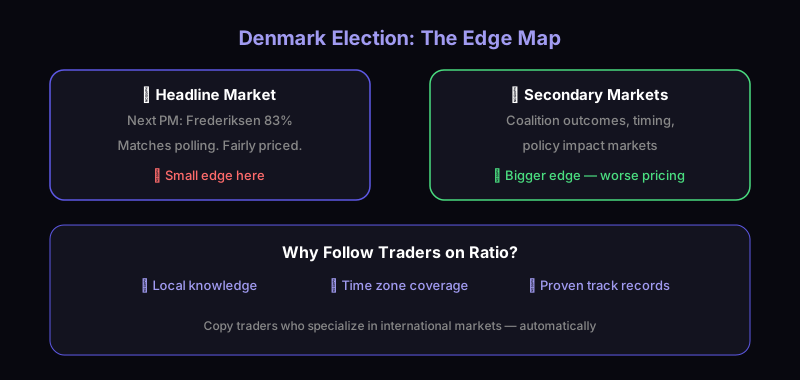
- The 83/10 split on Polymarket roughly matches Danish polling averages, suggesting the market is reasonably efficient here.
The edge isn't in the headline market. It's in related markets and timing. When does the election get called? What happens to coalition negotiations after? These secondary markets often have worse pricing.
Step 3: Size Your Positions for International Events
International markets carry unique risks:
- Time zone gaps. News breaks at 3 AM your time, and the market moves before you wake up.
- Translation lag. Key information might be in Danish, Farsi, or Spanish before it hits English media.
- Liquidity risk. Thinner markets mean bigger spreads and harder exits.
This is another reason copy trading makes sense for international events. Traders who are actually based in or close to these regions have natural information and timing advantages. Following them through an app like Ratio lets you benefit from their local knowledge without trying to become an expert on Danish coalition politics yourself.
The Competitor Landscape: Where to Trade International Events
Let's be honest about your options:
Polymarket is the volume king. Most international political markets live here, and the liquidity is best. But Polymarket's interface makes it hard to discover international opportunities or track the wallets that specialize in them. You're on your own.
Kalshi covers some international events but is more focused on US-centric markets (economics, Fed decisions, weather). The regulatory structure means fewer exotic international markets.
Polycule and Polygun are newer entrants that aggregate Polymarket data and offer analytics. They're useful for research but don't solve the core problem of knowing which traders to follow for specific regions.
Kreo focuses on social features but lacks the depth of international market coverage and trader analytics.
Stand.trade offers some copy trading features but the international market coverage is thin.
The gap in all of these platforms is the same: none of them make it easy to find and follow traders who specialize in specific international markets. That's exactly what Ratio does differently. The social layer means you can find traders who are consistently profitable on European politics, Middle East geopolitics, or Latin American elections, and copy their trades automatically through the mobile app.
Building an International Markets Portfolio
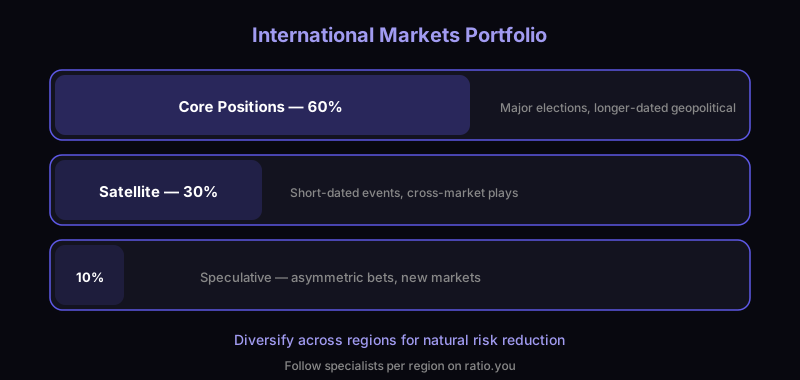
Here's how I'd approach building an international prediction market portfolio in Q2 2026:
Core positions (60% of bankroll):
- Major elections with clear polling (Denmark, any upcoming European elections)
- Iran/Middle East resolution markets (longer-dated, less volatile)
Satellite positions (30%):
- Shorter-dated geopolitical events (Strait of Hormuz, Cuba developments)
- Cross-market correlations (oil + Iran, EU policy + Denmark)
Speculative (10%):
- Low-probability events with asymmetric payoffs
- New markets that just opened with inefficient pricing
The key is diversification across regions and event types. International markets are less correlated with each other than, say, five different US political markets. That means your portfolio has natural risk reduction built in.
Why This Matters for the Future of Prediction Markets
International events represent the next growth frontier for prediction markets. The 2024 US election brought millions of new users to Polymarket. But those users are now looking for what's next. They've traded Trump markets. They've done March Madness. International events are the natural next step.
Prediction market apps that make international events accessible, understandable, and tradeable will win the next wave of users. That means better discovery, better social features, and better tools for following experts across different regions.
Ratio is positioned well here because the copy trading model naturally solves the expertise gap. You don't need to understand Danish politics. You need to find someone who does and follow their trades. That's a fundamentally more scalable approach than trying to become an expert on every country's elections.
Getting Started Today
If international prediction markets interest you, here's your action plan:
- Look beyond the front page. On Polymarket, scroll past the trending US markets and explore the Politics, Geopolitics, and Elections categories.
- Find specialist traders. Whether you use Ratio or manually research wallets, identify traders who focus on specific regions.
- Start small. International markets can be volatile and illiquid. Learn the dynamics with small positions before scaling up.
- Stay informed. Follow a few international news sources. Even a basic RSS feed of European political news gives you an edge over traders who only read US media.
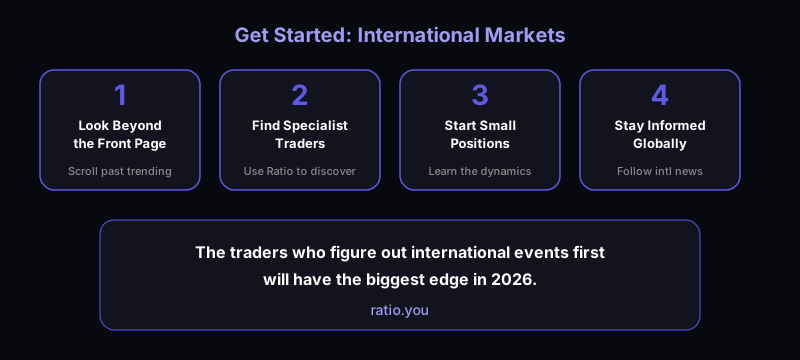
The Denmark election is just the beginning. As prediction markets go global, the traders who figure out international events first will have the biggest edge. The question is whether you'll be one of them.
Trade smarter on international prediction markets. Ratio lets you discover, follow, and copy top traders across every market category—including the international events most traders are missing.
Get Started
Ready to start copy trading?
Download Ratio and follow the best traders on Polymarket. Available on iOS and Android.