
Copy Trading Polymarket: How to Read Wallet Histories Like a Pro
The secret to profitable copy trading on Polymarket is reading wallet histories correctly. Learn how to decode trade patterns, spot fake edge, and find wallets actually worth copying.
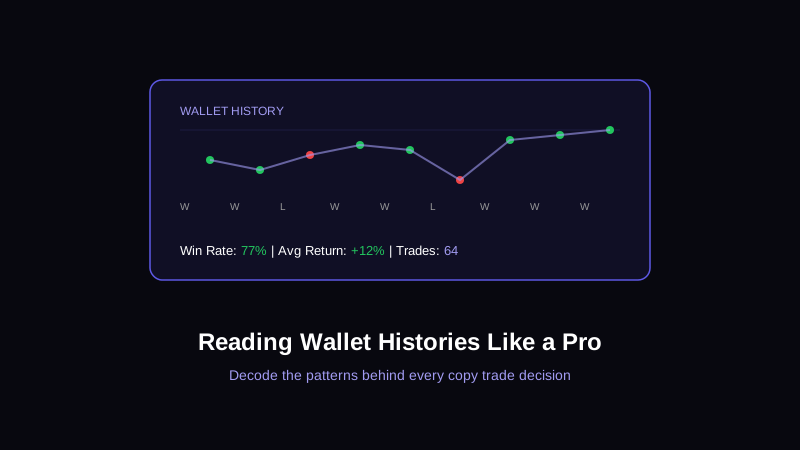
Every Polymarket Wallet Tells a Story
Before you copy trade anyone on Polymarket, you need to learn how to read their wallet like a book. Not just the headline numbers - the actual trade history. The timing. The sizing. The patterns that reveal whether this wallet has a real edge or just got lucky.
Most people who copy trade on Polymarket skip this step entirely. They see a green P&L number and start following. That's like hiring someone based on their LinkedIn headline without checking if they can actually do the job.
This guide teaches you to read Polymarket wallet histories the way professional copy traders do - looking for the signals that separate genuinely skilled traders from lucky gamblers, bots, and traps.
The Anatomy of a Polymarket Wallet History
Every wallet on Polymarket leaves a trail. When you're evaluating a wallet to copy trade, you're looking at five key dimensions:
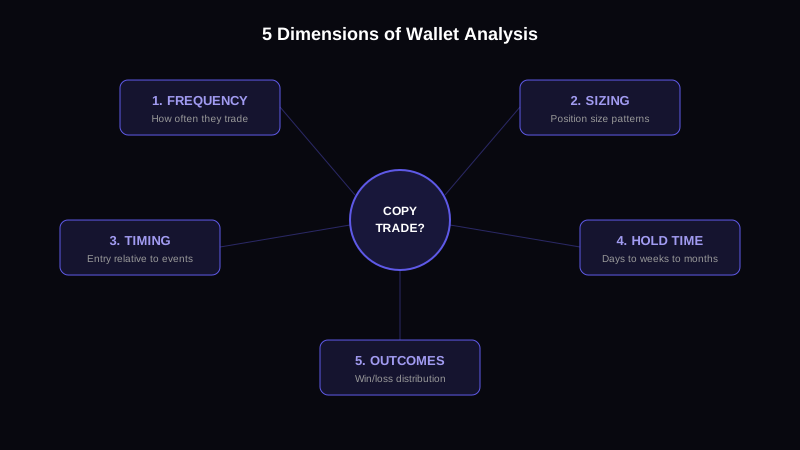
1. Trade Frequency
How often does this wallet trade? This matters more than you think for copy trading.
A wallet that makes 2-3 trades per week gives you plenty of time to follow their moves. A wallet making 50 trades a day? You'll never keep up, and the slippage on your copy trades will destroy any edge.
The sweet spot for copy trading on Polymarket is wallets that trade 3-15 times per week. Enough activity to generate returns, slow enough to actually follow.
2. Position Sizing Patterns
Look at how the wallet sizes its bets. This reveals their confidence level and risk management.
Consistent sizers bet roughly the same amount on every trade. These wallets are disciplined and tend to produce steady, copy-tradeable returns.
Variable sizers adjust their position based on conviction. These can be great to copy trade - but only if you can read their sizing as a signal. A wallet that puts 10x their normal size on a trade is screaming "high conviction."
Erratic sizers have no pattern. Small bet, huge bet, medium bet, tiny bet - no logic. These wallets are usually emotional traders, and emotional traders are terrible to copy trade on Polymarket.
3. Entry Timing
When does the wallet enter positions relative to market events? This is crucial for your copy trading strategy.
Early movers enter positions days or weeks before events. These are the best wallets for copy trading because you have a wide window to follow their trade at a similar price.
News traders jump in right as information hits. You can copy trade these wallets, but the slippage will be significant - by the time you see their trade and act, the price has already moved.
Late movers enter after the initial price move. Surprisingly, some of these wallets are profitable - they wait for overreactions and fade them. But copy trading a contrarian is mentally tough because it always feels like you're on the wrong side.
4. Hold Duration
How long does the wallet typically hold positions? This directly affects your copy trading experience.
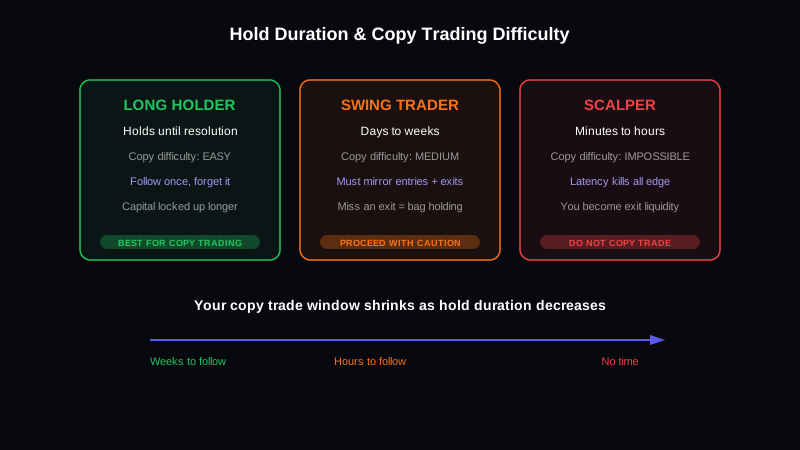
Long holders buy positions and sit on them until resolution. Great for copy trading - you follow once and forget about it. The downside is your capital is locked up.
Swing traders hold for days to weeks, actively entering and exiting. More complex to copy trade since you need to mirror both their entries and exits. Miss an exit signal and you're holding a position they've already sold.
Scalpers are in and out within hours or minutes. Do not try to copy trade scalpers on Polymarket. The latency between their trade and yours makes it virtually impossible to capture their edge.
5. Market Outcome Distribution
This is the most revealing dimension. Look at the resolved markets in the wallet's history and categorize the outcomes:
- Decisive wins - they were clearly right and the market resolved in their favor
- Close wins - they were right but the market was tight
- Close losses - reasonable bet that didn't work out
- Decisive losses - they were clearly wrong
The best polymarket wallets to copy have a healthy mix of decisive wins and close losses. That pattern suggests real analytical skill - they get the big calls right and their mistakes are reasonable.
Red flag: a wallet with mostly close wins and a few decisive losses. That pattern often means they're taking tiny edges on lots of trades and occasionally getting destroyed. Copy trading this type of wallet means you'll slowly grind out small gains until a big loss wipes them out.
The Three Wallet History Patterns Every Copy Trader Must Know
After analyzing hundreds of Polymarket wallets for copy trading potential, three patterns keep appearing. Learn to spot them and you'll save yourself a lot of money.
Pattern 1: The Grinder
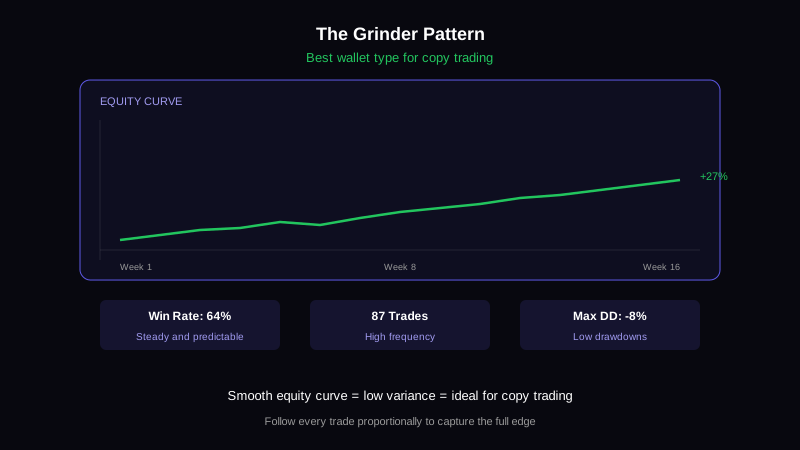
What it looks like: Steady, frequent trades with a 60-70% win rate. Small position sizes. Modest but consistent profit growth. No massive wins or losses.
Copy trading verdict: Excellent. Grinders are the bread and butter of a polymarket copy trading strategy. Their consistency means your copy trades will closely mirror their returns. Low variance means fewer drawdowns. The only downside is the returns aren't spectacular - expect steady 15-30% over time, not 10x moonshots.
How to copy trade them: Follow every trade at the same proportional size. Their edge comes from volume and consistency, so you need to mirror the full strategy, not cherry-pick.
Pattern 2: The Sniper
What it looks like: Infrequent trades - maybe 2-5 per month. But when they trade, they go big and they're usually right. Win rate above 75%, but small sample sizes.
Copy trading verdict: Good but tricky. Snipers have real edge, usually deep expertise in a specific category. The challenge for copy trading is the low frequency - you might wait weeks between trades, and each one carries more weight.
How to copy trade them: Treat each trade as a high-conviction play. Allocate more per trade (since there are fewer of them) but never exceed your risk limits. Snipers are best as one component of a broader copy trading portfolio.
Pattern 3: The Streaker
What it looks like: Dramatic winning streaks followed by equally dramatic losing streaks. High overall profit but an emotional rollercoaster. Win rate might be 55% but the variance is extreme.
Copy trading verdict: Dangerous. Streakers make money overall but the path is brutal. If you start copy trading during a losing streak, you'll quit before the winning streak begins. And there's no way to predict which phase they're in.
How to copy trade them: Only follow with a small allocation and commit to at least 3 months. If you can't stomach a 30% drawdown on this portion of your portfolio, don't copy trade streakers at all.
Practical Wallet History Analysis: A Step-by-Step Copy Trading Walkthrough
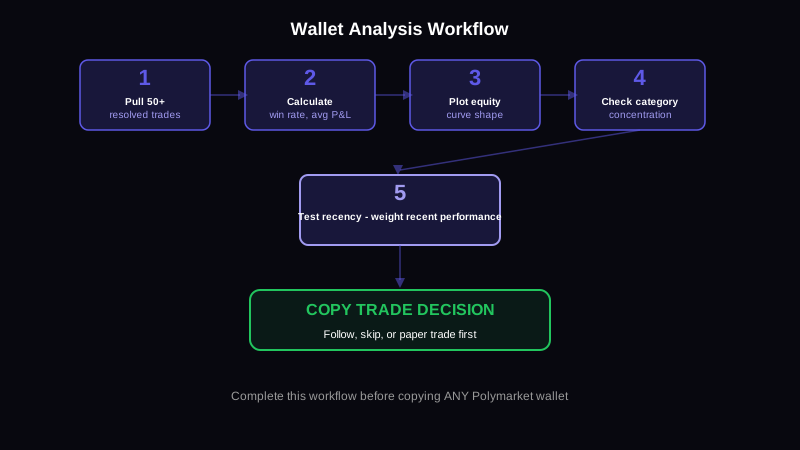
Let's walk through exactly how to analyze a Polymarket wallet history for copy trading. Here's the process top copy traders use:
Step 1: Pull the last 50 resolved trades. Unresolved trades don't tell you anything about edge. You need outcomes.
Step 2: Calculate the basics. Win rate, average profit per trade, largest win, largest loss, average hold time.
Step 3: Plot the equity curve. If you started with $1,000 and followed every trade proportionally, what would your balance look like today? Smooth upward curve = great for copy trading. Jagged spikes = proceed with caution.
Step 4: Check for category concentration. If 80% of their wins come from political markets but they also trade crypto, only copy their political trades. Category-specific copy trading on Polymarket almost always outperforms blanket following.
Step 5: Test for recency. A wallet that crushed it 6 months ago but has been mediocre recently might have lost their edge. Weight recent performance more heavily in your copy trading decisions.
The Wallet History Red Flags That Should Kill a Copy Trade
Sometimes the most valuable thing wallet history analysis tells you is who NOT to copy trade. Watch for these:
Sudden strategy changes. A wallet that traded politics for 6 months then suddenly pivots to crypto has lost their circle of competence. Wait and see if they build a track record in the new category before you copy trade them.
Increasing position sizes after losses. This is classic tilt behavior. A wallet that doubles down after a loss is chasing - and if you're copy trading them, you're chasing their chase.
Gaps in trading history. Long periods of inactivity followed by a flurry of trades can mean the wallet changed hands or the trader is back after blowing up a previous account.
Perfect timing on breaking news. If a wallet consistently enters positions minutes before major announcements, they might have an information edge you can't replicate. By the time you see their trade and copy it, the edge is gone.
Turn Wallet Analysis Into a Copy Trading System
Reading Polymarket wallet histories is a skill. Like any skill, it gets easier with practice. Start by analyzing 5-10 wallets this week - not to copy trade them, but to practice reading patterns.
After a few weeks of analysis, you'll develop intuition for which wallets have real edge and which ones just look good on the surface. That intuition is the foundation of every successful Polymarket copy trading strategy.
If doing this manually sounds like a lot of work - it is. That's why platforms like Ratio exist, giving you trader profiles with performance stats, trade histories, and the ability to follow top wallets directly. The analysis that used to take hours of on-chain research is available at a glance.
Whether you do it manually or use tools, the principle is the same: never copy trade a Polymarket wallet until you've read its history. The numbers don't lie - you just need to know how to read them.
Get Started
Ready to start copy trading?
Download Ratio and follow the best traders on Polymarket. Available on iOS and Android.